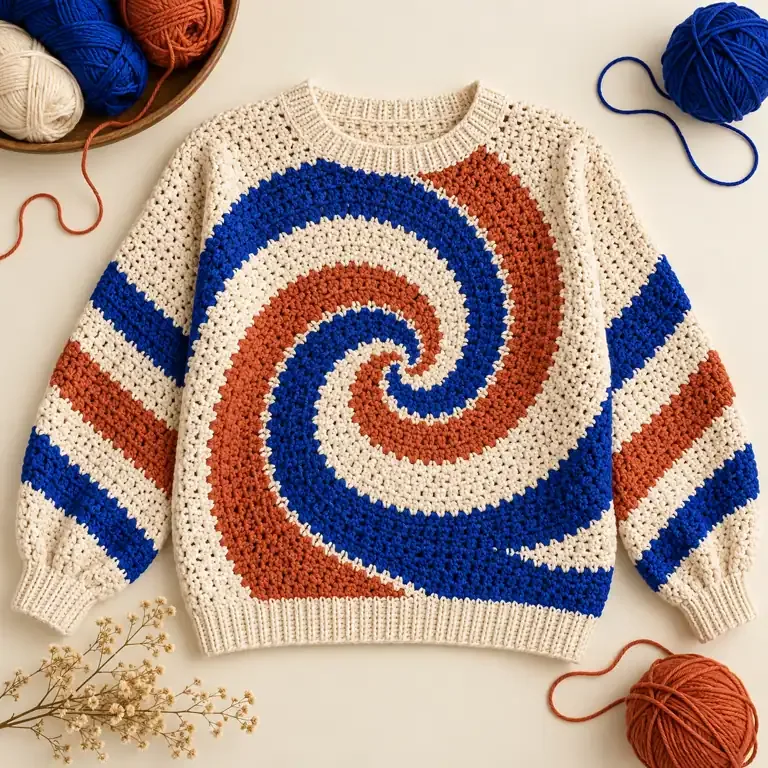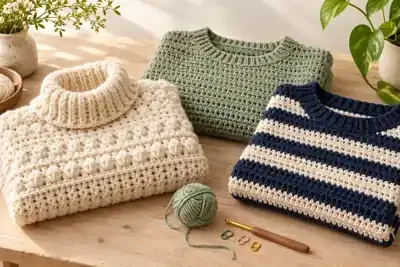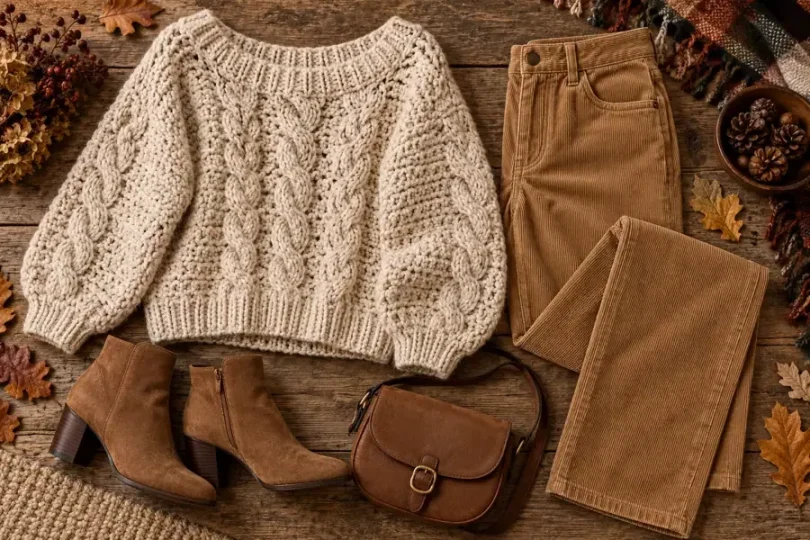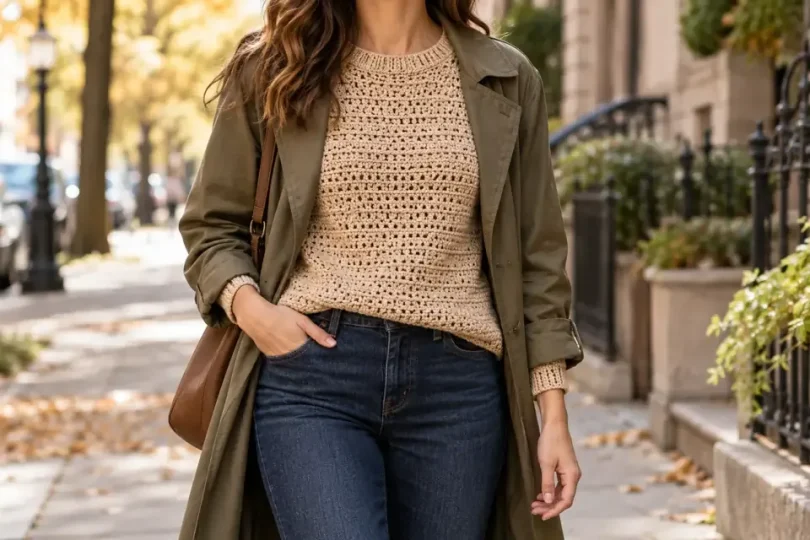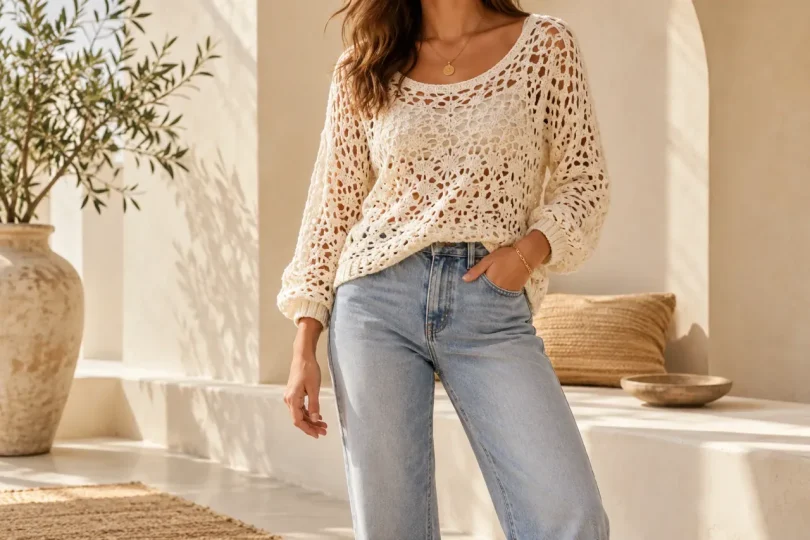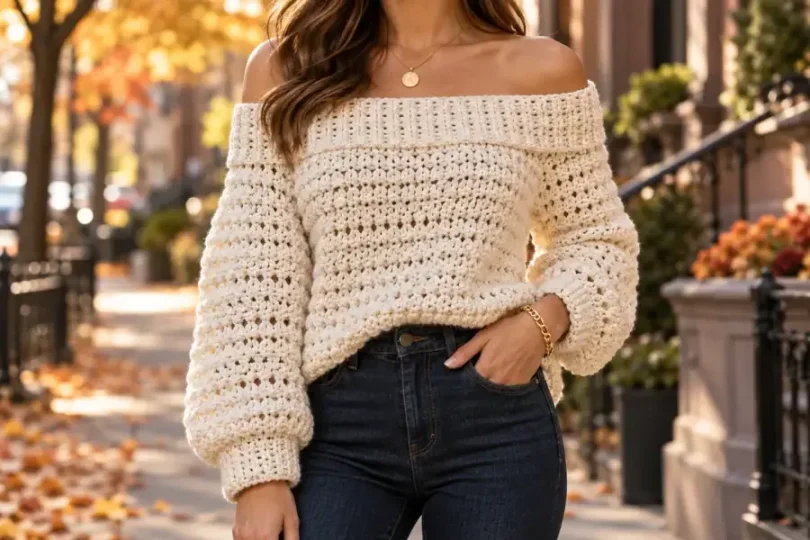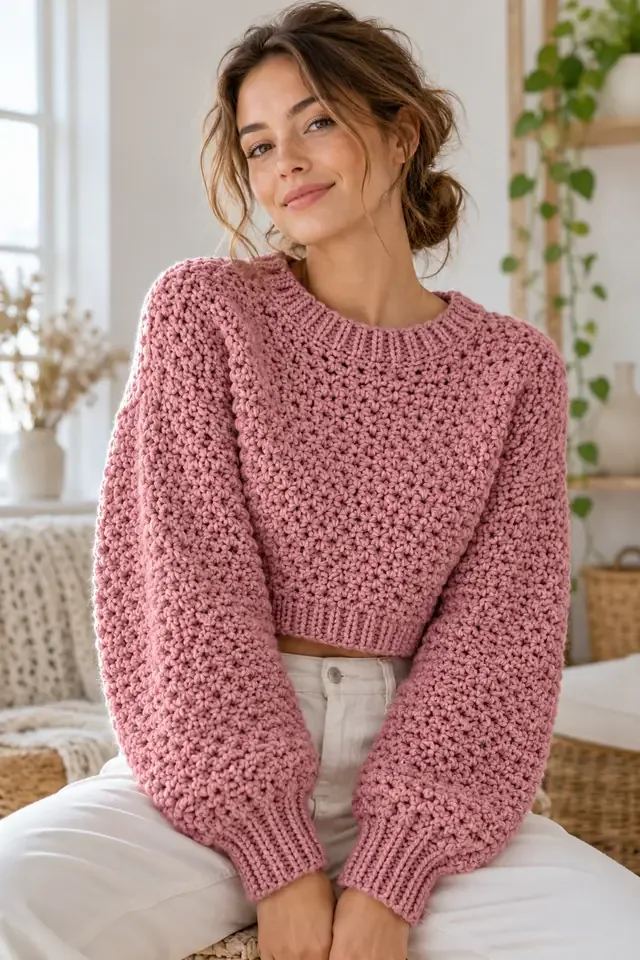
A crochet sweater can be a simple everyday layer, a textured statement piece, or a colorful project that teaches you new garment skills. This collection brings together ten free crochet sweater patterns with different silhouettes and constructions, from a beginner-friendly cropped pullover to top-down raglans and geometric colorwork. Each entry explains what makes the project distinct, what to check before starting, and where to find the complete instructions.
The links lead to the original designer or yarn company pages. Some offer free instructions online or as a free download, and some also sell an optional ad-free PDF. The images in this guide are original visual concepts made to help you picture a color and styling direction; they are not photos of the linked designers’ samples. Follow the source pattern for the actual stitches, sizing, yarn quantity, gauge, and construction.
Explore the 10 crochet sweater patterns
10 crochet sweater patterns to make and wear
Need a quick starting point? The Basic Stitch Sweater and the adult crew-neck pullover are labeled beginner or easy by their sources. For a try-on-as-you-go construction, compare the Cobblestone and Alpine raglans. If you enjoy working with color, look at Sustain-A-Stripe, Stepping Stripes, or Slanted & Enchanted. The pattern pages should be your final check for sizing, yarn, gauge, and skill requirements.
1. A beginner-friendly cropped sweater with crossed stitches
The Basic Stitch Sweater is a cheerful starting point for a first wearable: Hobbii describes it as beginner-friendly and gives nine sizes, from XS through 5XL. The cropped shape, chunky yarn, and crossed-stitch detail help create a finished look without a complicated palette. The source lists a 6 mm hook as a starting point, but the downloadable pattern should remain your final reference for yarn amounts and gauge. If you want a longer hem, check how the construction is worked before adding rows; extra length can change the amount of yarn you need. This design works nicely in a single shade, while a contrast rib can make the cuffs and hem stand out.
At a glance: Skill level: Beginner. Published size range: XS to 5XL. The source page provides the pattern and current material information; check it before starting.
Get the Free Basic Stitch Sweater Pattern
2. A flecked pullover with a little surface texture
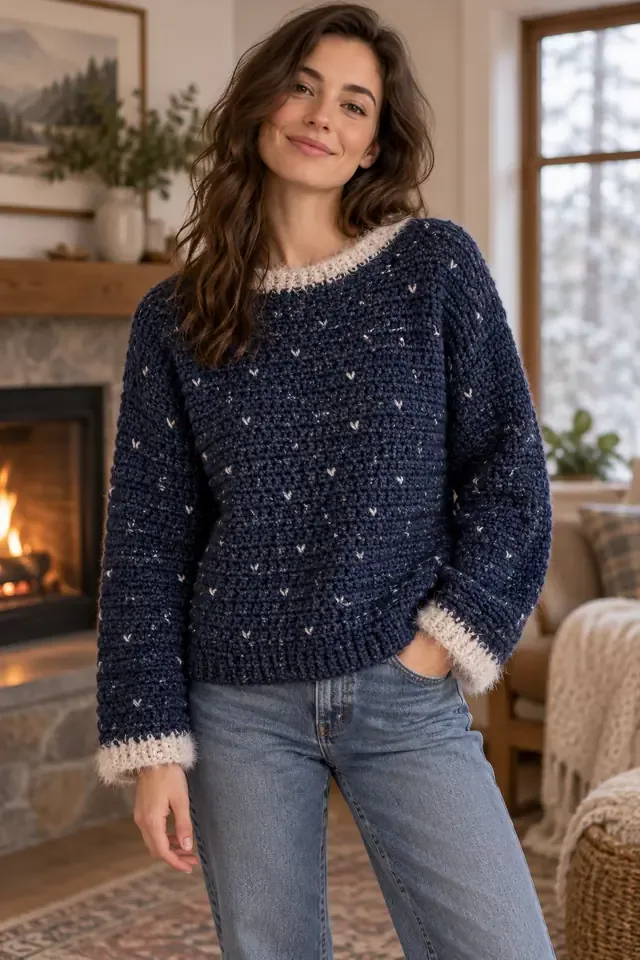
Snowy Days is a closed pullover that mixes a solid main color with small textured accents for a playful finish. Premier lists sizes XS through 5XL, along with finished bust and length measurements, so compare those numbers with a sweater you already like. The listed techniques include extended single crochet, increases and decreases, joined rounds, and working with textured yarn. If fluffy accent yarn is new to you, make a small test swatch first to see how clearly you can read the stitches. The illustrated navy version is only a color idea; the pattern page provides the designer’s yarn and hook details.
At a glance: Skill level: See designer page. Published size range: XS to 5XL. The source page provides the pattern and current material information; check it before starting.
Download the Free Snowy Days Pattern
3. A striped pullover that uses color as the feature
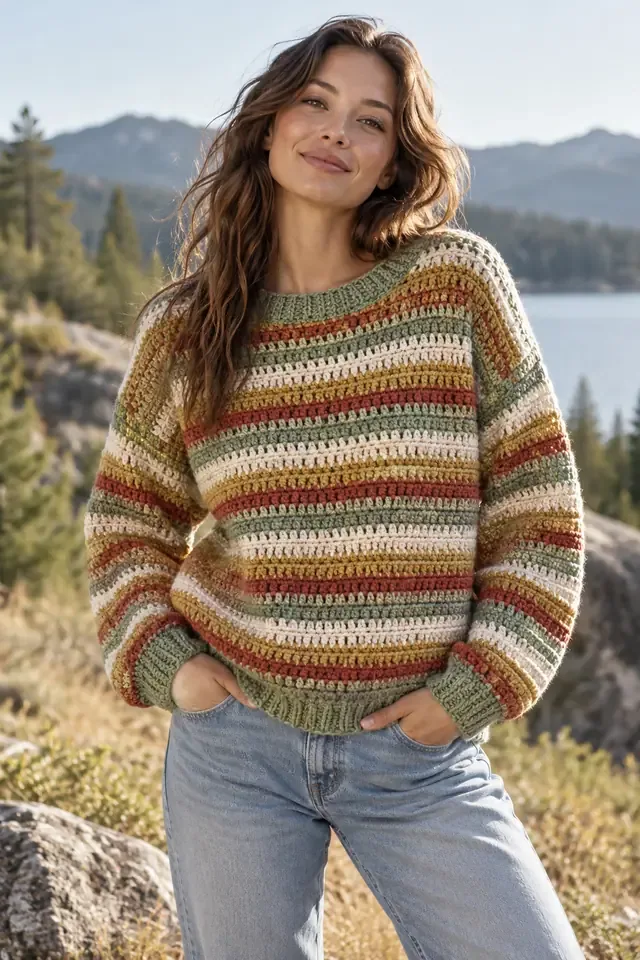
Sustain-A-Stripe is worked in pieces and seamed, which makes it easier to adjust the colors row by row and to work each part separately. Premier lists nine sizes, XS through 5XL, with finished chest and length measurements. The design uses mesh-stripe fabric and calls for several basic stitches, foundation half-double crochet, back-loop work, and seaming. Stripes create yarn tails, so weave them in as you finish each section rather than saving all the ends for the last day. The image suggests a softer palette of sage, cream, rust, and gold; you can use fewer colors if you prefer a cleaner, simpler sequence.
At a glance: Skill level: See designer page. Published size range: XS to 5XL. The source page provides the pattern and current material information; check it before starting.
Get the Free Sustain-A-Stripe Pattern
4. A versatile adult crew-neck pullover
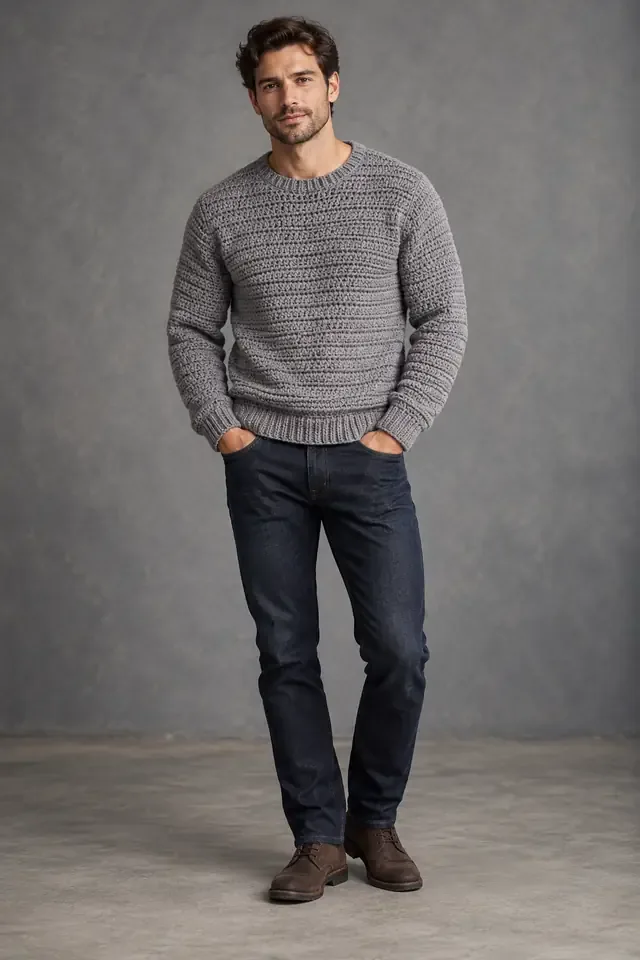
This Caron crew-neck pattern is designed as an easy, go-with-everything sweater. It offers six size groupings, from XS/S to 4XL/5XL. The pattern page gives both body measurements and finished chest measurements, helping you understand the intended ease before choosing a size. The straightforward crew neckline makes it simple to wear over a tee or collared shirt, and a neutral gray, navy, or oatmeal shade can become a wardrobe staple. Although the sample illustration here is styled on a man, the published measurements are the most useful guide for any maker: choose based on the recipient’s body and preferred fit, not the model.
At a glance: Skill level: Easy. Published size range: XS/S to 4XL/5XL. The source page provides the pattern and current material information; check it before starting.
Download the Free Crew-Neck Pullover Pattern
5. A soft pullover with a draped cowl neckline
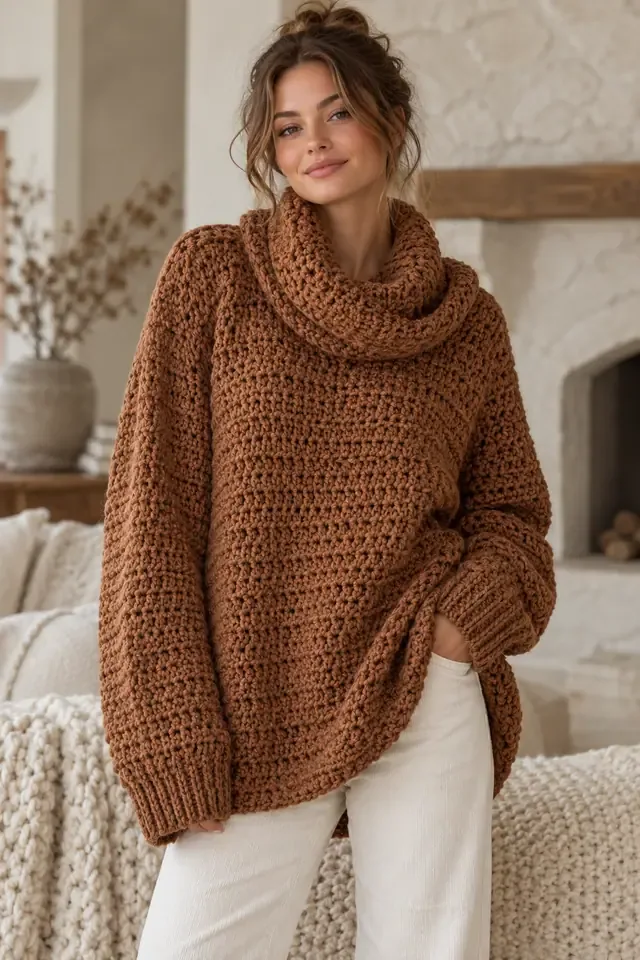
A cowl neckline gives a classic pullover a softer, more layered look without adding a separate accessory. Yarnspirations lists this Caron design as easy and provides size options from XS/S through 4XL/5XL. The cowl is part of the garment, so it can sit comfortably around the neck and stay in place as you move. For a versatile finish, choose a solid color with enough stitch definition to show the fabric; cinnamon, deep teal, and warm cream all work well. Read the designer’s yarn and gauge notes before substituting, especially around the neckline, where drape affects how the cowl falls.
At a glance: Skill level: Easy. Published size range: XS/S through 4XL/5XL size options. The source page provides the pattern and current material information; check it before starting.
View the Free Cowl Pullover Pattern
6. A relaxed tweedy sweater with side slits
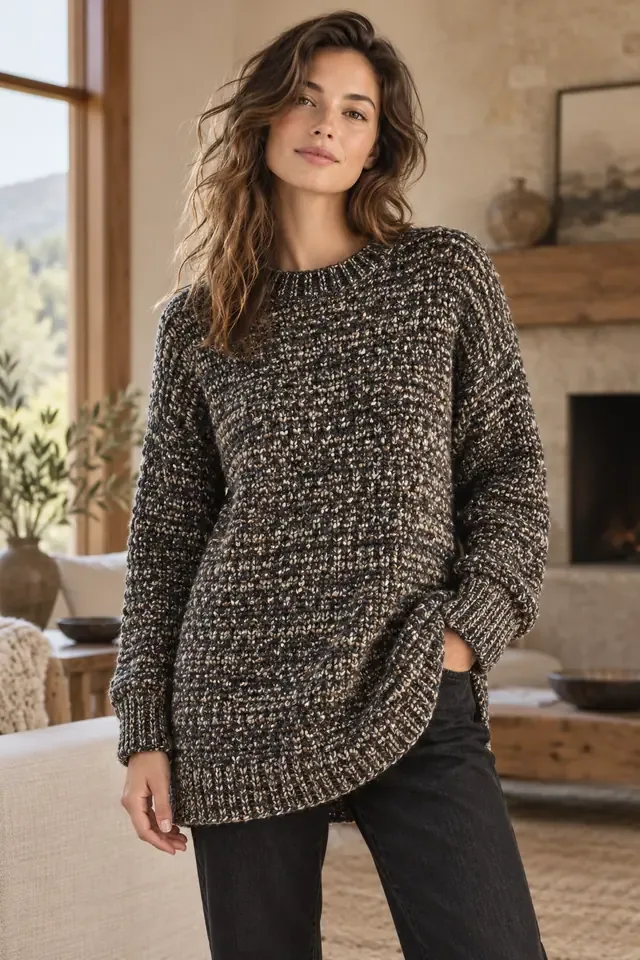
The Caron Tweedy Pullover offers a relaxed fit, a textured two-row stitch repeat, striped puff sleeves, a rolled neck, and side slits. Yarnspirations marks the pattern easy and gives six size groups, XS/S through 4XL/5XL. The official pattern page describes the stitch sequence and provides finished bust measurements, which is useful when checking the intended ease. A tweed-effect yarn adds color flecks without requiring frequent yarn changes; a solid yarn will make the stitch texture easier to see as you work. Keep the side slits at the length in the instructions unless you are comfortable adjusting the front and back panels evenly.
At a glance: Skill level: Easy. Published size range: XS/S to 4XL/5XL. The source page provides the pattern and current material information; check it before starting.
Open the Free Tweedy Pullover Pattern
7. A bold color-blocked stripe pullover
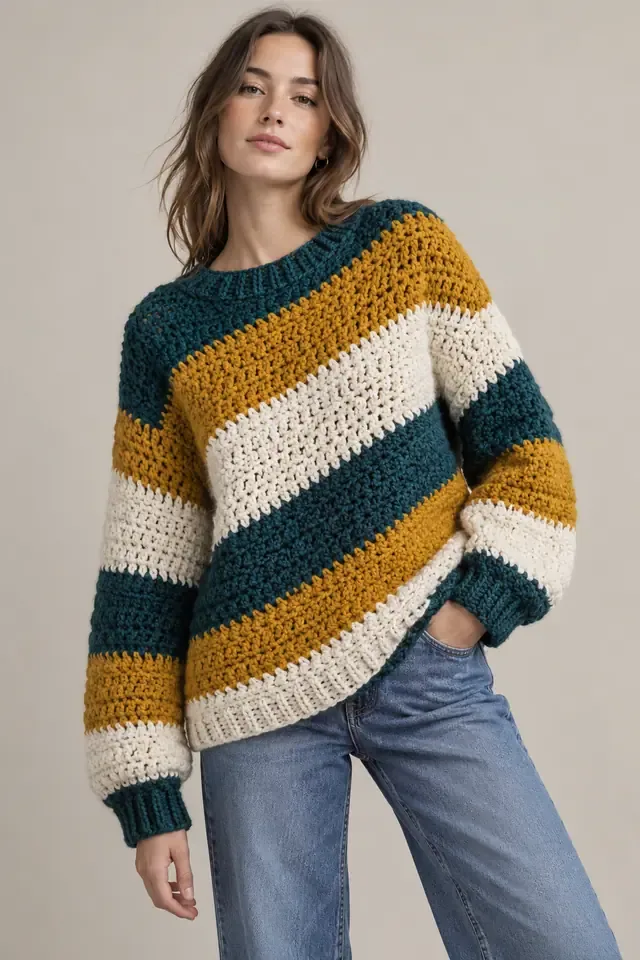
Stepping Stripes is an easy pullover designed for cozy yarn and clear color bands. The source page groups sizes from XS/S through 4XL/5XL and provides finished measurements. A thick, soft yarn can make the project warm and substantial, so check the recommended fiber and gauge before beginning. For a high-contrast version, use cream with teal and ochre; for a subtler sweater, choose two shades from the same color family. When changing colors, follow the designer’s instructions for carrying or fastening off yarn so the inside of the sweater stays comfortable against another layer.
At a glance: Skill level: Easy. Published size range: XS/S to 4XL/5XL. The source page provides the pattern and current material information; check it before starting.
Get the Free Stepping Stripes Pattern
8. A top-down raglan you can try on as you work
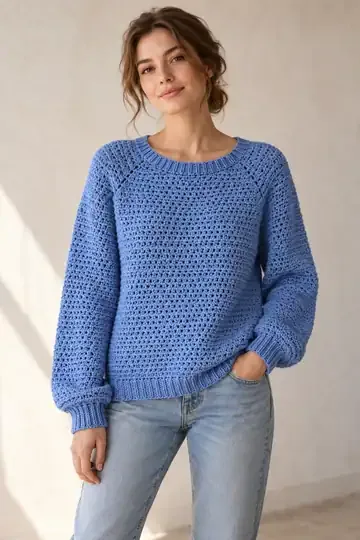
The Cobblestone Raglan is worked from the top down, so the yoke and body grow in rounds and you can try the sweater on as you go. The block stitch creates a subtle grid, and the source includes a free written pattern plus a step-by-step video; an optional ad-free PDF is also available for purchase. Make sure you use the pattern’s gauge and bust chart rather than guessing from the photo. This construction can be especially useful if you want to check sleeve and body length during the project, but the raglan increases and joined rounds still require careful stitch counting. The blue image is a visual concept, not a sample from the pattern page.
At a glance: Skill level: See source for skill level. Published size range: XS/S to 4X/5X size groups. The source page provides the pattern and current material information; check it before starting.
Read the Free Cobblestone Raglan Pattern
Watch the Crochet Raglan Video Tutorial
9. A geometric pullover with angled color sections
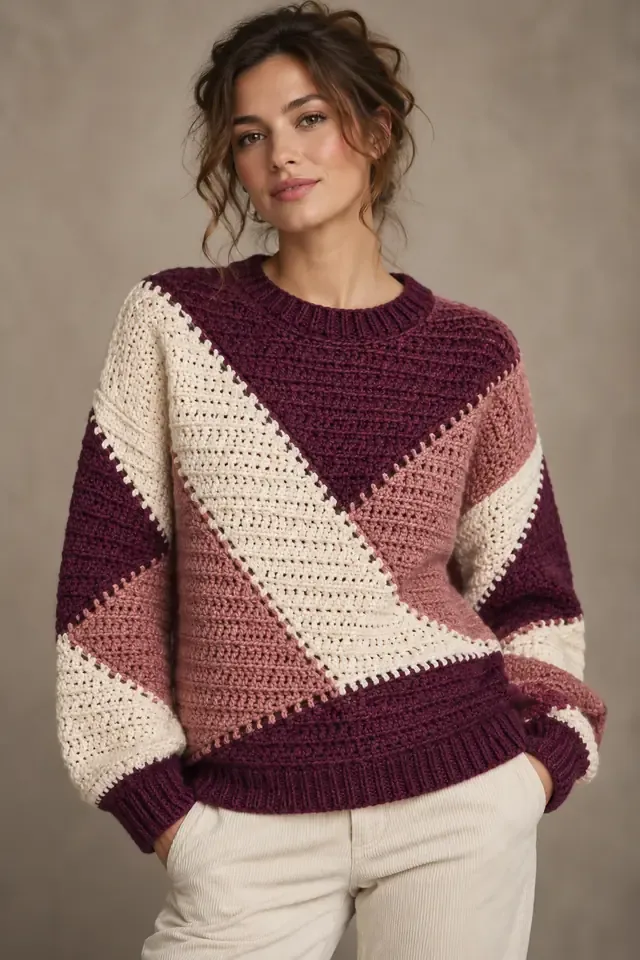
Slanted & Enchanted is a geometric Patons pullover with a distinctive angled color layout. The source lists it as an easy crochet pattern and includes six size groups, from XS/S through 4XL/5XL. Its finished measurements and gauge notes are essential because color placement and panel proportions need to align with the garment dimensions. Choose three shades with a clear contrast—such as plum, cream, and dusty rose—or use two tones for a calmer effect. Before working the full sweater, make a small color swatch to confirm that the shades look balanced together under the lighting where you expect to wear it.
At a glance: Skill level: Easy. Published size range: XS/S to 4XL/5XL. The source page provides the pattern and current material information; check it before starting.
Download the Free Slanted & Enchanted Pattern
10. A top-down raglan with shaping at the neckline
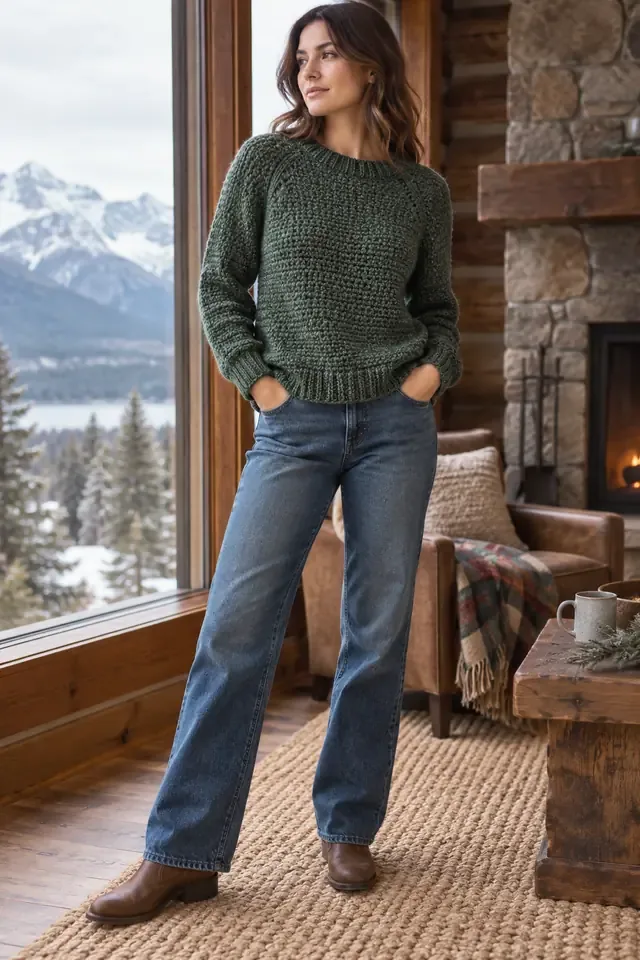
The Alpine Sweater is worked top down in raglan construction, with tapered sleeves and short rows used to shape the neckline. Hobbii describes it as an intermediate project and notes that newer garment makers may find it more challenging. The size range is XS to 2XL, with about 2 inches of ease recommended; finished bust, sleeve, and underarm-length measurements are provided. A video tutorial accompanies the short-row section, so follow it alongside the written instructions if this technique is new to you. The forest-green image is only an illustrative styling idea; use the linked pattern’s exact measurements, yarn, and stitch counts.
At a glance: Skill level: Intermediate. Published size range: XS to 2XL. The source page provides the pattern and current material information; check it before starting.
Get the Free Alpine Sweater Pattern
How to choose a crochet sweater pattern that fits
Start with finished garment measurements
Size labels are not standardized. Measure your chest and compare it with the finished bust or chest measurement on the pattern page. Then decide whether you want a close fit, a little room for a shirt underneath, or a relaxed oversized shape. A sweater you already own can be a helpful reference: measure it flat across the chest and compare the number with the pattern’s finished width. Check the length and sleeve measurements too, especially if you are tall, petite, or prefer longer cuffs.
Make a gauge swatch before you commit
Work the pattern stitch with the recommended hook and yarn, then measure the center of the swatch without stretching it. If the pattern calls for blocking or washing, treat the swatch the same way before measuring. Too many stitches across the stated width usually means you need a larger hook; too few can mean a smaller hook. Row gauge matters for sweater length and sleeve shaping. A swatch takes time, but it can prevent a finished garment that is too wide, too narrow, or much longer than expected.
Choose yarn for drape and comfort
Yarn weight alone does not determine how a sweater will feel. Fiber, twist, and stitch texture affect drape, warmth, and recovery. Wool and wool blends often spring back after stretching; cotton can feel cool but may weigh more; acrylic blends are often easy-care, though their behavior varies by yarn. For fuzzy or novelty yarn, make a test swatch to confirm that you can still see and count the stitches. Use the yarn quantities and fiber recommendations in the source pattern as your baseline.
Keep notes as you work
Write down the size you selected, hook sizes, gauge, row count, and any changes you make. Mark the right side of each panel and label sleeves before assembly. For a top-down raglan, count each increase round carefully and try the sweater on at the milestones named in the instructions. For a striped sweater, note the color sequence and where each change happens. These simple notes make it easier to match the second sleeve and repeat the project later.
Color combinations to personalize these sweaters
One solid color shows off stitch texture and keeps color changes simple. For a quiet neutral sweater, combine oatmeal, charcoal, and warm brown. A coastal palette could use navy, cream, and muted blue. Try forest green with soft gray for a classic feel, or plum with dusty rose for a more expressive geometric pullover. If you are choosing several shades, lay the yarns side by side in natural light before buying the full quantity. Contrast is important in stripes and geometric sections; if the colors are too similar, the design can disappear from a distance.
More crochet sweater patterns on our blog
For more project choices, browse our guides to free crochet sweater patterns for cozy handmade style and 35 free patterns for crochet sweaters. They offer additional constructions and styling ideas if you have not found the right project yet.
Frequently asked questions
Which crochet sweater pattern is best for a beginner?
Hobbii labels the Basic Stitch Sweater beginner-friendly, while Yarnspirations lists the adult crew-neck and several other patterns in this collection as easy. A first sweater is still a larger project than a small accessory, so read the instructions first and make the gauge swatch before starting the full garment.
Are the patterns in this list free?
The linked sources currently provide free pattern instructions or a free download. Some designers also offer an optional paid ad-free PDF. Check each source page for current access details and any requirements for downloading the file.
Can I substitute a different yarn?
Usually, but the replacement should produce the required gauge and a similar fabric. Compare yarn weight, fiber, yardage, and care instructions, then make and wash a swatch. If the new yarn is heavier or less elastic than the recommended one, the sweater may have a different drape and finished size.
How do I decide between a top-down raglan and a seamed sweater?
A top-down raglan is worked from the neckline toward the body and sleeves, allowing you to try the garment on as it grows. A seamed pattern is made in separate pieces and joined later; it can be easier to handle flat panels and check dimensions as you go. Choose the construction that suits your experience and the way you like to work.
Can I change the length or sleeve style?
Many makers adjust length, but do so only after checking the pattern’s construction and yarn requirements. Adding rows uses more yarn and can affect the proportions. For sleeve changes, keep both sleeves consistent and follow any shaping instructions. If you are new to garment alterations, make the pattern as written for your first version.
Choose a pattern and enjoy the process
Pick the sweater you will be excited to wear, then let the source pattern guide the technical details. A careful size check, a washed gauge swatch, and a few notes along the way can make the project more predictable and much more enjoyable from the first stitch to the final seam.