A sweater project can look simple on a screen and still involve unfamiliar shaping, lace, or finishing once you pick up your hook. The right design depends on more than color: neckline, fit, stitch texture, and construction all affect how the garment feels to make and wear.
For anyone searching for “11 Easy and Free Crochet Sweater” ideas, this collection brings together a range of silhouettes, from everyday pullovers to a cropped color-blocked top and cable-front sweater dresses. Each design has a distinct look, so you can compare the features before choosing a project.
The available descriptions identify each design’s key details, but they do not include pattern links, format, skill ratings, or confirmation of free access. Check the original designer’s listing for those details before you begin; a project described here is not automatically confirmed as a free pattern.
Quick Answer
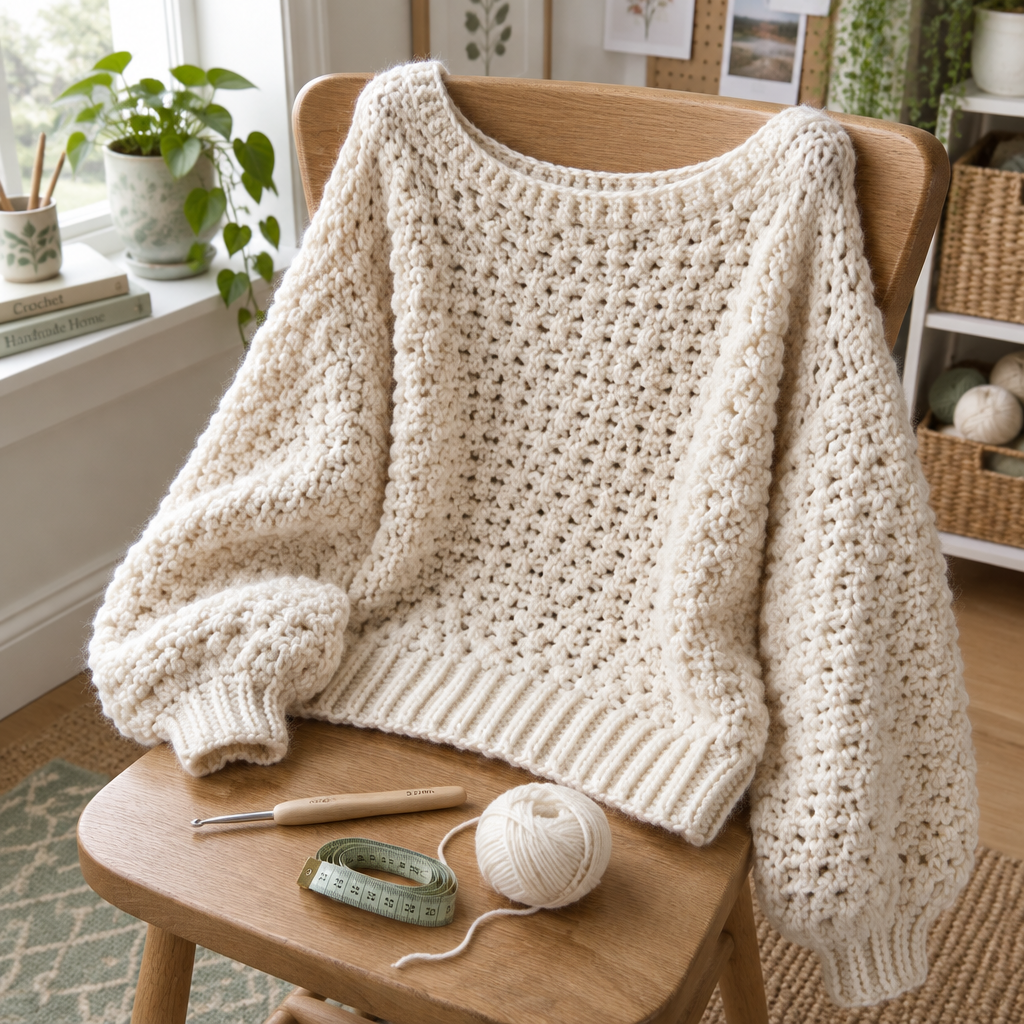
These 11 crochet sweater ideas include simple pullovers, striped and color-blocked tops, openwork designs, textured sweaters, and cable-front sweater dresses. Choose by the fit and neckline you want, then check the original pattern for its price, format, skill level, sizing, yarn, and gauge. The descriptions here do not confirm those pattern-specific details.
Key Takeaways
- The collection covers everyday pullovers, lacy and mesh styles, striped or color-blocked tops, oversized raglans, and two sweater dresses.
- Openwork, cables, trinity stitch, and ribbed edges change a sweater’s texture and appearance, and unfamiliar stitch work may call for extra practice.
- Your preferred wardrobe fit, neckline, sleeve shape, and intended season can help narrow down which silhouette to make.
- Before starting, check the original pattern for its price, format, skill rating, yarn guidance, size range, finished measurements, gauge, and construction.
- Match the project to techniques you already know, or plan time to learn new stitches and check the instructions as you work.
11 Easy and Free Crochet Sweater Patterns to Explore
These 11 designs offer plenty of variety: a simple gray pullover, a boxy cropped sweater, openwork styles, tactile textures, and longer dress silhouettes. Use the collection as a visual shortlist, then visit each original pattern listing to decide whether its instructions and construction suit you.
The research descriptions do not provide original links or confirm whether each design has a free pattern, paid pattern, written instructions, video, or downloadable PDF. They also do not state skill levels. Check the source listing for each individual design before you start, and do not assume a pattern is free just because you found it in a collection of free-pattern ideas.
The descriptions do identify helpful design features. For example, one sweater uses double crochet and slip stitches, while another uses treble crochet in an oversized raglan shape. Other designs highlight chevrons, diamond mesh, trinity stitch, cables, or ribbed edges. Those details can help you spot a project that matches your interests, but the original instructions will tell you how the designer expects you to work each stitch.
A useful first pass is to sort the options by garment shape: pullover, cropped top, oversized layer, or sweater dress. Then compare necklines and sleeves. If you want a low-key wardrobe piece, the gray velvet boat-neck pullover may appeal; for a bolder statement, consider the yellow mesh sweater or a color-blocked design. Treat “easy” as a personal fit, not a guaranteed skill label: only the original pattern can confirm its stated difficulty.
Lacy Sweaters with Openwork Details
Three designs use open spaces to create very different effects. The seamless V-neck pullover combines chevron openwork with long sleeves, giving the fabric a directional pattern across the sweater. Its V-neck offers a more open neckline, while the seamless construction may interest crocheters who want to explore a garment assembled with fewer seam joins. Check the original pattern for how it handles shaping and finishing.
The deep V-back sweater takes a more detailed approach. It features scalloped edges, long sleeves, and intricate lace cuffs, and its description identifies it as an intermediate-level design. The openwork is concentrated in a more decorative garment, so it may suit someone looking for a dressier silhouette and comfortable working with lace details. The deep back also makes the neckline a defining part of the design.
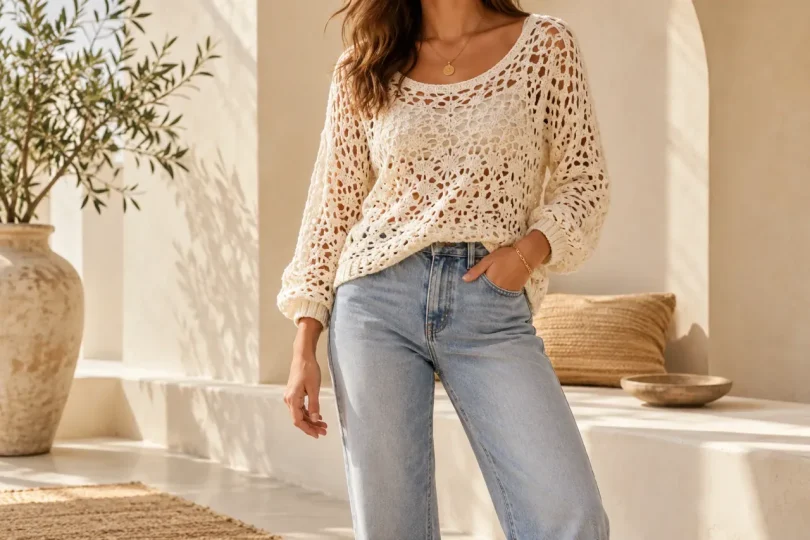
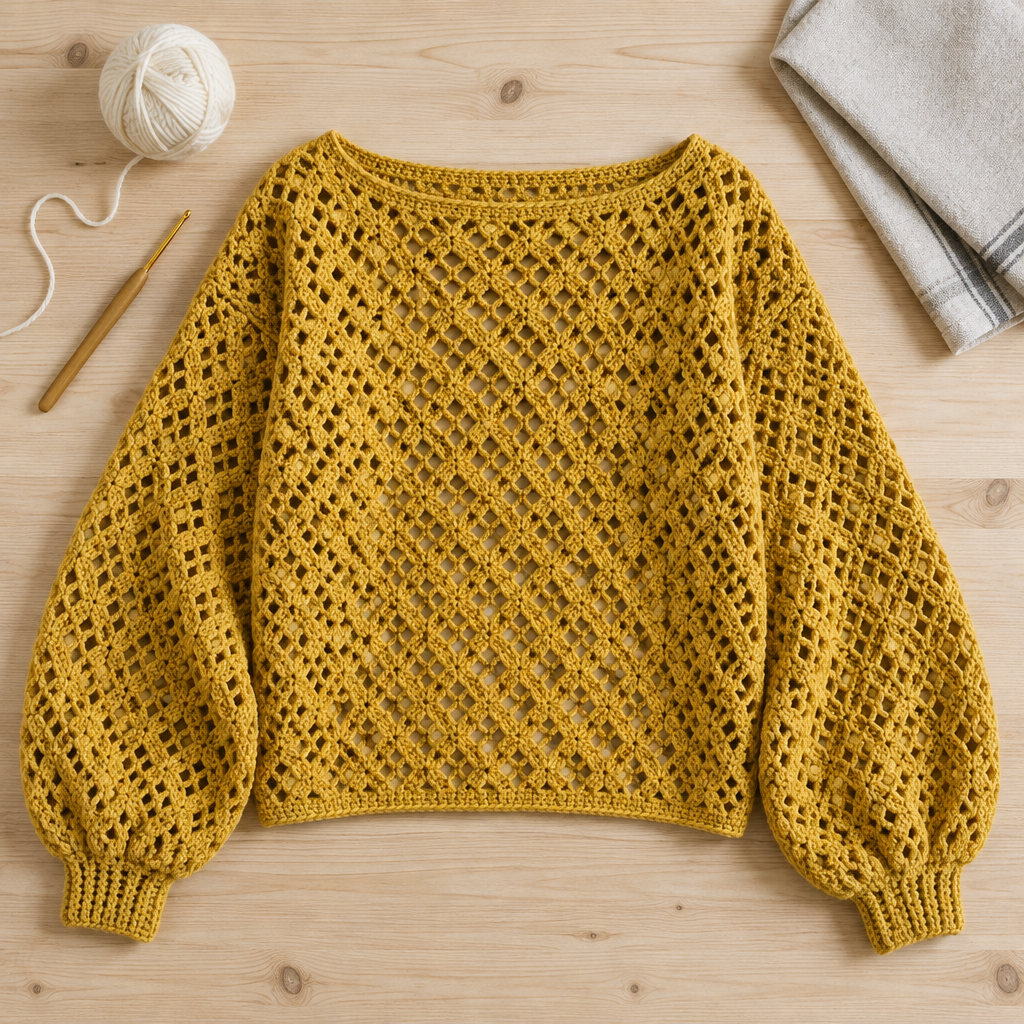
The bright yellow sweater uses an openwork diamond-mesh stitch, a boat neckline, and long balloon sleeves. Its mesh gives it a more graphic look than the chevrons or lace cuffs, while the vivid color makes the stitch pattern stand out. It may suit makers who want a statement layer and are comfortable following mesh instructions. For all three, check the source pattern’s stitch definitions, shaping directions, and guidance on wearing or layering an open fabric.
Textured Crochet Sweaters for a Cozy Feel
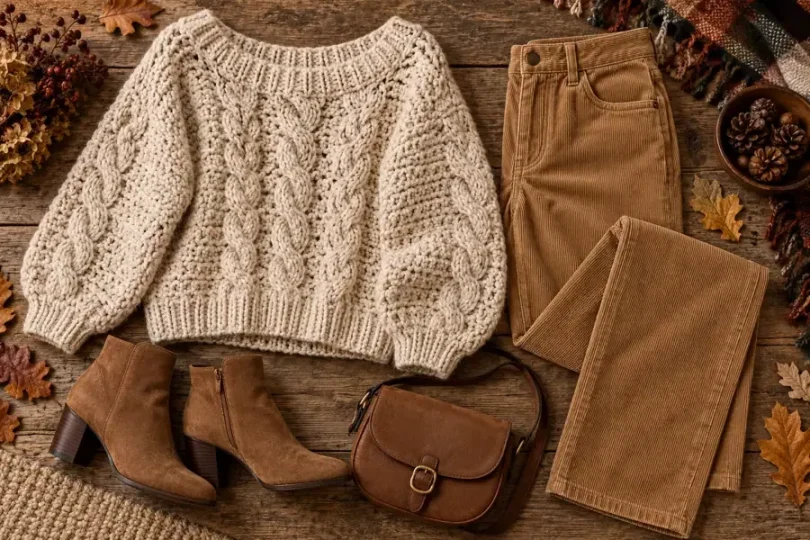
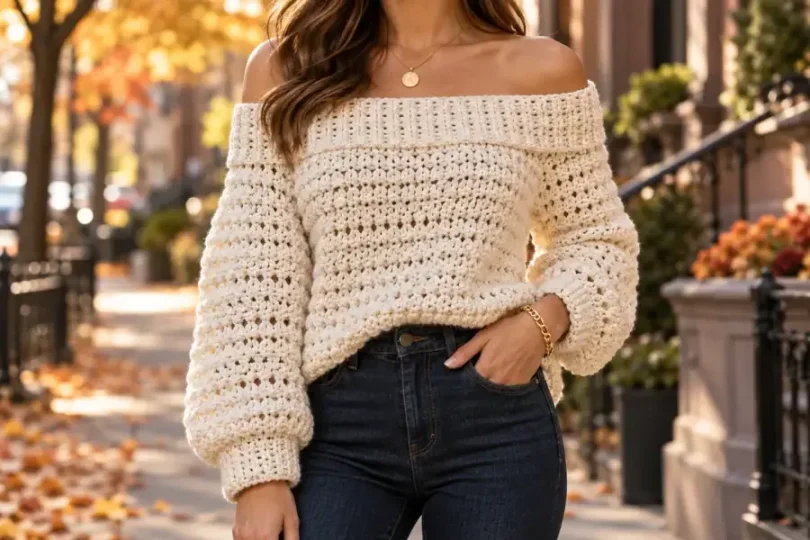
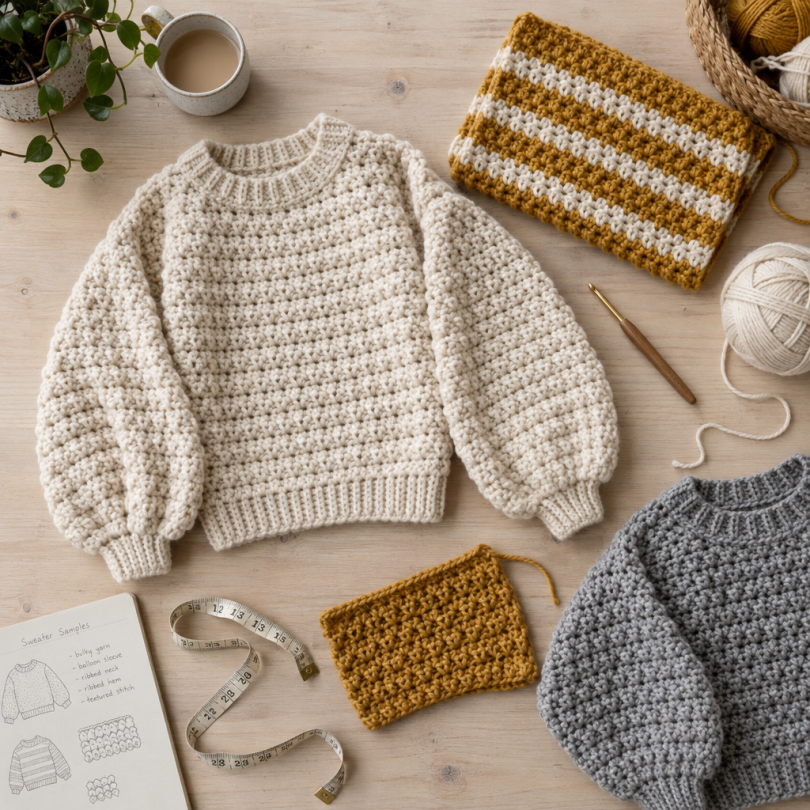
The chunky cream sweater pairs a wide neckline with balloon sleeves and a ribbed bottom hem. Its chunky texture gives the design a substantial, relaxed appearance, while the sleeves add volume and the ribbing provides a defined finish at the lower edge. If you like a cozy-looking silhouette, this is a strong candidate to investigate. The description does not name a yarn weight or fiber, so consult the original pattern rather than inferring a substitute from the photos or style notes.
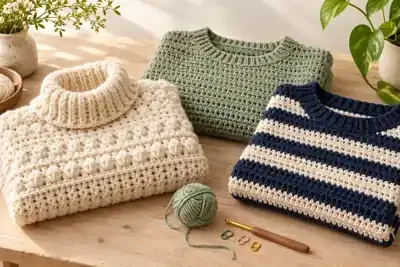
The blue striped sweater uses Aran weight yarn and trinity stitch, with a cozy cowl neckline and size-inclusive sizing described in the source notes. Its stitch texture and stripes work together to create a more detailed surface than a plain pullover. The cowl gives the neckline a soft, bundled look, making the design feel distinct from a wide-neck or boat-neck sweater. Check the original listing for the exact size range and yardage.
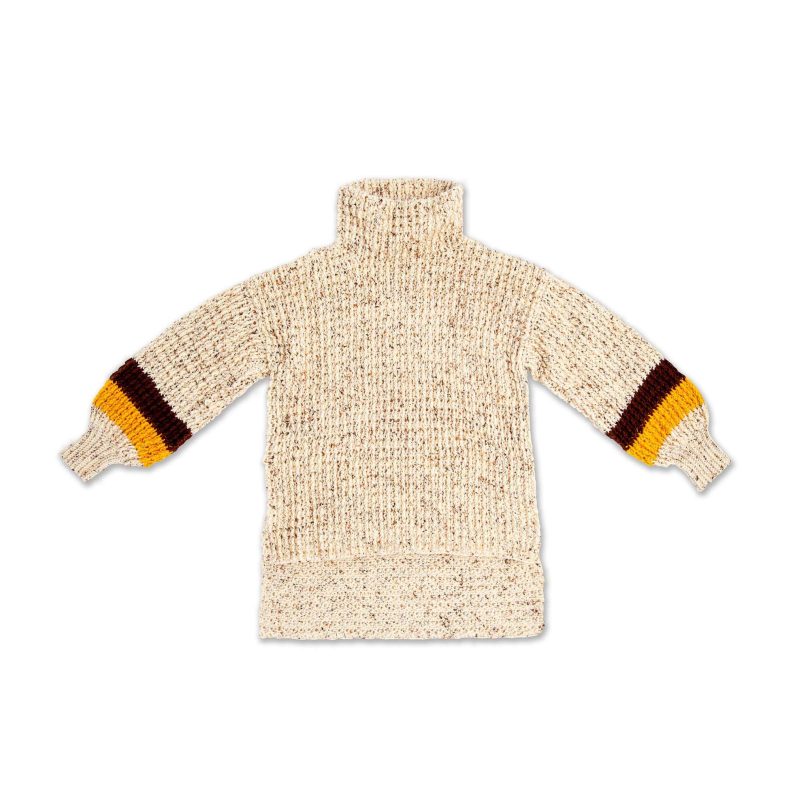
By contrast, the soft gray velvet pullover has a simple everyday design, boat neckline, and cozy texture. Velvet yarn can give crochet fabric a plush appearance, but its handling and care depend on the specific yarn and pattern instructions. This sweater may be a good direction if you prefer a quieter silhouette over prominent color or stitch motifs. Compare the pattern’s yarn suggestions, gauge, and finished measurements before deciding which textured option best fits your wardrobe.
Striped and Color-Blocked Sweater Ideas
The mustard-and-cream sweater combines stripes with double crochet and slip stitches. Its wide neckline and long sleeves keep the silhouette familiar, while the two-color treatment adds visual interest. If you enjoy working with more than one color but want a design described through commonly encountered stitches, this may be worth comparing with the other options. Check the instructions for how the pattern manages color changes and ends.
The modern boxy cropped sweater makes color placement a stronger feature. It has graphic color blocking, a high turtleneck, and striped ribbed cuffs. Its cropped, boxy shape differs from a longer everyday pullover, and the high neck gives it a more structured look. The contrasting blocks can create a bold effect, so consider whether the colors will work with the clothes you plan to wear it over.
The oversized top-down raglan offers a different kind of flexibility: the design can be striped or made in a solid color, and it uses treble crochet. Its relaxed shape may suit someone seeking a roomy layer, while the top-down raglan construction affects how the garment takes shape. Stripes emphasize the sweater’s color arrangement; a solid version draws more attention to texture and silhouette. Read the source pattern for shaping, color changes, and fit instructions before choosing your version.
Crochet Sweater Dresses with Cable Details
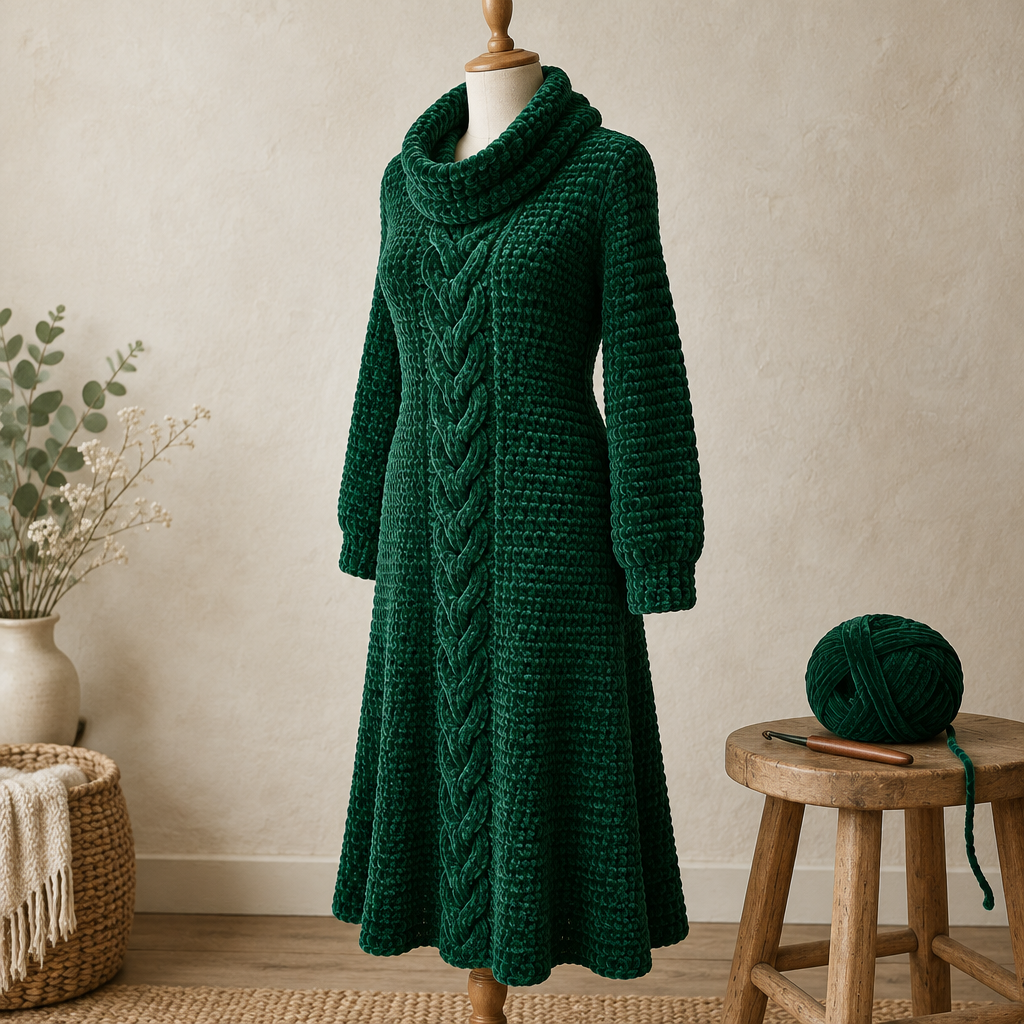
The gray and emerald sweater dresses share a defining design: a prominent front cable and a loose cowl neck, worked in velvet. The gray version offers a quieter color choice, while emerald brings a stronger, more saturated look. Both descriptions note that you can customize the length, making these options different from the shorter pullover and cropped styles in the collection.
Length changes can affect how much yarn you need and how the finished garment drapes, so do not make an adjustment based on appearance alone. Look for the original pattern’s instructions on length, shaping, and any measurements needed to keep the dress comfortable. Also check its size range, recommended yarn and amount, gauge, and finishing requirements. The descriptions do not provide those specifics, so the source listing is essential before you commit to materials.
A prominent cable can make the front of the dress a focal point, while the loose cowl creates a soft neckline. Velvet yarn adds another consideration: its texture may affect stitch visibility, and care instructions vary by yarn. Review the pattern and the yarn label together. If you are choosing between the two color options, compare them with your wardrobe and the shade of yarn available in the fiber and weight the pattern recommends.
How to Choose the Right Sweater Pattern
Start with the garment you would actually wear. A pullover can be a useful everyday layer, a cropped sweater may work with high-waisted outfits, and an oversized raglan offers a roomier shape. A sweater dress has a longer silhouette and may require different planning for length and yarn. Let the intended wardrobe role guide your shortlist rather than choosing a design only because its photo catches your eye.
Next, consider neckline and sleeve shape. The collection includes V-necks, a boat neck, a wide neckline, a cowl neck, and a high turtleneck. Sleeves range from long and fitted-looking to balloon shapes, while cuffs and hems may add ribbing or lace details. These features affect both the finished look and the techniques you will need to follow.
Then compare project complexity with your experience. A description identifies the deep V-back design as intermediate, but the other skill ratings are not supplied. Check each original pattern’s stated level and scan its stitch list. If you have not worked cables, mesh, treble crochet, or raglan shaping, decide whether you want to learn that technique on this project or choose a more familiar stitch structure first.
Finally, check the source listing for price and format. Confirm whether it offers free instructions, a paid pattern, a written pattern, video guidance, or a PDF before you gather supplies. A good match is one whose style you like and whose instructions, fit, and techniques suit the time and attention you can give it.
Yarn, Fit, and Pattern Details to Check
Read the original pattern’s yarn weight and fiber suggestions before buying. The collection descriptions mention Aran weight yarn for the blue striped trinity-stitch sweater and velvet yarn for several gray and emerald designs, but they do not supply complete yarn specifications. Weight and fiber influence how a garment hangs and feels, so a substitute can change the result even when it seems similar at first glance.
Check the size range and finished measurements, not just the size label you usually buy. A pattern may provide garment measurements that help you compare its intended fit with a sweater you already like. Look for notes about ease, body width, length, sleeve length, and neckline fit when the source includes them. For the sweater dresses, pay particular attention to length instructions and how any customization changes the project.
Gauge matters because it connects your stitch and row count to the pattern’s intended dimensions. Make and measure a gauge swatch using the recommended hook and yarn, following the pattern’s instructions. If your gauge differs, changing hook size or yarn may affect the fabric, so test adjustments before beginning the garment.
Also review construction: top-down raglan, seamless shaping, separate pieces, seams, and finishing steps each call for different work. The source pattern should explain the assembly and any edging or ribbing. Yarn substitutions and fit outcomes depend on those pattern-specific details; do not assume that matching a yarn’s general weight alone will preserve the original drape or size.
Crochet Techniques Used in These Sweater Designs
The collection includes familiar and more distinctive stitch approaches. Double crochet and slip stitches appear in the mustard-and-cream striped design, while treble crochet features in the oversized raglan. These stitches create different fabric heights and textures, so follow the pattern’s stitch instructions and turning directions rather than relying on the stitch name alone.
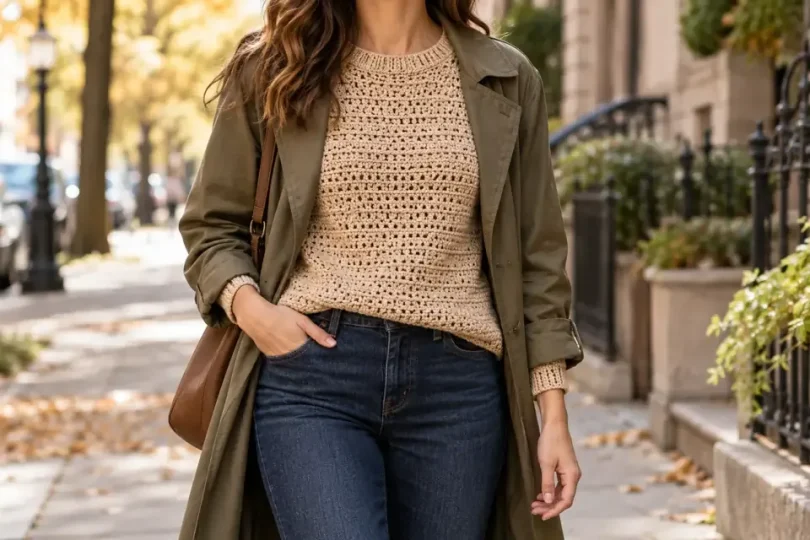
Openwork appears in the chevron pullover and diamond-mesh sweater, while the deep V-back design adds lace cuffs. Open spaces and lace details create a lighter visual texture, but they also make stitch placement and repeats important. If the source includes a chart or written repeat, review it before starting and mark the instructions as needed.
Cables give the sweater dresses their prominent front detail. The descriptions do not explain the cable method, so check the original pattern for any special stitch instructions or tools. The chunky cream sweater has ribbing at the bottom hem, and the color-blocked cropped sweater features striped ribbed cuffs. Ribbed edges can add a tidy finish, but the source will clarify how to work them and attach them.
The oversized raglan uses top-down construction, which describes how the garment develops from the upper portion toward the body and sleeves. Construction terms do not replace the pattern’s shaping directions. If a stitch, chart, or shaping method is new to you, consult the original instructions and practice a small sample before working it into the sweater.
Planning a Wearable Sweater Project
Give the project a wardrobe role first: a cozy layer for cooler days, a statement top, or a longer sweater dress. That choice can help you decide among a simple gray pullover, a textured cowl-neck style, a cropped color-blocked design, or an openwork sweater. Think about what you would layer it over and which neckline or sleeve shape feels comfortable to wear.
Choose colors with both the pattern and your existing clothes in mind. Mustard and cream offer a two-color contrast; blue stripes and emerald velvet make color part of the design’s identity. A solid version of the raglan shifts attention toward its shape and stitch texture. Check the pattern for color-change instructions before buying multiple shades.
Before crocheting, review construction, finishing, yarn amounts, and gauge. Gather the recommended supplies, understand whether the garment needs seams or edging, and note any points where the pattern directs you to check fit. Set aside time to try the sweater on as instructed rather than waiting until every piece is complete. A few planned fit checks can help you catch length or ease concerns while you can still adjust the work.
Compare the 11 sweater designs
| Design | Distinctive details | Pattern details to verify |
|---|---|---|
| Seamless V-neck pullover | Chevron openwork, long sleeves | Price, format, skill level, shaping and sizing |
| Boxy cropped sweater | Graphic color blocking, high turtleneck, striped ribbed cuffs | Color changes, fit, price and instructions |
| Chunky cream sweater | Wide neckline, balloon sleeves, ribbed hem | Yarn weight, fiber, sizing and gauge |
| Gray velvet sweater dress | Front cable, loose cowl, customizable length | Yarn amount, length guidance, gauge and care |
| Mustard-and-cream sweater | Stripes, double crochet, slip stitches, wide neckline | Color-change directions, fit and pattern format |
| Deep V-back sweater | Scalloped edges, lace cuffs, long sleeves; described as intermediate | Instructions, sizing, construction and access terms |
| Emerald velvet sweater dress | Front cable, loose cowl, customizable length | Yarn amount, length guidance, gauge and care |
| Oversized raglan | Top-down, treble crochet; striped or solid | Shaping, fit, color instructions and skill rating |
| Blue striped cowl-neck sweater | Aran weight yarn, trinity stitch, size-inclusive | Exact size range, yarn quantity, gauge and price |
| Gray velvet pullover | Everyday silhouette, boat neckline, cozy texture | Fiber, size range, gauge and care |
| Yellow diamond-mesh sweater | Boat neckline, long balloon sleeves, openwork | Mesh instructions, yarn guidance, sizing and format |
The table compares design features from the available descriptions, not verified pattern listings. Confirm each pattern’s access terms and instructions with its original source before choosing supplies or treating it as a free project.
Common Mistakes
- Starting before checking gauge and finished measurements: A swatch that does not match the pattern gauge can change the sweater’s width or length. Measure your gauge and compare the intended garment measurements before making the full piece.
- Substituting yarn without considering weight and drape: A yarn that looks similar in color may produce a stiffer, heavier, or looser fabric. Compare the substitute’s weight and fiber with the pattern guidance, then swatch to check how the fabric behaves.
- Choosing a size from clothing labels instead of pattern measurements: A familiar retail size does not guarantee the same fit in a crochet garment. Use the pattern’s finished measurements and fit notes to select a size.
- Skipping fit checks during sweater construction: Waiting until the end to try on a garment can leave little room to correct body or sleeve length. Follow the pattern’s check-in points and compare the work with its measurements as you go.
Frequently Asked Questions
How much yarn should I buy for a crochet sweater?
Use the yarn quantity listed in the specific pattern for your chosen size, and check whether it states yardage, skein count, or both. The amount can vary with garment size, length, yarn weight, stitch pattern, and any modifications. If you plan to lengthen a sweater dress or change the design, ask the pattern designer or use the pattern’s guidance rather than relying on a general estimate.
Can I wash a handmade crochet sweater in a washing machine?
It depends on the fiber and yarn label, so do not assume every handmade sweater can go in a machine. Check the care instructions for the yarn and the pattern, and follow the gentlest method they allow. If the care guidance is unclear, test a small swatch first or choose a cautious hand-washing approach.
How do I keep crochet sweater seams from looking bulky?
Follow the pattern’s recommended joining method, since different seams suit different garment constructions. Keep your tension even and avoid pulling the joining yarn so tightly that it bunches the fabric. If the pattern allows a choice of seams, test the options on small swatches before assembling the sweater.
Can I make a crochet sweater shorter or longer than the pattern?
Many designs can be adjusted, but the pattern’s stitch repeat, shaping, and yarn requirements affect how to do it. Check where the pattern places increases, decreases, stripes, or cables before adding or removing rows. For a sweater dress, confirm how a length change affects the fit and required yarn before you begin.
What should I do if my sweater gauge is slightly different from the pattern?
Measure your swatch carefully and compare both stitch and row gauge with the pattern’s target. Try a different hook size and make another swatch, keeping the recommended yarn if possible. If you proceed with a mismatch, the finished measurements may change, so calculate the likely impact before making the garment.
Conclusion
A sweater’s silhouette and stitch pattern shape both the finished garment and the experience of making it. Choose a design you can picture wearing, then let the original pattern’s instructions—not the image alone—confirm whether its fit, yarn, construction, and difficulty work for you.
If you are still deciding, save a few favorites and compare their necklines, textures, and construction notes before buying yarn. Exploring more curated crochet ideas can make it easier to find a project that feels right for your wardrobe and your hook.