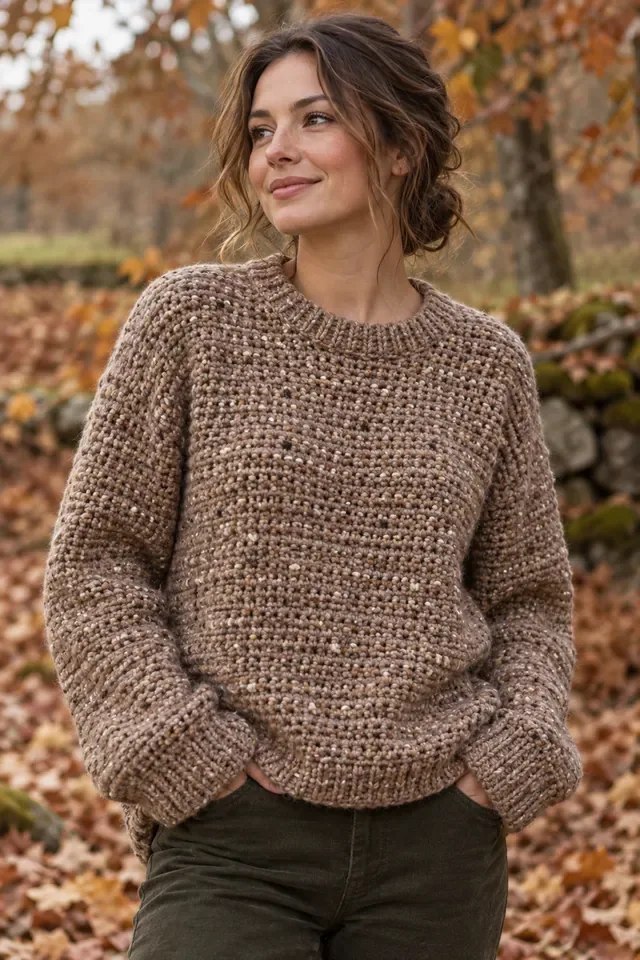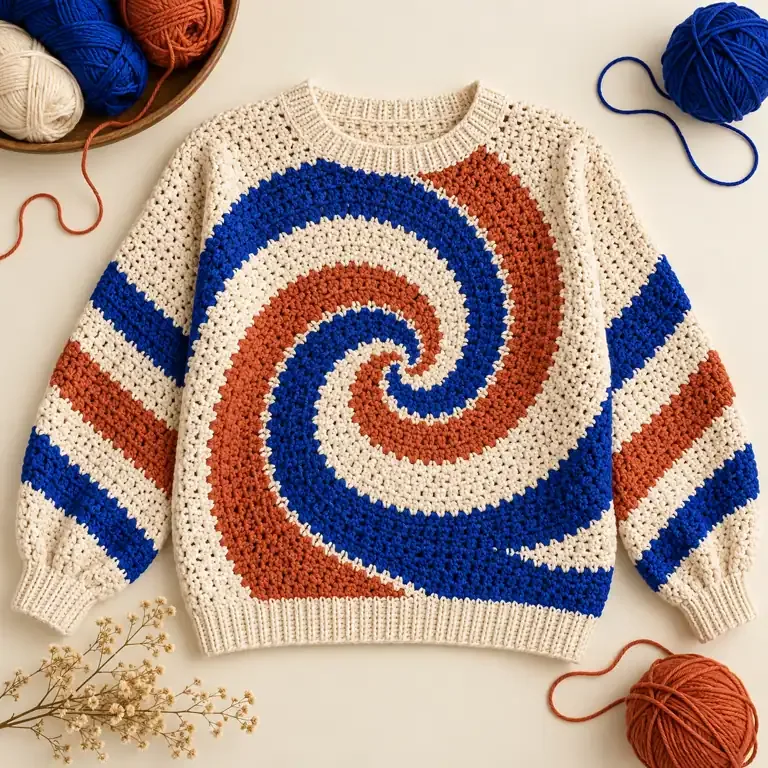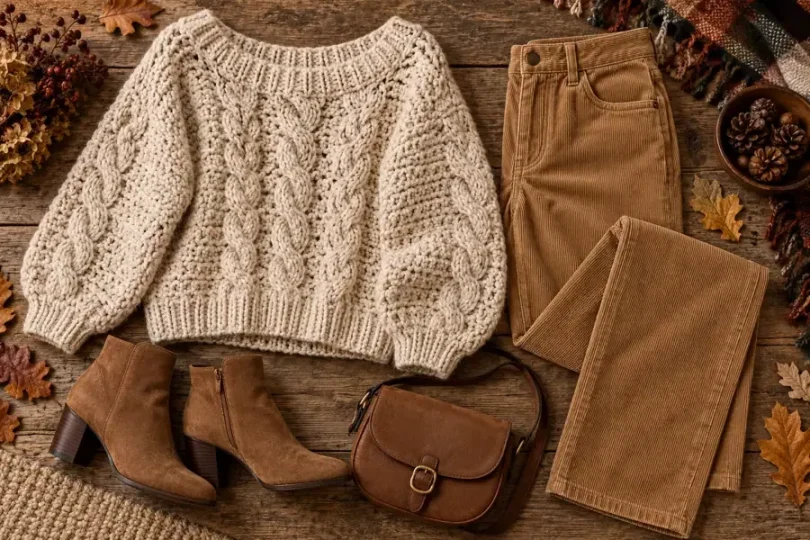
Argyle crochet brings diamond motifs, confident color combinations, and a classic knitwear feel to handmade sweaters. The look can be created in several different ways: charted colorwork, joined motifs, open lace, or planned pooling with variegated yarn. Those techniques can look related in a finished outfit, but they behave differently while you crochet.
This curated guide gathers 18 sweater, vest, cardigan, and top ideas with a usable pattern, written tutorial, or video resource for each. Original editorial illustrations help you imagine each style; they are not the designers’ finished-project photos. Always use the linked designer instructions for exact stitch counts, measurements, gauge, and sizing.
How to choose the right argyle-style project
For a first colorwork garment, a vest uses less yarn and has simpler shaping than a full sweater. If you enjoy charts and color changes, look for intarsia or tapestry-style instructions. If you prefer making pieces separately, try a modular motif project. Planned pooling is its own technique: the color repeat in a variegated yarn creates the pattern, so a swatch is essential. Openwork diamonds are lighter and often drape more than dense colorwork.
Before buying yarn, compare the pattern’s finished measurements with a garment you already like. Make a gauge swatch in the stitch pattern, block it as the designer recommends, and record the hook size and yarn. This is especially important for garments with diamonds: even small gauge changes can shift motif proportions or make the finished piece fit differently.
18 crochet argyle sweater and diamond-pattern ideas
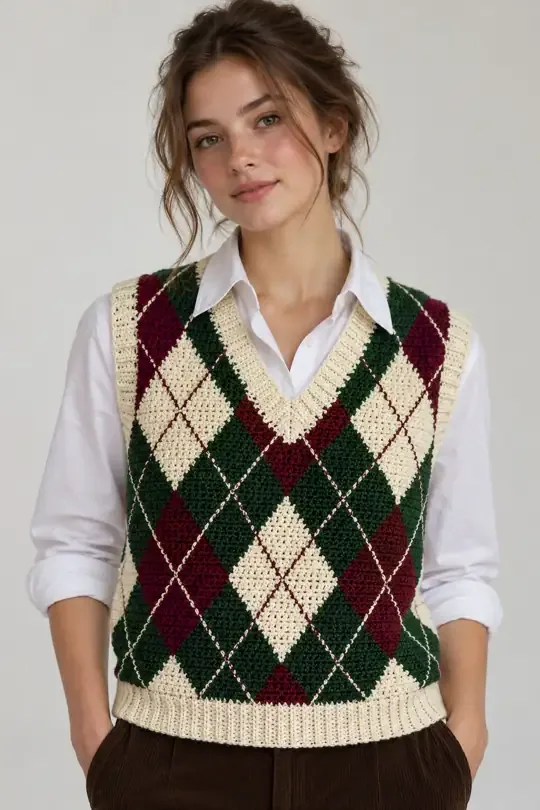
1. Classic V-Neck Argyle Crochet Sweater Vest
Traditional colorwork vest. A V-neck vest is the easiest way to wear argyle without committing to a full sweater. This concept pairs a deep green base with cream diamonds and fine burgundy and gold diagonals, so the diamond motif stays crisp over a simple shirt. It is a particularly practical choice for layering through changing temperatures.
The linked video is a visual crochet-along. Before beginning, check its yarn weight, hook size and gauge, then compare the finished chest measurement with a vest you already like. If you are adapting the color palette, keep one light shade and one dark shade so the diamonds remain legible.
2. Relaxed Oversized Diamond Vest
Oversized color-blocked vest. An oversized vest gives the diamond layout room to breathe and works well over shirts, dresses and lightweight turtlenecks. The blue-and-gold palette shown here feels bright and collegiate, while the loose shape is forgiving for layering. A neat ribbed or single-crochet edging can help balance a roomy body.
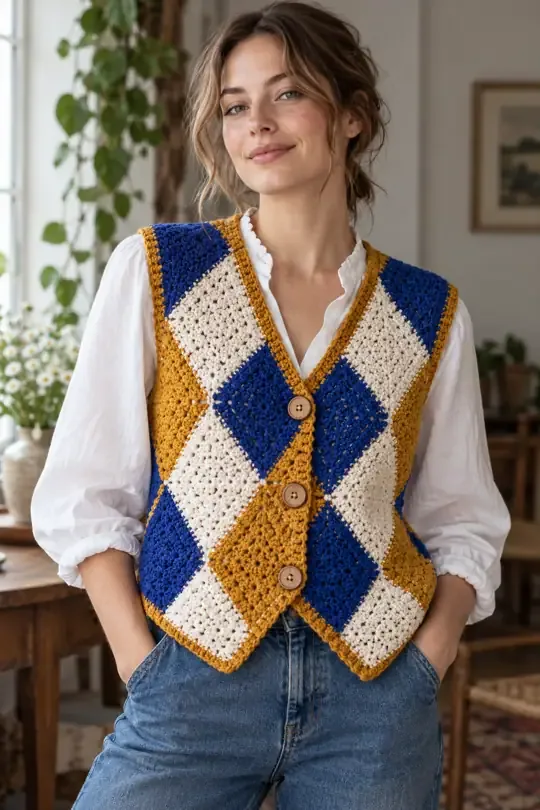
This is a video-led project, so use the creator’s own stitch counts and sizing rather than treating the illustration as a finished pattern sample. Measure the intended layering garment first: a vest worn over a shirt needs more ease than a close-fitting tank. A swatch helps you estimate width before committing to the body panels.
3. Patchwork Argyle-Inspired Crochet Vest
Modular diamond and patchwork construction. Patchwork construction turns colorwork into a series of manageable pieces. The rich burgundy-and-cream styling shown here demonstrates how large diamond blocks can create an argyle impression without carrying several yarn colors across every row. It can be a good choice if you prefer joining motifs to managing long floats.
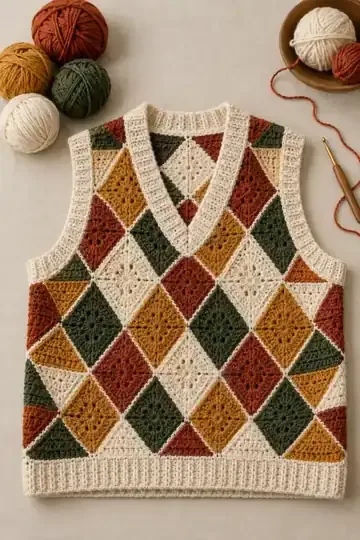
The tutorial linked below demonstrates the maker’s approach. Check whether the pieces are joined as squares, diamonds or larger panels, and note the order of assembly before you crochet all the motifs. Block pieces to consistent dimensions, arrange the color sequence on a flat surface, and seam with an even, flexible join.
4. Modular Diamond Crochet Vest
Motif-based geometric vest. A motif-based vest is built from repeated diamond units, so it is easier to change the overall length or add color than with a single large chart. The illustrated green sweater is a styling interpretation; the useful idea is the repeatable diamond geometry and the way contrast colors frame each unit.
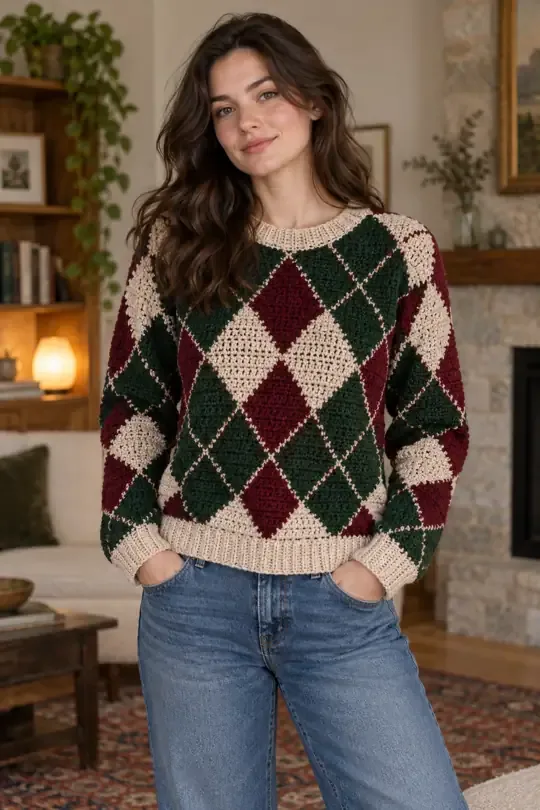
The linked tutorial walks through the construction. Confirm the motif count and joining method before making the full set: even a small change in motif size can affect armhole depth and shoulder width. Make one complete motif, block it, and use its measured dimensions to plan the front and back panels.
5. Full-Sleeve Diamond Argyle Pullover
Long-sleeve diamond pullover. For a warmer garment, a long-sleeve pullover brings the argyle pattern across a larger canvas. Keep the neckline and cuffs simple so the colorwork remains the focal point. The flat-lay illustration suggests one way to think about the garment’s motif layout; the video provides the maker’s actual approach.
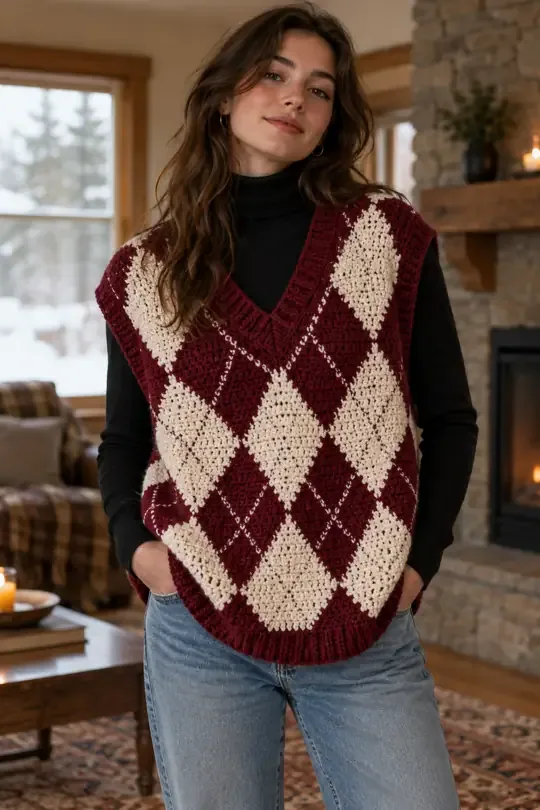
Before starting sleeves, compare the pattern’s body and sleeve measurements with a sweater that fits you well. Work both sleeves to the same length and check the motif repeat at the underarm, where color changes can otherwise look abrupt. The resource is a video tutorial, so pause to record row counts and color changes as you go.
6. Planned-Pooling Argyle Cardigan Jacket
Planned pooling with variegated yarn. Planned pooling uses the repeating color sequence in a variegated yarn to form a deliberate pattern. It can create an argyle-like effect, but the result depends on the yarn’s color lengths and your stitch tension; it is not the same as crocheting a charted diamond. This cardigan-jacket idea is especially useful for makers who enjoy swatching and adjusting.
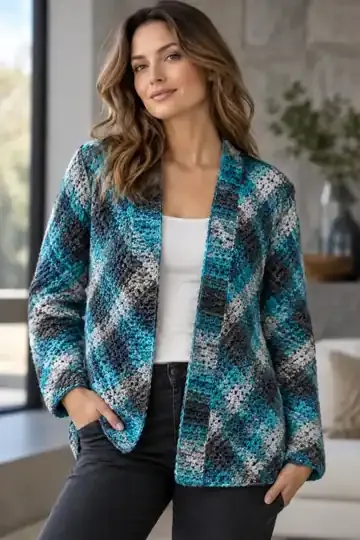
The Knotty Lace provides free written instructions with a video, plus an optional ad-free PDF. Its page describes a rectangle-based construction and a broad size range. Follow its pooling swatch guidance exactly: changing hook size or stitch count changes where the colors land, so do not substitute yarn until you have tested a repeat.
Open the free pattern and video
7. Winter Planned-Pooling Cardigan
Long, cozy pooling cardigan. A longer cardigan creates a cozy outer layer and gives a variegated yarn more space to form repeated color bands. The navy-and-cream styling here reads like a winter coatigan, but the defining technique is planned pooling rather than traditional intarsia argyle. It suits crocheters who enjoy controlling color placement through a gauge swatch.
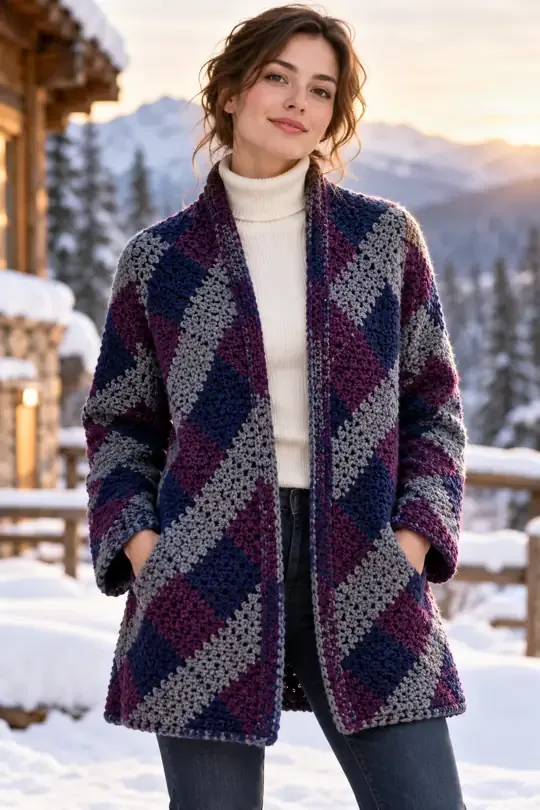
The linked video demonstrates one maker’s project. Planned pooling is sensitive to yarn and tension, so begin with a sample that uses the exact yarn you intend to crochet. Track the stitch count per color sequence, and keep notes if you need to remake a panel or adjust the length.
8. Off-Shoulder Diamond Sweater Dress
Sweater dress with an off-shoulder neckline. A sweater dress turns the diamond motif into a statement piece. An off-shoulder neckline creates a relaxed occasion look, while a comfortable body fit makes the garment easier to wear over tights or leggings. The plum-and-cream illustration is an original styling concept, not the designer’s pattern photograph.
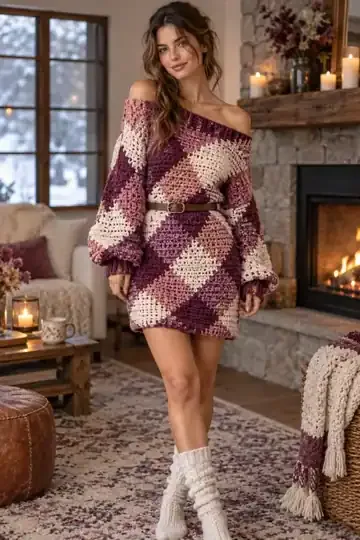
The linked page offers a free pattern and construction notes. Read the sizing and finished garment measurements carefully before choosing a size, since a dress needs enough room to sit and move comfortably. Check the neckline finish and length options before starting; small changes to either can affect how the dress hangs.
9. Two-Tone Button-Front Diamond Cardigan
Button-front cardigan with geometric diamonds. A button-front cardigan is easy to style open or closed, and a two-color diamond layout keeps the construction visually clean. Cream and navy give a crisp contrast, but the same design idea works in softer shades such as sage and oatmeal. A consistent button band is important: it helps the cardigan hang straight and prevents the front edges from stretching.
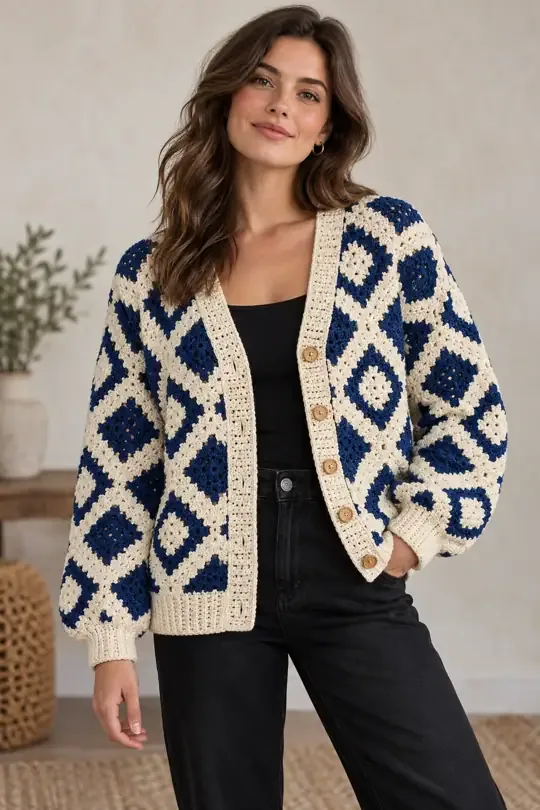
The linked video is the making resource. Check how the creator forms the button band and buttonholes, and count their spacing before attaching buttons. If you want a longer or wider fit, adjust the body before making the sleeves, then verify that the fronts still meet comfortably without pulling.
10. Granny-Diamond V-Neck Pullover
Granny-style diamond pullover. Granny-style diamond motifs combine familiar clusters with a graphic sweater silhouette. The burgundy, cream and green palette gives the pullover a heritage feel, while a V-neck keeps it light enough to layer over a collared shirt. This is diamond-inspired crochet rather than necessarily a traditional charted argyle fabric.
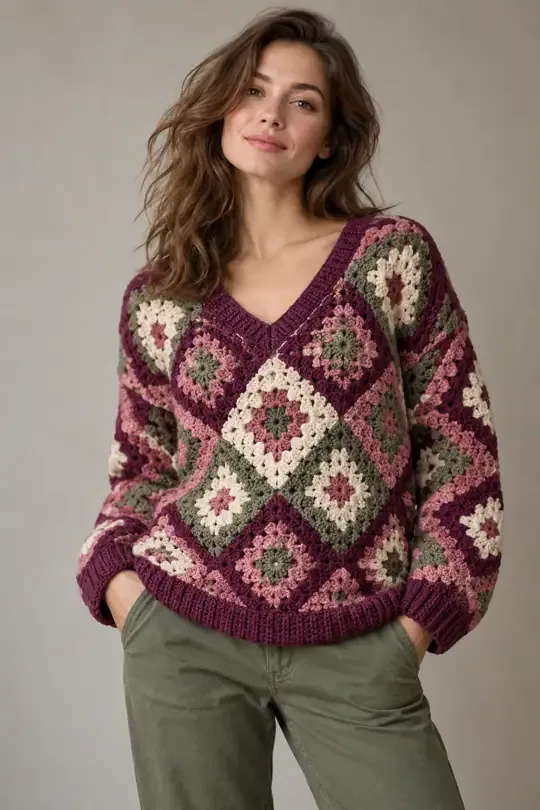
The linked Shades of Diamonds pattern is a paid PDF. Review its listed sizes, yarn requirements and construction notes before purchase, and compare the schematic with a garment you own. The pattern is the source for exact counts and measurements; the illustration on this page is an original visual concept.
11. Filet-Diamond Long Cardigan
Openwork filet diamond duster. A filet-style diamond cardigan uses open and filled spaces to create a lighter geometric fabric. The long brown duster shown here can work over a simple outfit without feeling as heavy as a dense winter coat. Choose a yarn with clear stitch definition so the open diamonds remain visible after the garment is worn.
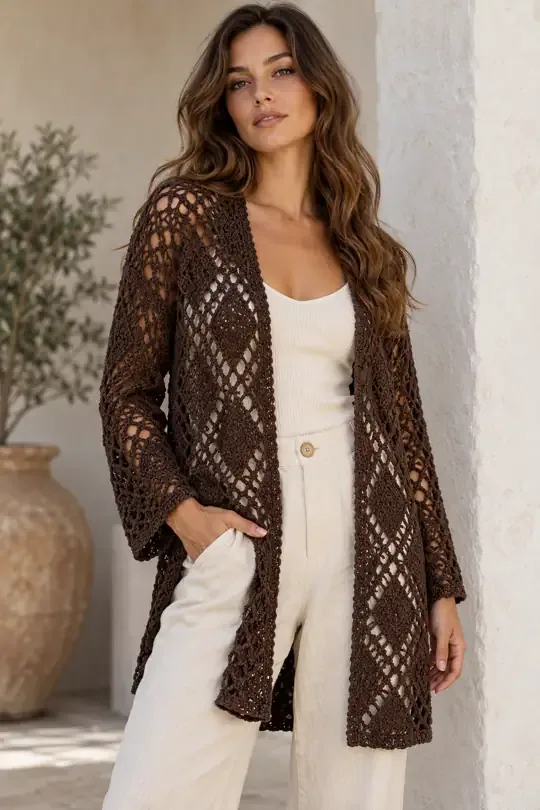
Briana K Designs shares a written pattern and video on the linked page. Follow the designer’s gauge and length measurements; openwork can grow with wear, so blocking and yarn choice matter. If you prefer a shorter layer, use the pattern’s shaping guidance rather than simply stopping at an arbitrary row.
12. One-Piece Diamond-Eyelet Cardigan
Seam-light eyelet cardigan. A diamond-eyelet cardigan offers a delicate texture while keeping the silhouette simple. The sage color emphasizes the small openings and makes this a versatile layer for spring and early autumn. A one-piece or seam-light construction can reduce finishing, though it still calls for careful attention at the neckline and front edges.
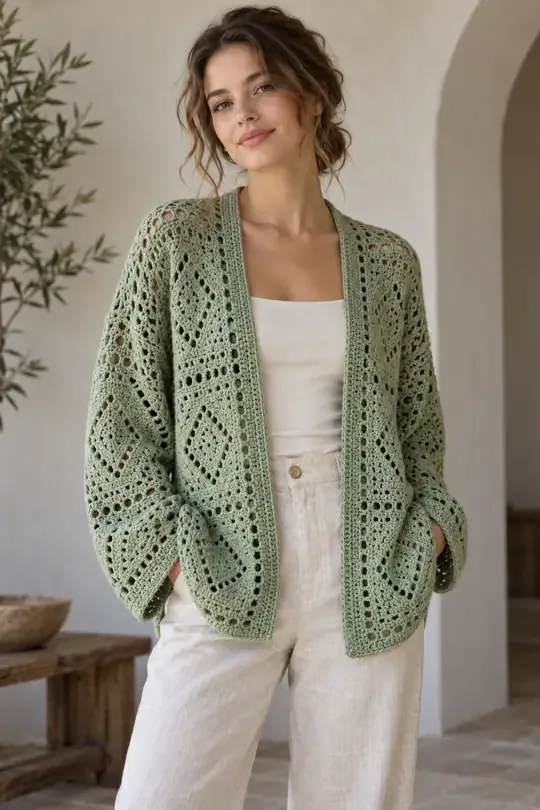
Yay For Yarn provides a free written diamond cardigan pattern. Read its notes on gauge, sizing and assembly before beginning, and check whether the construction is worked in pieces or as a continuous garment. Use the pattern’s own measurements to choose a size; decorative buttons and edging can be customized after the fit is established.
13. Made-to-Measure Argyle Sweater Vest
Custom-fit colorwork vest. A made-to-measure vest lets you tailor the chest, armholes and length to your body instead of relying only on standard sizing. The teal, rust and cream palette is a fresh alternative to traditional school colors. This approach is especially useful if your measurements fall between sizes or you want a specific amount of layering ease.
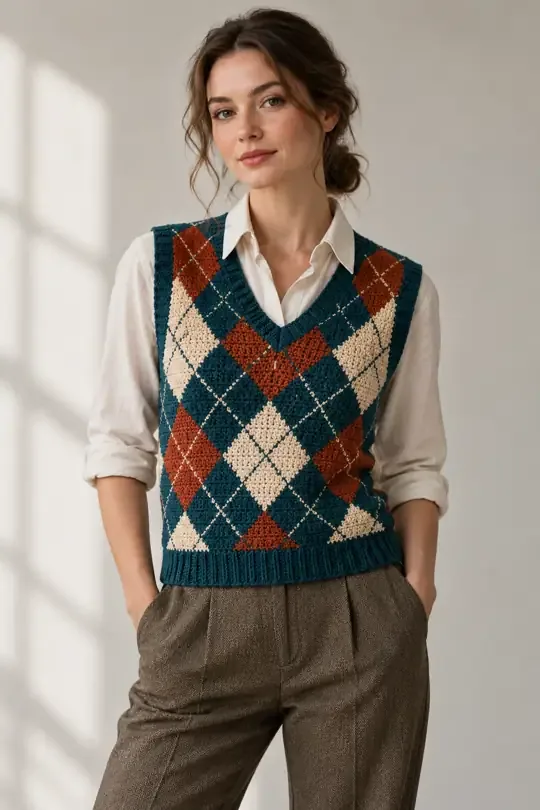
Lion Brand’s Argyle Vest page links to the pattern and its sizing information. Take your measurements over the clothes you plan to wear underneath, then compare them with the finished garment dimensions and gauge. Do not skip the swatch: a small gauge difference can add or remove noticeable width across a vest.
14. Two-Tone Jacquard Diamond Sweater
Charted tapestry-style diamond sweater. A two-tone jacquard or tapestry-style sweater builds diamonds into the fabric using contrasting yarns. A simple cream body with a dark geometric band feels polished and lets the colorwork take center stage. This technique is different from joining separate granny diamonds: the motif is integrated into the crocheted rows.
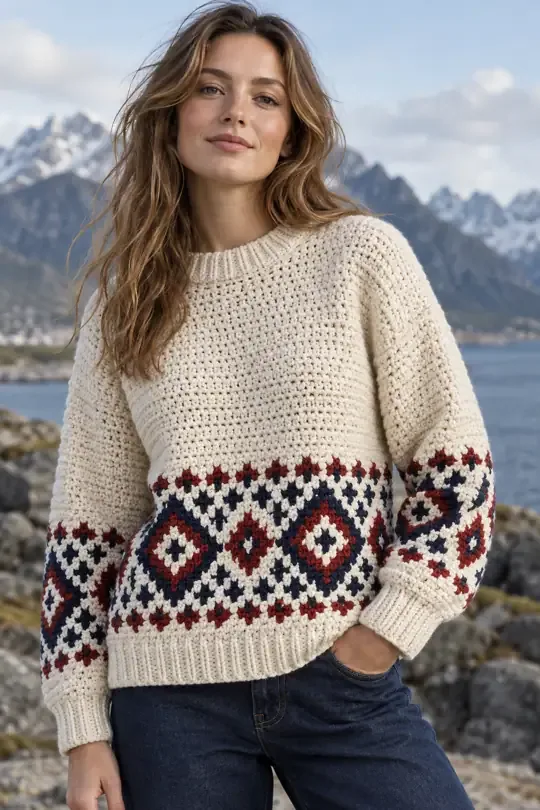
Katia lists a downloadable crochet PDF with several sizes. Check the pattern page for the current PDF and yarn requirements, and follow its chart carefully. Keep the unused yarn tension relaxed behind the work so the fabric does not pucker; a small colorwork swatch helps you check both gauge and drape before making the garment.
15. Multicolor Lace-Diamond Sweater
Colorful openwork diamond pullover. Open lace diamonds make a sweater feel lighter, while a warm palette of rust, mustard and brown keeps it grounded for cool-weather outfits. This is a good direction for crocheters who want a textured motif without the dense fabric of traditional stranded colorwork. A smooth yarn makes the lace pattern easier to read.
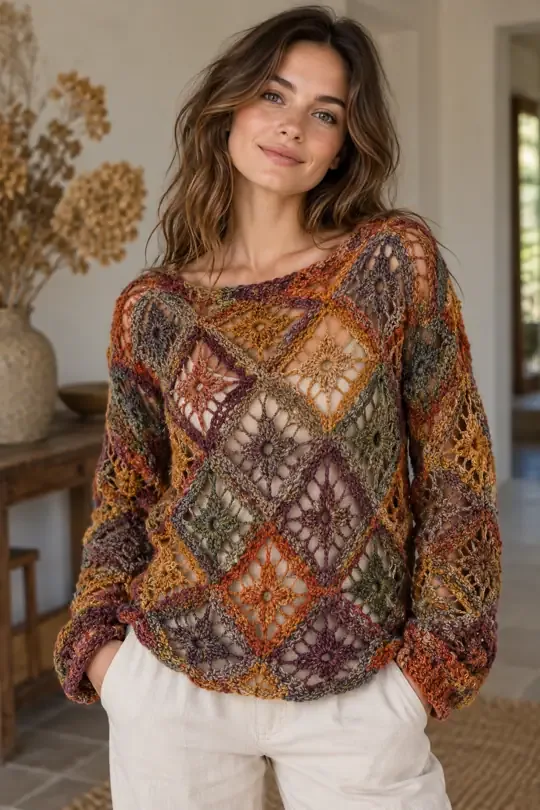
Katia offers a crochet PDF for a lace-diamond sweater in a range of sizes. Review the pattern’s size chart and yarn information before choosing materials. Lace stitches can open significantly after blocking, so make and block a swatch the same way you plan to finish the sweater, then check the resulting width and height.
16. Long Diamond Vest for Layering
Long open-diamond layering vest. A long sleeveless vest gives an outfit extra texture without adding bulky sleeves. Cream is an easy neutral over dark dresses and fitted tops, and an open diamond repeat helps the garment drape. If you want a shorter version, plan the finished length before crocheting and keep the edging proportional to the body.
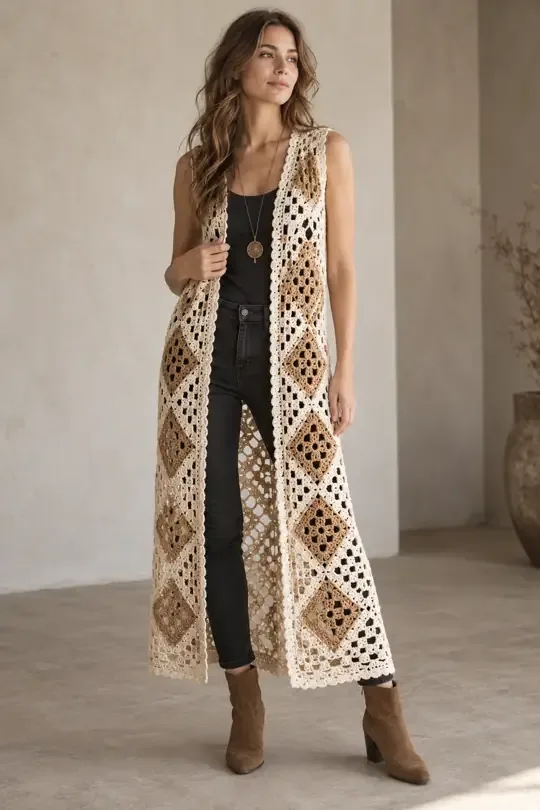
The linked video can help you visualize the construction and stitch rhythm. Follow its own measurements and gauge, and try the vest on as you work if the design allows. The fabric should hang without pulling at the shoulders; if it feels too wide or stiff, revisit your hook and swatch before completing both panels.
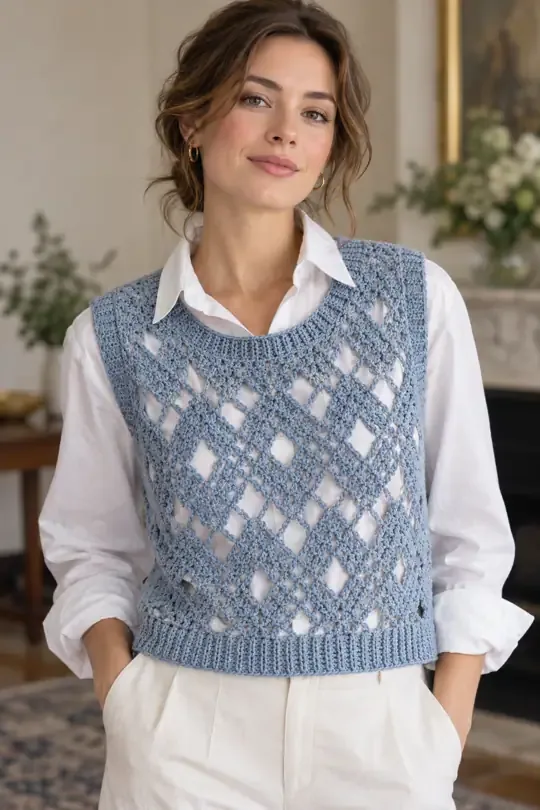
17. Openwork Diamond Crochet Vest
Airy diamond-lace vest. An airy vest is a comfortable way to wear a diamond pattern in warmer weather. Pale blue gives the open stitches a soft, modern look, and the sleeveless shape layers easily over a shirt or simple dress. This is a lace interpretation of argyle geometry, not a conventional multicolor argyle chart.
Sweet Nothings Crochet shares a free written diamond vest tutorial. Check its stitch multiples and finished measurements before starting, since openwork panels can stretch. If you change yarn weight, make a blocked swatch and recalculate the width using the new gauge rather than copying the original row count.
Open the free written tutorial
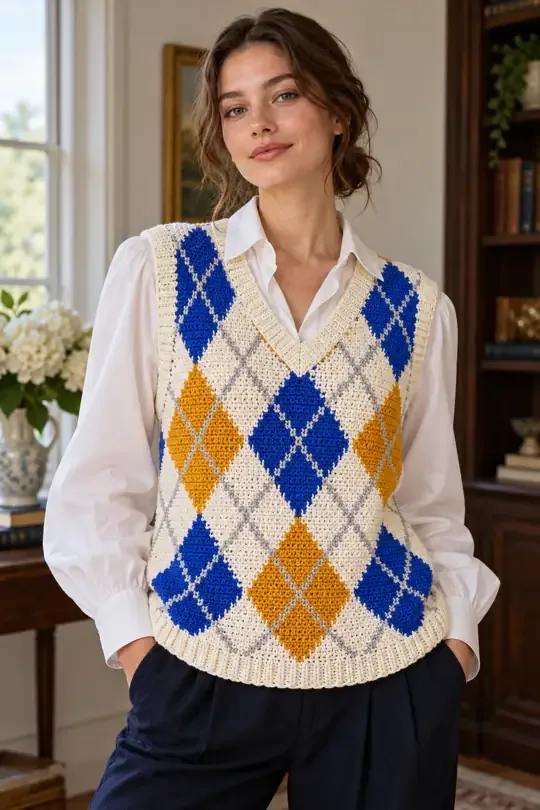
18. Argyle Intarsia Sleeveless Top
Sleeveless intarsia diamond top. A sleeveless top is a lighter, more compact project than a full sweater and makes a good introduction to charted color changes. The blue and gold diamonds stand out against a light background, while the sleeveless cut keeps the motif from feeling too heavy. Intarsia uses separate yarn sections, so tidy joins and yarn management are key.
Yarnspirations offers the Bernat Argyle Intarsia Crochet Top pattern as a free download, with multiple size ranges listed on its page. Download the instructions and check the finished chest measurements, yarn amounts and chart before buying supplies. Follow the colorwork chart row by row and weave in ends securely on the inside.
Color combinations that make diamond motifs stand out
Classic argyle often pairs a light background with two contrasting motif colors. For a softer wardrobe palette, try oatmeal with sage and cream; for a bold statement, use navy with mustard and ivory. Burgundy, blush, and cream feel warm without looking too dark, while charcoal with icy blue and white gives a crisp modern result. If your design uses a variegated yarn for planned pooling, choose a colorway with a regular, repeating sequence and test it before starting the garment.
Keep contrast in mind: a diamond pattern can disappear when all yarn shades have similar lightness. Take a quick grayscale photo of your yarn choices; if the colors blend together in grayscale, consider replacing one shade with a much lighter or darker option.
Tips for a neater crochet sweater
- Swatch and block first. Measure after blocking, not just straight off the hook.
- Track color changes. A row-by-row note or chart marker helps keep diamonds aligned across panels.
- Manage unused yarn gently. Carrying strands too tightly can pucker colorwork; intarsia may need separate bobbins for each color area.
- Check fit as you go. Compare the body and sleeve lengths with your measurements and the pattern schematic.
- Finish before seaming. Weave in ends securely and block panels to consistent dimensions.
- Use the designer’s pattern for exact instructions. The illustrations here are inspiration, not substitute stitch charts or sizing diagrams.
More crochet sweater inspiration
Looking for other silhouettes and construction styles? Browse our roundup of free crochet sweater patterns, discover more ideas in crochet sweater patterns for a handmade wardrobe, or explore cozy crochet sweater projects.
Frequently asked questions
Is argyle crochet suitable for beginners?
A simple vest or a motif-based design can be approachable if you already know basic stitches and how to read a pattern. Intarsia and planned pooling take more attention because color placement and tension affect the finished look. Choose a video or written pattern that clearly explains its technique, and practice the motif on a small swatch first.
What is the difference between argyle and diamond crochet?
Argyle typically refers to a diamond layout with contrasting diagonal lines or smaller diamonds layered over larger diamonds. A project with a repeating diamond lace or granny-square motif may be argyle-inspired without using traditional argyle colorwork. This guide labels technique and appearance so you can choose what you want to make.
Can I substitute yarn in an argyle sweater pattern?
Usually, but match the pattern’s recommended yarn weight and check gauge carefully. For planned pooling, the yarn’s color sequence is part of the pattern, so a substitute can change or prevent the pooling effect. For charted colorwork, choose shades with enough contrast to keep the diamonds visible.
Are all the patterns in this roundup free?
No. The links include free written patterns, free downloads, video tutorials, and at least one paid PDF. Each button describes the resource type where known; check the designer’s page for current access terms, sizing, and material requirements before beginning.
Which project is best if I want a wearable first argyle piece?
A vest is often a practical first choice because it uses less yarn and avoids sleeve shaping. If you want a cardigan, a simple rectangle-based construction can make the overall shape easier to manage, but follow the linked pattern’s gauge and measurements closely.
Pattern details and availability can change. The linked designers’ pages are the authority for current instructions, sizing, and download terms.