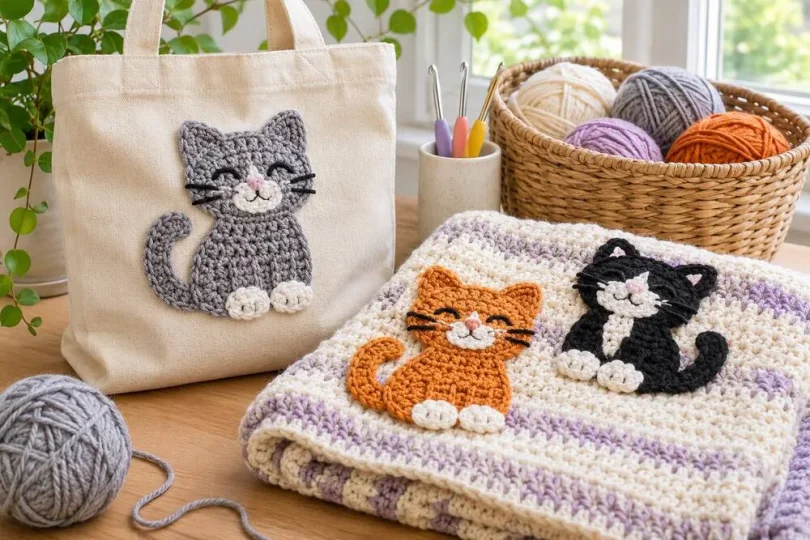
A small crochet cat can turn a plain tote, blanket, scarf, or cushion into something personal—and a flat applique is a more manageable first project than a stuffed amigurumi for many beginners. This guide brings together ten cat applique patterns and tutorials, notes what each source offers, and helps you choose one that matches the skills you already have.
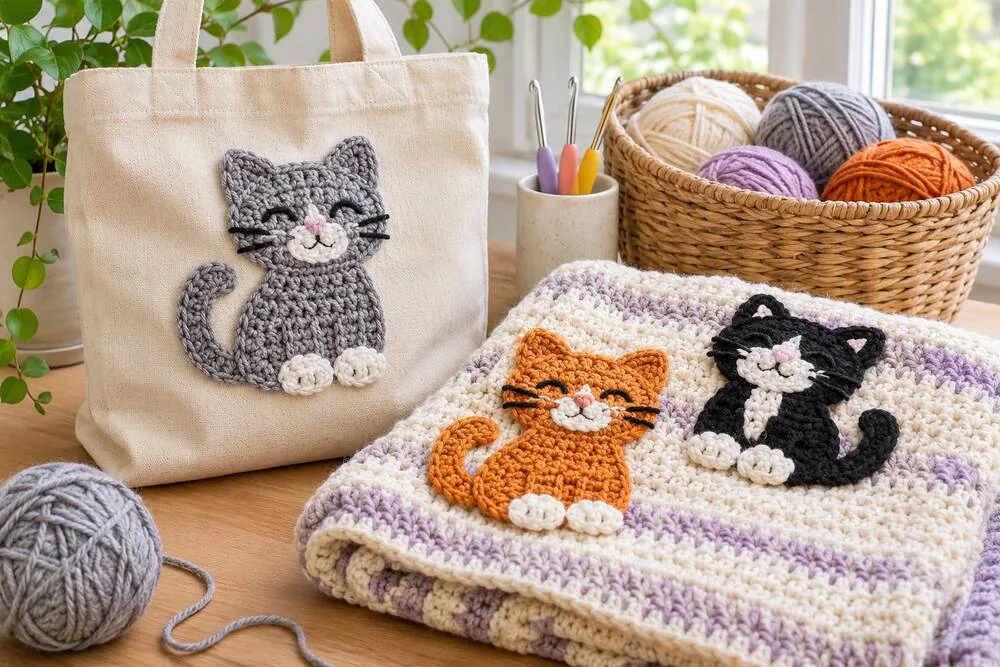
Quick note about the images: the illustrations throughout this roundup are AI-generated styling examples, not photos of the designers’ exact finished patterns. Follow each designer’s linked page for the real sample, materials, measurements, and instructions. Free access and formats are described as listed; check the source page for current terms.
At a glance: choose the right first project
| Pattern idea | Good fit if you want… | Source format |
|---|---|---|
| Loop & Twine | A one-piece, flat beginner motif | Free written pattern |
| Craft Fix | A cat face with embroidered details | Free pattern |
| Aunt Lydia’s Boo Kitty | A simple seasonal black cat | Free download |
| Quick Cat Applique | A small scrap-yarn project | Free Ravelry download |
| Kerri Brown | Photo-supported instructions | Free Ravelry listing |
| Dani West | A tiny motif with video help | Free PDF and video |
| Raji’s Craft Hobby | Written steps, photos, and a video | Free web tutorial |
| Ribblr Kitty Cat | An interactive beginner pattern | Free ePattern |
| Iris F Black Cat | A video-first walkthrough | Free video tutorial |
| GoldenLucyCrafts | A more detailed stretch project | Free pattern; intermediate |
10 easy crochet cat applique patterns and tutorials
Each option below links directly to the designer or pattern listing. Skill labels, measurements, and formats can differ between sources, so use the source page as the final reference before casting on your first chain.
1. Loop & Twine: one-piece cat applique
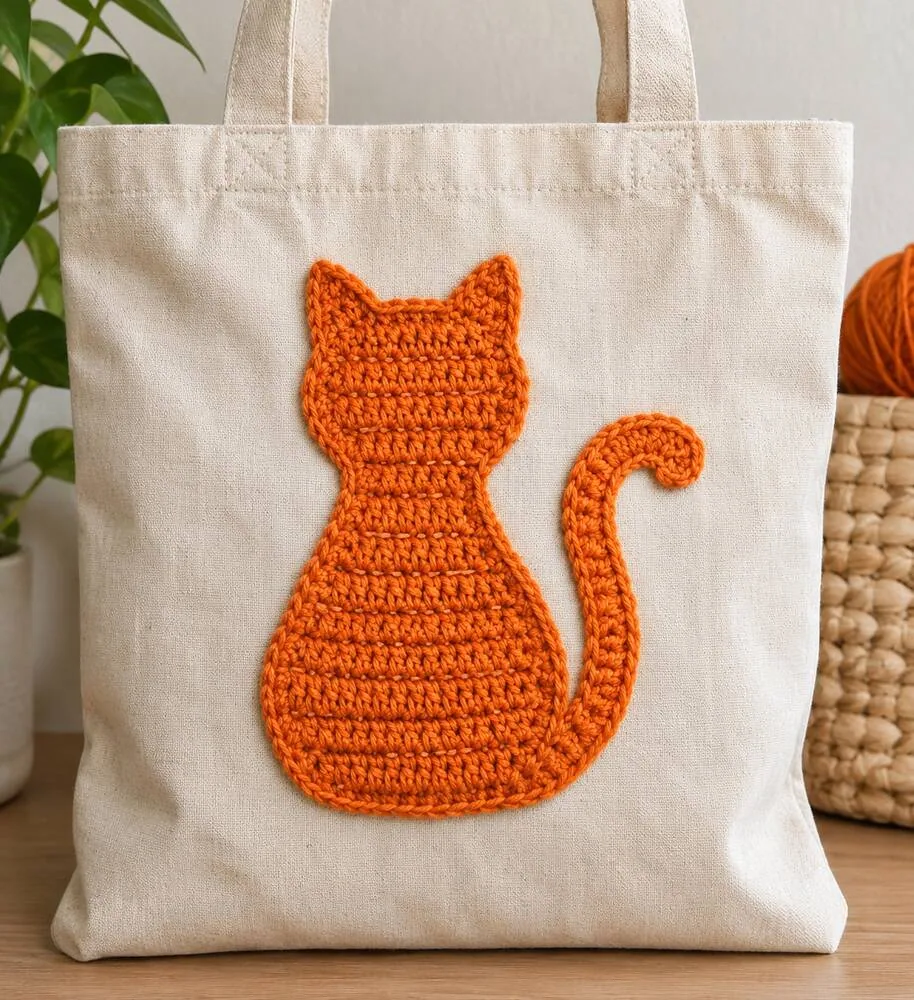
Pattern format: Free written pattern; the designer describes it as beginner friendly.
This is a sensible place to start if you want a recognizable cat without making a stuffed toy. The design is worked as a flat motif from a starting chain, with the shape and tail created in one piece, so it avoids the assembly involved in a multi-part amigurumi. That gives a beginner a chance to practice keeping stitches even and reading simple shaping instructions. Use the pattern’s listed yarn and hook as written for your first try; changing yarn weight will affect the motif’s size. The sample image here is only a color and styling idea—the designer’s page is the reference for the real shape and instructions.
2. Craft Fix: embroidered cat face
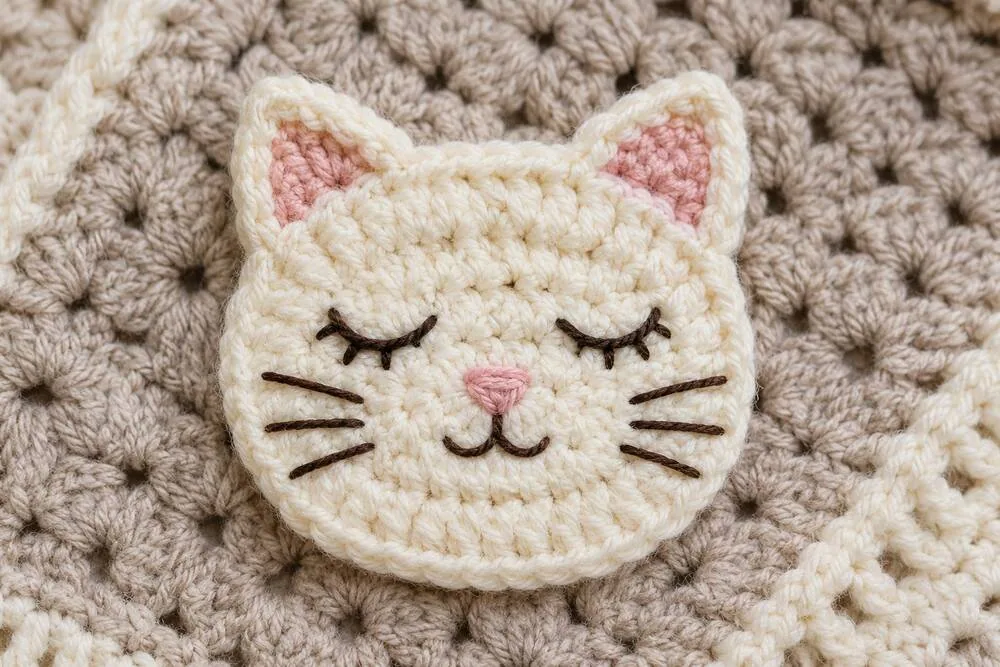
Pattern format: Free pattern; flat face motif with embroidery details.
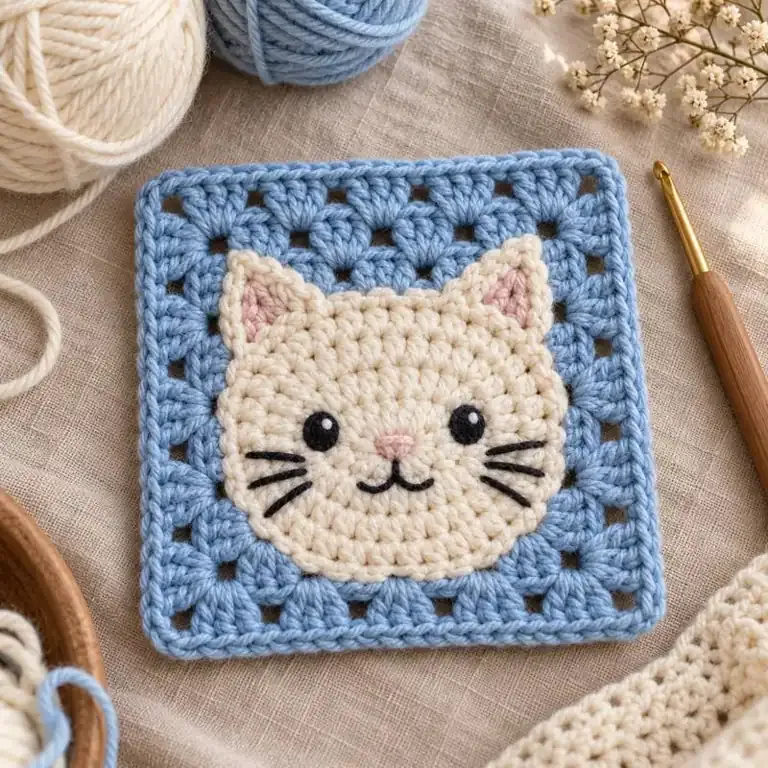
A cat-face motif is a good option if you would rather crochet a compact shape than a full body. The visual interest comes from the ears and the embroidered expression, so you can keep the base in one calm color and personalize the eyes, nose, and whiskers afterward. Take a moment to mark the face’s center before stitching details; a little planning helps keep the expression balanced. The source page provides the pattern and its own sample. Consider this when you want an applique for a blanket, tote, or cushion, and check the designer’s stitch terminology before beginning.
3. Yarnspirations: Aunt Lydia’s Boo Kitty
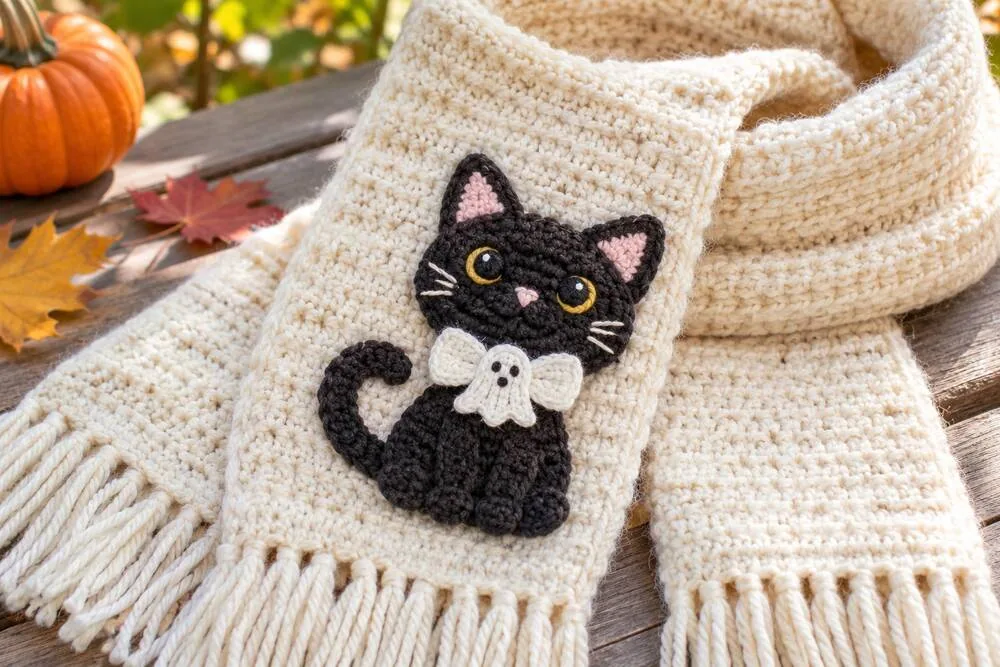
Pattern format: Free downloadable pattern; easy level according to the listing.
This playful black cat has a seasonal, slightly spooky feel that can work beyond Halloween. It is a flat applique rather than a plush toy, making it useful for dressing up a scarf, tote, or trick-or-treat bag. Yarnspirations labels the pattern easy and offers the instructions as a free download. Before you start, read the materials list and check the pattern’s terminology, especially if you learned crochet with a different abbreviation system. Try a high-contrast palette such as black with cream details, or use charcoal and soft pink for a gentler look.
4. Andrea Collins: Quick Cat Applique
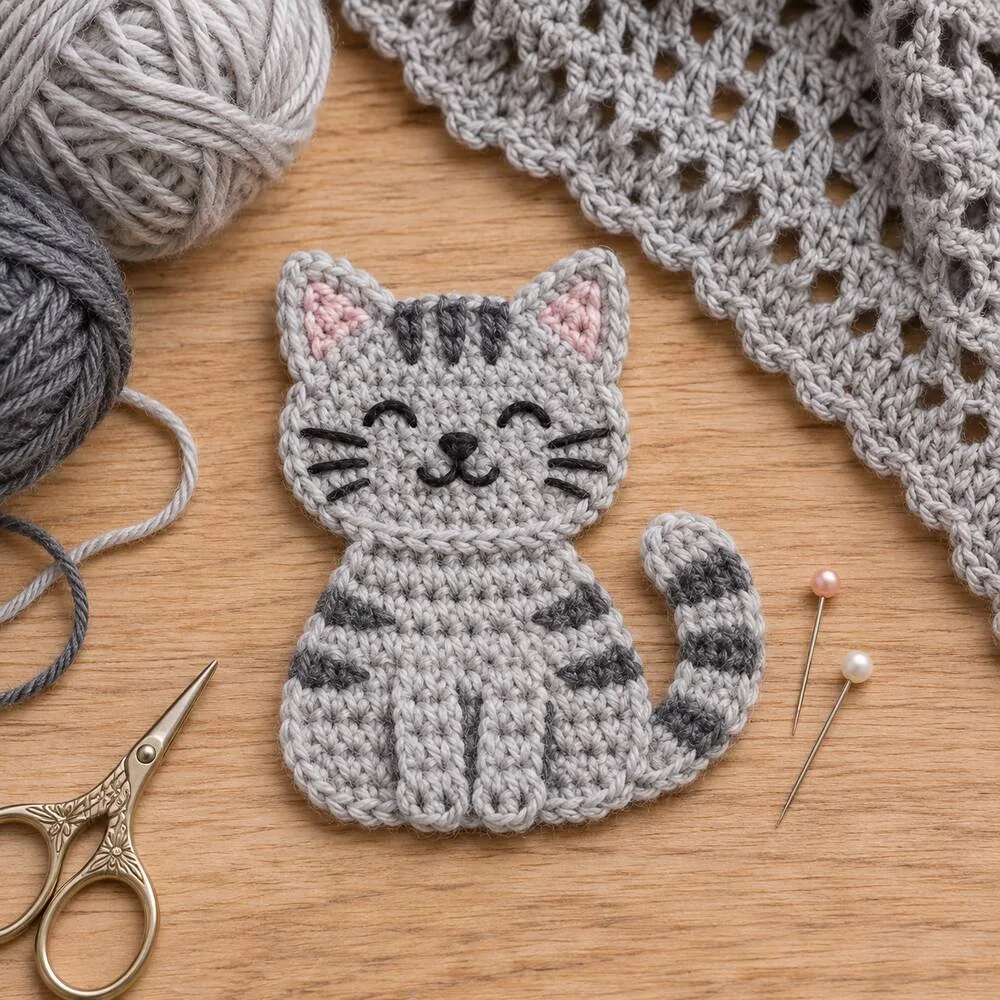
Pattern format: Free Ravelry download; check the Ravelry listing for account or download requirements.
The appeal of this small motif is its quick, scrap-yarn scale: it is an easy way to try a cat silhouette without committing to a large project. The Ravelry listing is the source for the download and any pattern notes, so review those before choosing yarn or estimating the finished dimensions. A small motif can be useful as a patch or gift embellishment, but tiny stitches sometimes feel fiddlier than a larger beginner project. If you are new to crochet, work in a smooth light-colored yarn so it is easier to see each stitch.
5. Kerri Brown: Cat Appliqué
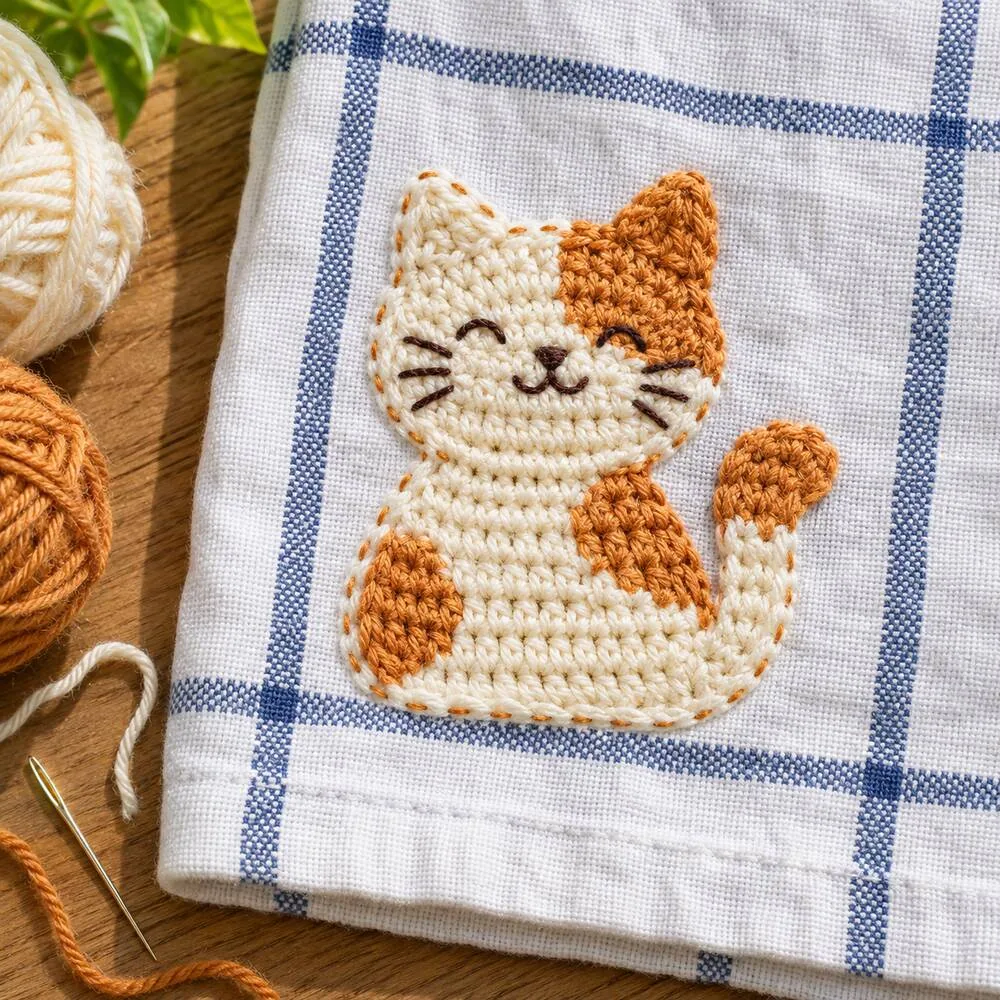
Pattern format: Free Ravelry download; the listing includes photo tutorial information.
This option is worth exploring if step photos help you understand the making process. A cat applique can be sewn onto a handmade blanket or bag, or used to personalize a suitable textile. The listing points to a photo-supported tutorial, which can be useful when you want to compare your work with a visual reference as you go. Check the designer’s notes for size and construction details, then decide whether the motif fits the surface you have in mind. For an item that will be washed, secure all yarn ends carefully and follow the care instructions for both the motif and the base fabric.
6. Dani West: A Cat Applique
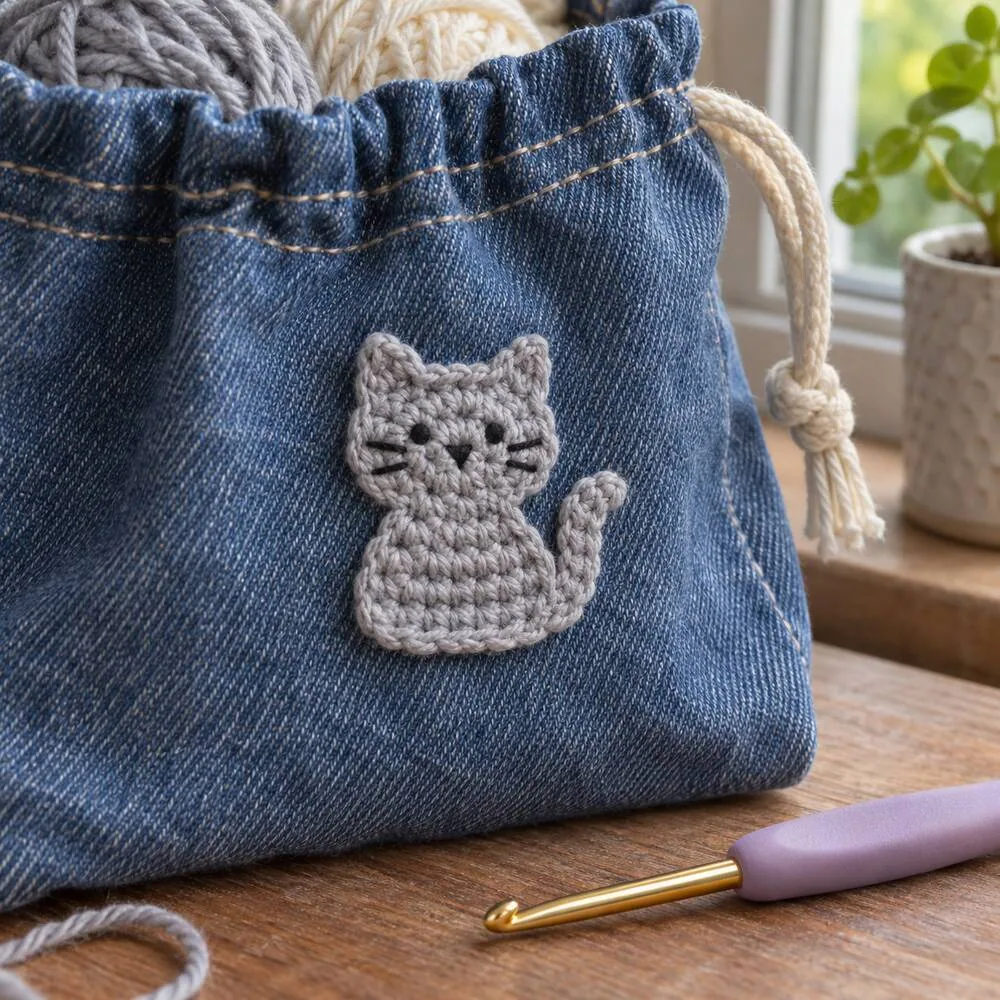
Pattern format: Free PDF download and video tutorial; the listing marks it easy and notes a very small finished motif.
This very small cat motif is a good choice when you want a compact embellishment rather than a large decoration. The listing describes it as easy and provides both a downloadable PDF and video support. Because the finished motif is only a few centimeters across, use the source’s hook and yarn recommendations instead of scaling down at random; an already-small shape can become hard to handle with thinner yarn. The pattern uses US crochet terms, so check the stitch key if you normally follow UK terms. A tiny applique looks especially sweet on a project pouch, but sew it down securely if the item will be used often.
7. Raji’s Craft Hobby: starting-chain cat applique
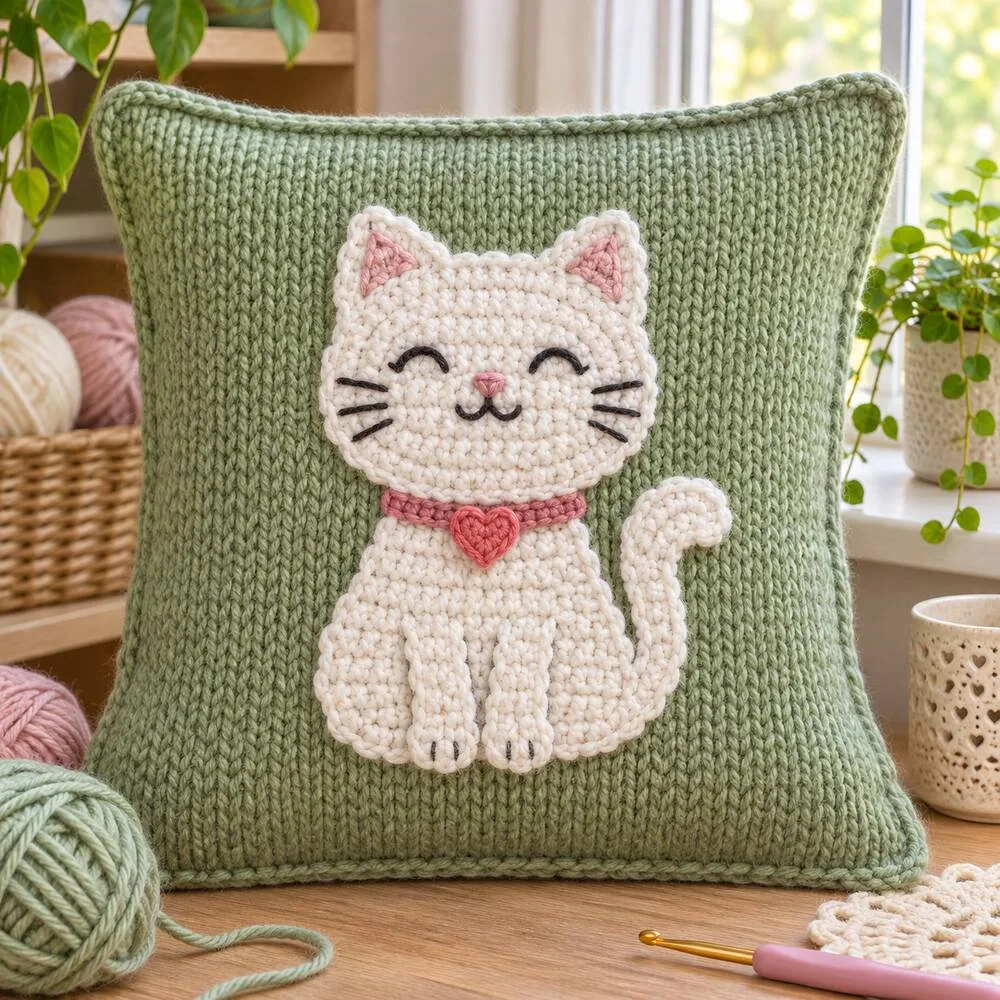
Pattern format: Free written and photo tutorial with a video; basic stitches are used, and a paid printable PDF may also be offered.
This tutorial is useful if you prefer to see the written steps and photos together, with a video available as another way to follow along. The motif is built from starting chains and basic stitches, and the source describes a finished size of about three inches. That makes it a practical size for a small embellishment while still large enough to see the cat shape clearly. The printable PDF is an optional purchase, so check the current page for access details. When adding a little heart or collar, sew on details after pinning them in place so they sit symmetrically.
8. Ineffective Carnivore: Kitty Cat Appliqué on Ribblr
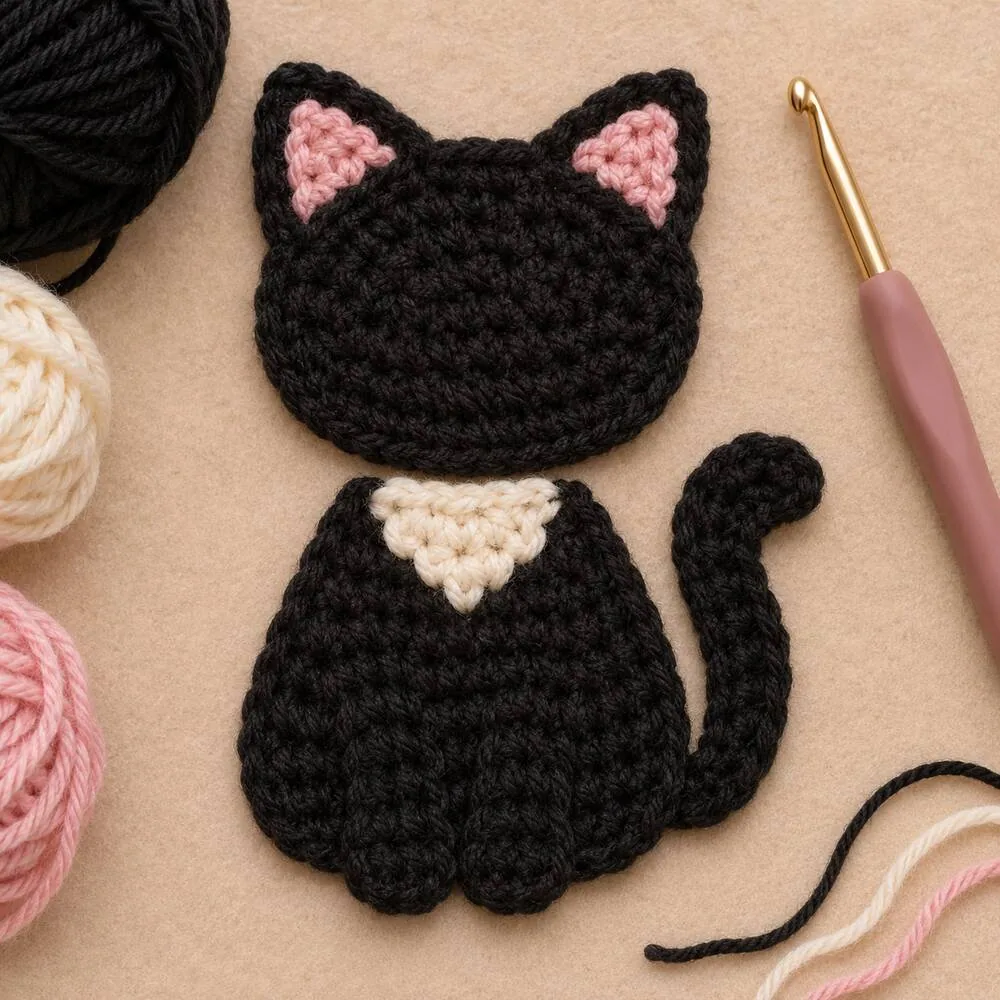
Pattern format: Free interactive ePattern; the designer labels it beginner friendly.
Ribblr’s interactive format is appealing if you like following instructions on screen rather than printing a pattern. This kitty applique is described as beginner friendly and offers a straightforward way to add a feline motif to a project. Read the designer’s materials and construction notes in the Ribblr pattern itself; interface features and download options can vary, so confirm what is available on the listing. If you are new to color changes or sewing small accents, work the main shape first, then add details one at a time and weave in ends before attaching the applique to your project.
9. Iris F: Black Cat Applique video tutorial
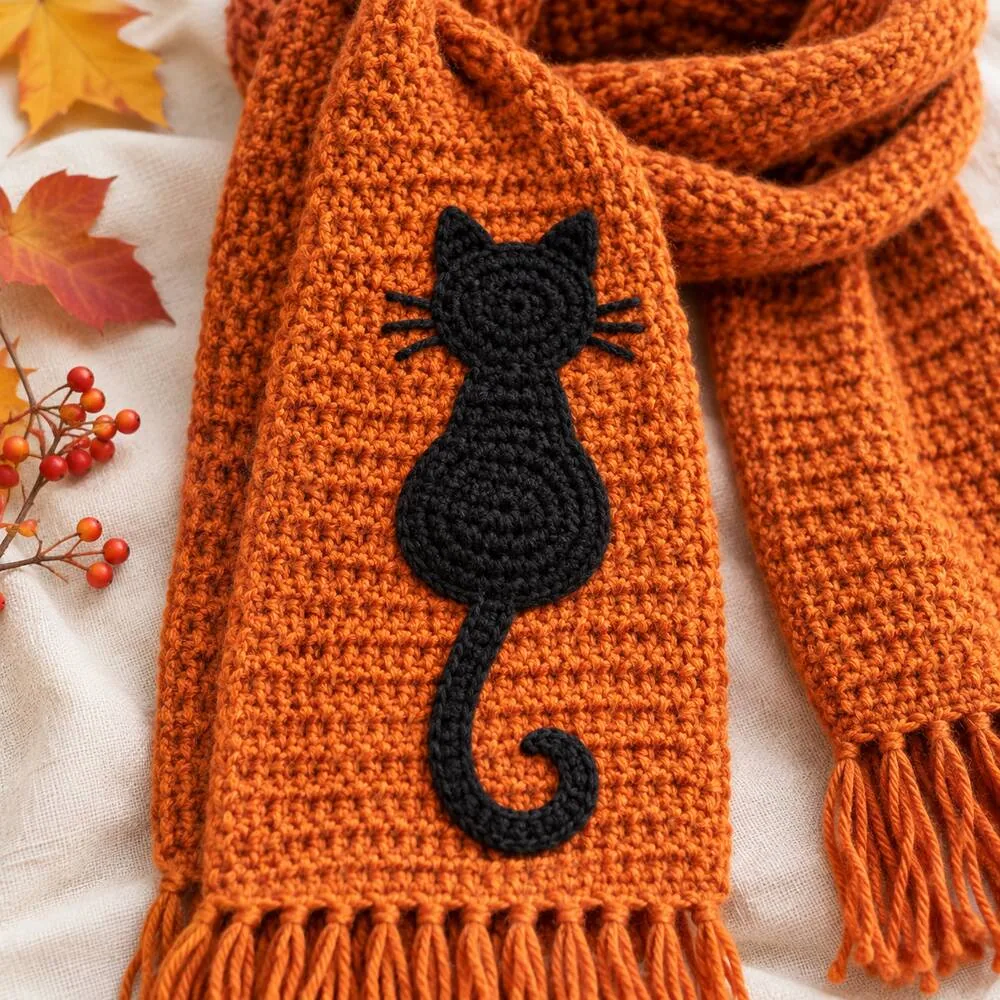
Pattern format: Free video-led tutorial; a separate written pattern was not confirmed.
Choose this if you learn best by watching someone crochet in real time. The Ravelry listing links to a video tutorial for a black cat applique. I could not confirm a separate written pattern, so plan to pause, rewind, and note any stitch counts or materials shown in the video. This format can be helpful for seeing hand movements, but it may be less convenient when you want to scan a line quickly. Keep a notebook beside you and make a small test version before attaching the finished cat to a scarf or bag.
The Ravelry listing links to the creator’s video tutorial; a separate written pattern was not confirmed. See the pattern listing.
10. GoldenLucyCrafts: Black Cat Applique
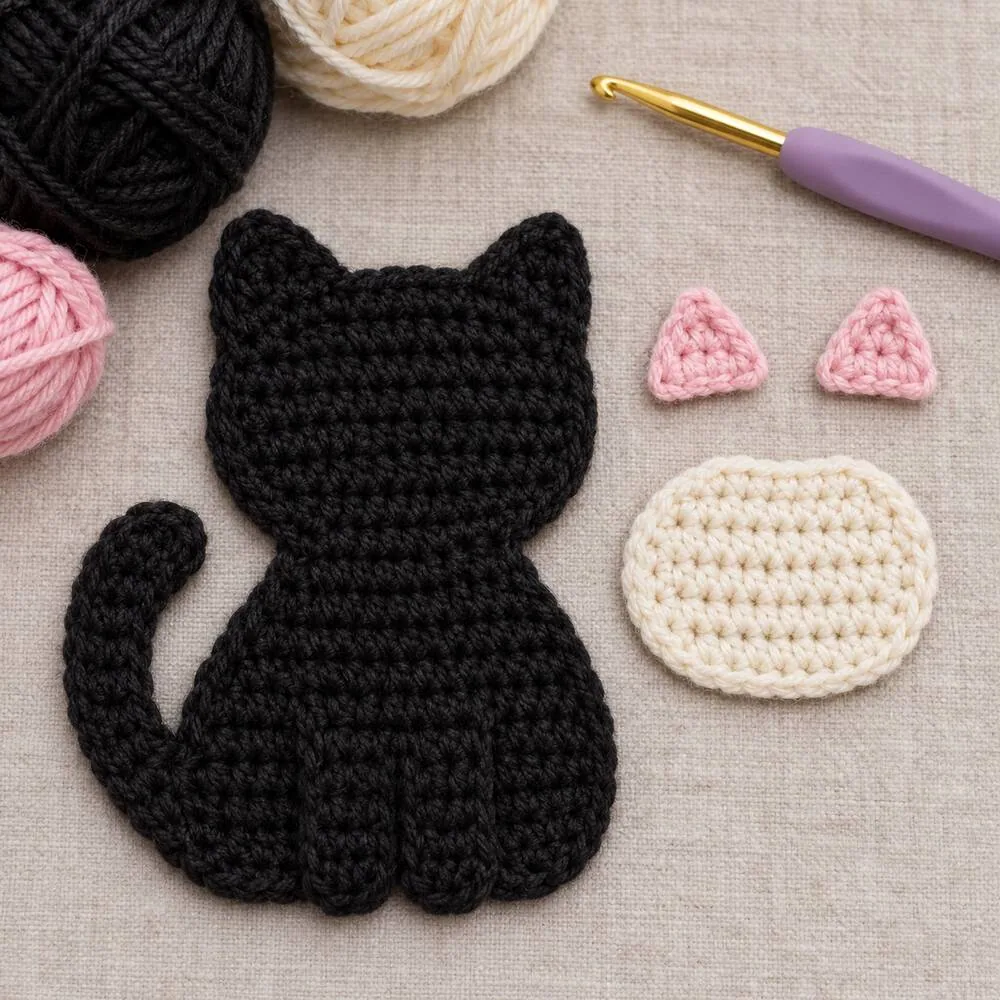
Pattern format: Free pattern; the designer marks it intermediate, so treat it as a confidence-building next step.
This is the most ambitious option in the collection for a newer crocheter. The designer marks the black cat applique as intermediate and describes a construction with several separate pieces, so expect more joining and placement than the flatter, simpler motifs above. It can be a satisfying next project once you are comfortable with basic stitches and finishing seams. Read the full instructions before starting and pin the components in position before sewing them together. That small pause helps the face, ears, and tail sit where you want them. It is included as a stretch choice, not as the easiest first pattern.
What you need before starting
For a flat applique, your project will usually need less equipment than a stuffed toy, but the exact materials depend on the designer. Before beginning, check the pattern page for yarn weight, hook size, tapestry needle, stitch markers, and any embroidery thread or accent yarn. Start with the recommended materials so the finished shape is close to the designer’s sample.
- Smooth yarn in a light or medium shade: it is easier to see individual stitches than with fuzzy or very dark yarn.
- The recommended crochet hook: the hook size changes the fabric density and motif size; make a small swatch if your tension differs from the sample.
- A tapestry needle and scissors: these help weave in the ends and attach the applique neatly.
- Stitch markers: useful if the pattern is worked in the round or you need to mark a shaping point.
- Optional embroidery yarn: choose a contrasting, smooth strand for eyes, nose, whiskers, or a collar.
US and UK crochet terms use different names for some stitches. Check the pattern’s terminology before you begin and keep its abbreviation key nearby. If a tutorial uses a video, note the stitch counts and materials as you watch so you do not need to search for them later.
Beginner tips for a neater cat applique
Count as you go
Small motifs can change shape quickly if you miss or add a stitch. Count each row or round at the point the designer recommends. Place a marker in the first stitch of a round if you tend to lose track of where it begins.
Keep the tension even
Pulling the yarn very tightly can make it difficult to insert your hook into the next stitch and may curl the edge. Aim for consistent loops and pause to lay the work flat. If your stitches are uneven, a smooth, light-colored yarn can make it easier to see where your hook should go.
Arrange details before sewing
For eyes, ears, a tail, or a collar that is attached separately, pin the pieces in place first. Step back and compare both sides before stitching. This small check can prevent an expression from looking lopsided once the thread is secured.
Choose safe finishing details
If you are making an item for a young child, avoid loose parts that could detach and follow the designer’s safety guidance. Embroidered features can be a practical alternative to plastic embellishments, but secure the yarn ends firmly. For a bag or blanket that will be washed, attach the applique around its edge and follow the care instructions for the yarn and base fabric.
Easy ways to customize the same cat design
Once you understand the original pattern, color choices can make the same silhouette feel entirely different. Keep the pattern’s stitch structure unchanged for the first version, then experiment with color and embroidery on a second motif.
- Classic tabby: warm ginger or gray yarn with a cream muzzle and embroidered stripes.
- Tuxedo cat: black body, white chest or face patch, and tiny pink nose.
- Soft cottage palette: oatmeal, sage, and dusty rose for blankets or cushions.
- Halloween cat: charcoal or black with a plum or orange accent.
- Calico-inspired: cream base with small ginger and charcoal patches.
- Minimal monochrome: one neutral shade, with the face embroidered in a contrasting dark yarn.
Use color changes only where the pattern allows them. If you add separate patches, make sure the back is tidy and the applique lies flat before sewing it onto a finished item.
How to attach a crochet cat to a project
First, wash or block the applique if the designer recommends it. Lay it on the finished surface and pin it in place. Check that it is straight and positioned where you want it, then use a tapestry needle and matching yarn to sew around the edge. Small, evenly spaced stitches help keep the applique flat. Secure the yarn on the reverse side and weave in the tail so it cannot work loose.
For stretch fabrics, avoid pulling the sewing yarn too tightly, or the base may pucker. For an item that will be used often, reinforce the ears and tail as well as the body. Always test the care method on a yarn swatch if the finished project will be laundered.
What is trending in crochet right now?
Pinterest’s official 2026 Hobbies Trend Report describes a broader move toward hands-on, personal, giftable crafts and reports that searches for “unique amigurumi” increased by 56%. That is a general amigurumi signal—not a statistic specifically about cat appliques. Still, it supports the appeal of small, customizable crochet projects like these motifs, especially when they can personalize a handmade gift or everyday accessory. Read Pinterest’s trend report.
Frequently asked questions
Which crochet cat applique is easiest for a complete beginner?
Loop & Twine’s one-piece applique is described as beginner friendly and avoids sewing several crocheted parts together. If you prefer visual support, Raji’s tutorial includes written steps, photos, and a video. Always check the designer’s own skill notes and terminology before choosing.
Are all ten patterns completely free?
The linked listings describe the options as free patterns, free downloads, or free video tutorials, although some designers may offer a paid printable PDF as an extra. Access methods can change, so check the linked source for current details and whether you need an account.
Can I use an applique on a blanket or sweater?
Yes. A flat cat motif can embellish a blanket, sweater, tote, scarf, cushion, or project pouch. Check the yarn and base fabric care instructions, and sew around the motif securely so the edges do not lift with use.
Should I use safety eyes?
That depends on the project and the designer’s instructions. Embroidery is often a good option for washable gifts or items intended for young children because it avoids small hard pieces. Whichever method you choose, secure all details and follow appropriate safety guidance.
What if my applique curls or looks uneven?
Check your stitch count and tension against the pattern. Tight chains or missed stitches can distort the outline. Lightly block the motif if the yarn allows it, then pin it flat and compare its shape with the designer’s sample before attaching it.
What is a good next project after an applique?
Try a cat granny square to practice building a motif into a larger block, or browse the beginner crochet cat pattern guide for a wider range of project types. You can also explore our cat granny square collection and the Crochet Cat Patterns category.
Choose one small motif and start stitching
A flat applique is a rewarding way to make something personal while practicing stitch control, shaping, or embroidery. Pick a pattern with instructions that match how you like to learn, check the original materials list, and make one test motif before attaching it to a treasured project. The designer’s page is the source for exact measurements, stitch counts, and any updates.
Image note: all pictures in this article are AI-generated illustrative concepts and do not reproduce the designers’ original pattern photographs.