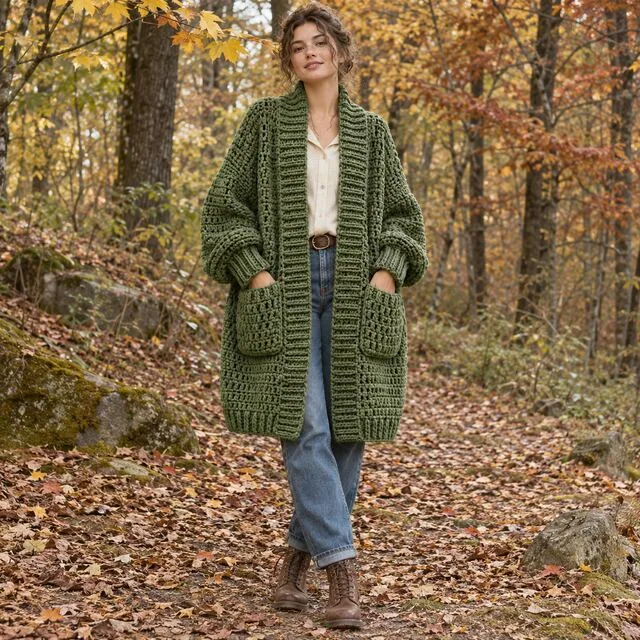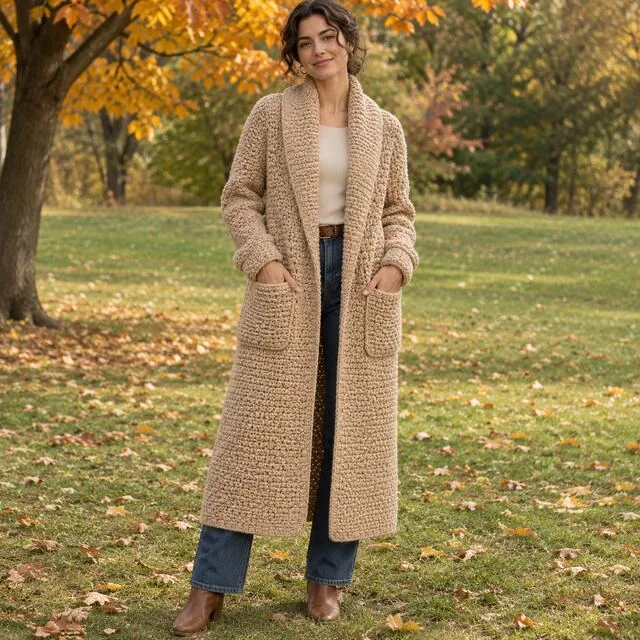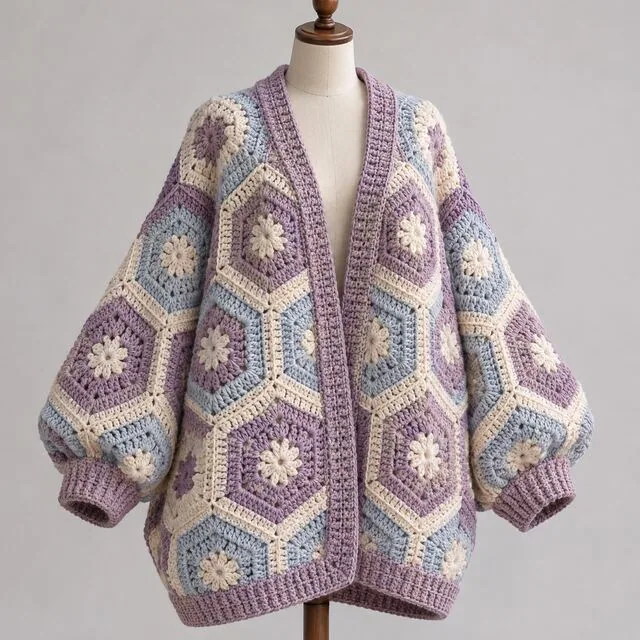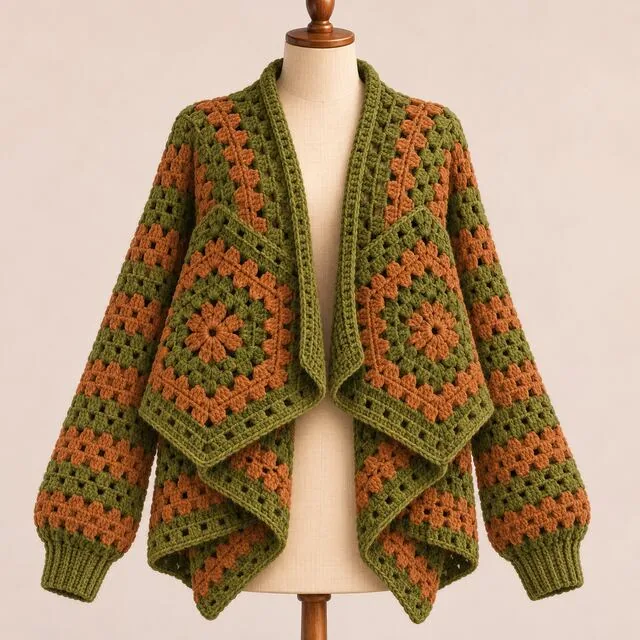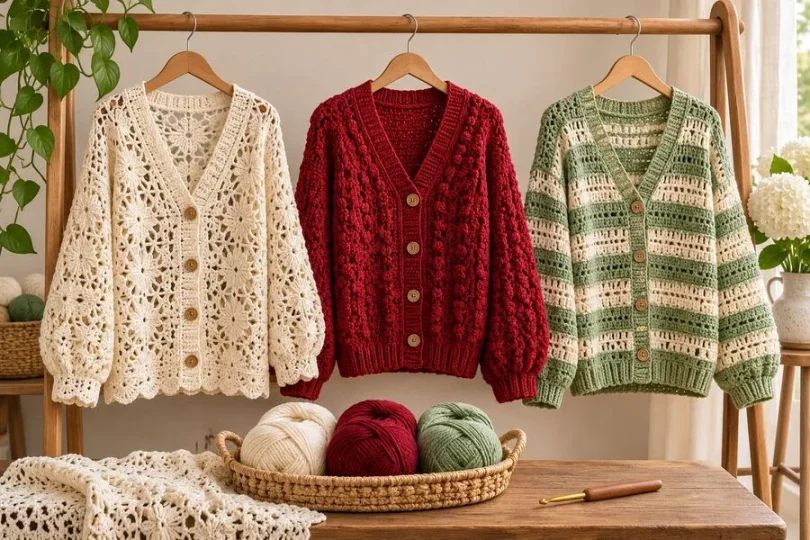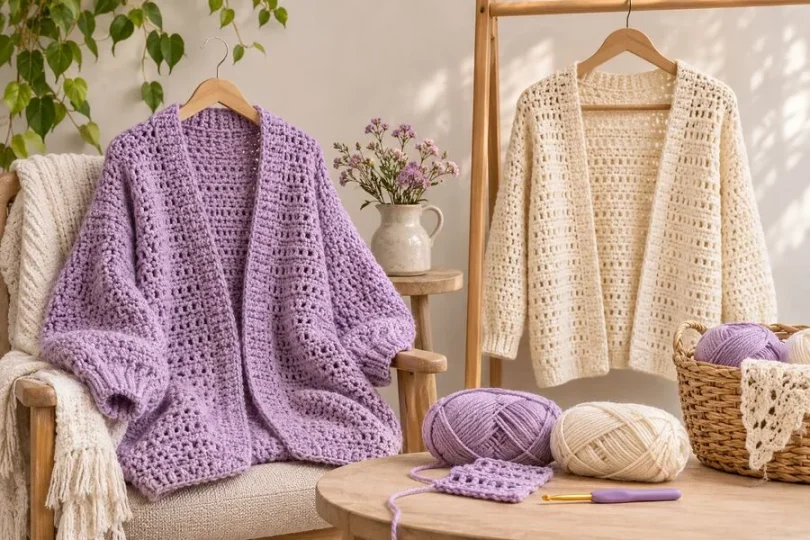
A lace cardigan can be the piece that makes a simple outfit feel finished: an open stitch over a plain tank, a soft wrap over a dress, or a little mesh texture above high-waisted jeans. The challenge is finding a design you can actually make. A beautiful saved image is only useful when you can also find the real instructions, understand the fit and choose suitable yarn.
These 10 lace and mesh crochet cardigan patterns focus on different wearable shapes, from a tie-front filet-style mesh cardigan to a long wave-lace cover-up and a warmer cocoon with a statement back. You will find a photograph of each original design, a practical project summary, and buttons to the designer’s written instructions, PDF options and verified videos where available.
Pattern access: Each selection has a free written version. Printable PDFs are generally optional paid products; some free websites require a free subscriber account. Not every design has a video or a separate verified PDF. Resource buttons state what they lead to. The featured header is an editorial illustration; the ten photographs below show the designers’ actual samples.
Why lace and openwork cardigans belong on your inspiration board
Pinterest’s Pinterest Predicts 2026 report identifies “Laced Up,” a wider fashion and accessories direction involving lace and crochet detail. That supports exploring delicate openwork as an aesthetic; it does not establish a most-popular-cardigan ranking.
Our selection translates that direction into makeable projects: romantic ties, geometric openings, fine-yarn drape and decorative borders. These are editorial choices rather than ten designs claimed to be viral. Comparable Facebook engagement figures and Google Trends results were not available to verify during this review, so no popularity scores or search-growth percentages are assigned to these patterns.
Lace vs mesh vs filet crochet: which should you choose?
Lace describes decorative openwork: shells, fans, clusters, leaves or other repeated shapes with spaces between them. Mesh describes an open fabric that often repeats a simple grid or net. Filet usually uses a regular system of open and filled blocks; those blocks can remain simple or form pictures and geometric motifs.
The categories overlap. A mesh cardigan can have a shell-lace border, and a simple filet-style fabric does not need a flower chart. In this collection, Lemon is the clearest starting point for an uncomplicated filet-style mesh look. For additional chart-focused options, explore our lace, mesh and filet cardigan collection.
Compare the 10 crochet cardigan patterns
| Pattern | Best reason to choose it | Main resources |
|---|---|---|
| 1. Lemon Mesh Cardigan | Tie-front filet-style mesh | Free written · paid PDF · video |
| 2. Cabot Trail Cardigan | Long-sleeve cluster lace | Free written · paid PDF · video |
| 3. Nexus Lace Cardigan | Everyday lace with pockets | Free written · paid PDF · technique video |
| 4. Diamond Cardigan | Geometric eyelet openwork | Free written · paid PDF · video |
| 5. Summer Grace Cardigan | Shell lace and open horizontal bands | Free written · video |
| 6. Breeze Cardi | Fine-yarn openwork layer | Free written · paid PDF · video |
| 7. Cherry Blossom Wrap Cardi | Two-panel lace wrap | Free written · paid PDF |
| 8. Kylie Kimono | Long lacy-wave cover-up | Free written · paid PDF |
| 9. Lunara Short-Sleeve Cardigan | Mesh clusters with a structured upper body | Free written · paid PDF |
| 10. Dream Catcher Lace Cocoon Cardi | Statement lace back for cooler days | Free written · paid PDF · video |
10 lace and mesh crochet cardigans to make
1. Lemon Mesh Cardigan

Yarn: See designer’s current materials list. Sizes: S–XXL. Project guidance: Easy+.
If you save romantic tie-front cardigans but struggle to find an actual pattern behind the picture, start here. Lemon brings together a regular mesh body, softly scalloped edges and a small front fastening. The result has enough detail to feel special without depending on a complicated pictorial chart.
The designer supplies finished body and sleeve measurements, written instructions and a video. The PDF is an optional purchase. This is our pick for an outfit where the cardigan should frame a camisole or dress rather than dominate it.
Before you start: Compare the finished sleeve width with a comfortable garment before committing to a size. A generous body does not automatically guarantee a roomy upper arm.
2. Cabot Trail Cardigan
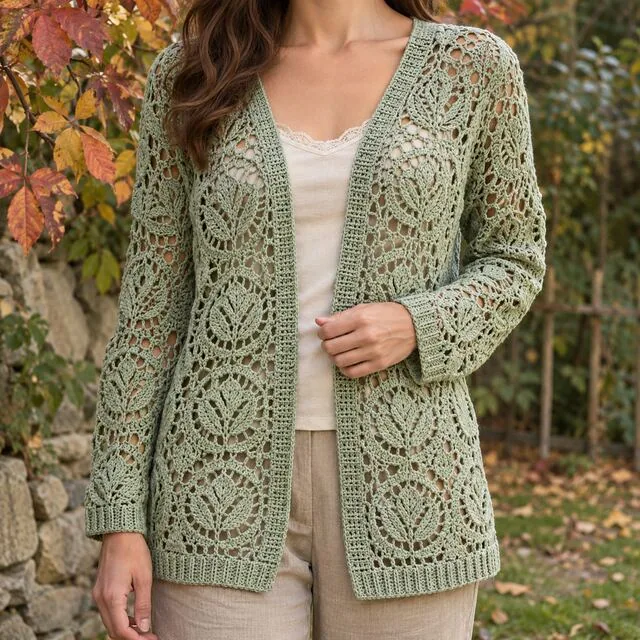
Yarn: DK; original CotLin cotton/linen blend. Sizes: XS–5X. Project guidance: Easy.
Cabot Trail is a strong choice when you want a recognisable cardigan shape with a decorative open stitch. The cluster lace has a short repeat, while the full sleeves give the garment more coverage than a sleeveless wrap. Think of it as a light layer for a cool evening rather than a dense winter sweater.
The garment is worked flat in one piece with limited seaming. Free written access is offered to blog subscribers, and an optional paid PDF and a full video are available. Its broad size range makes it worth considering when you want more guidance than a one-size project provides.
Before you start: Practise the cluster repeat in your intended yarn, then measure after washing. Keep the lace aligned when matching the side and sleeve edges.
3. Nexus Lace Cardigan
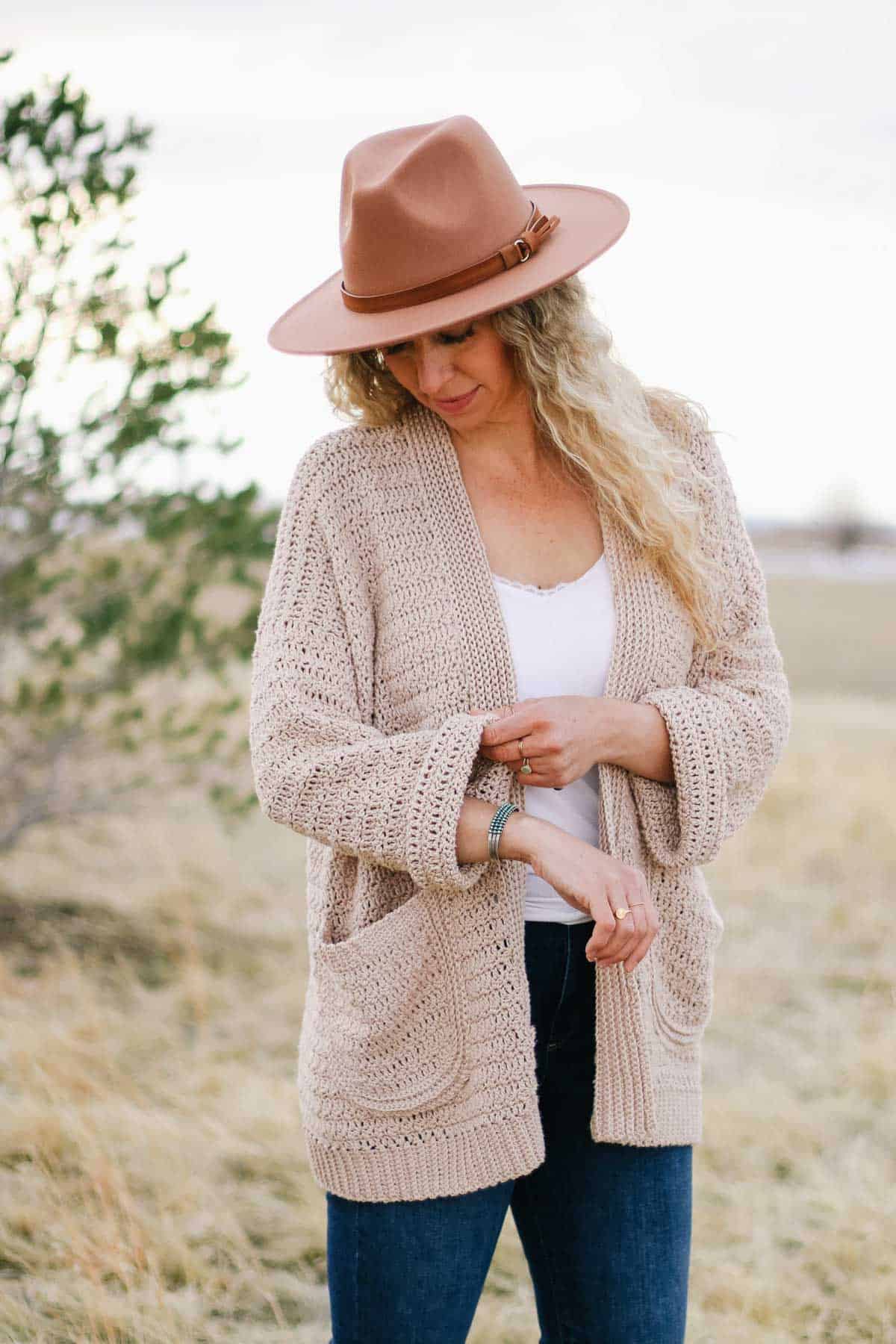
Yarn: Original bamboo yarn; check current substitution notes. Sizes: S–5X. Project guidance: Simple construction with sleeve shaping.
Nexus makes openwork feel practical. Cuffed sleeves, a defined front edge and rounded pockets give this design the familiarity of an everyday cardigan, while the fabric stays fluid. It is an appealing direction if very large mesh openings feel too exposed for your wardrobe.
The body grows from the lower ribbing, and the sleeves are worked into the armholes. The pockets are attached separately. The designer offers free online instructions, which may require a free Grow account, plus a paid printable PDF. The linked pocket-ribbing video teaches a finishing technique rather than the whole garment.
Before you start: Check both the stitch gauge and the fabric’s movement when replacing bamboo yarn. A springy substitute can produce a noticeably different silhouette.
4. Diamond Cardigan

Yarn: #4 worsted. Sizes: Three grouped sizes spanning XS–5X. Project guidance: Advanced beginner.
Prefer geometric openings to floral lace? Diamond uses eyelets to create a repeating diamond effect within an oversized cardigan. It offers a bolder, more graphic look than fine all-over lace and works especially well with a plain layer underneath.
The construction is based on a modified rectangle, with no conventional shaping to manage. The free pattern includes a right-handed and a left-handed video, and the large-print PDF is sold separately. Although it looks airy, the worsted-weight yarn means it is more substantial than a fingering-weight summer layer.
Before you start: Choose by the finished measurements of the grouped sizes. Measure the intended length on your own body; the designer notes that the sample is shown on a petite model.
5. Summer Grace Cardigan
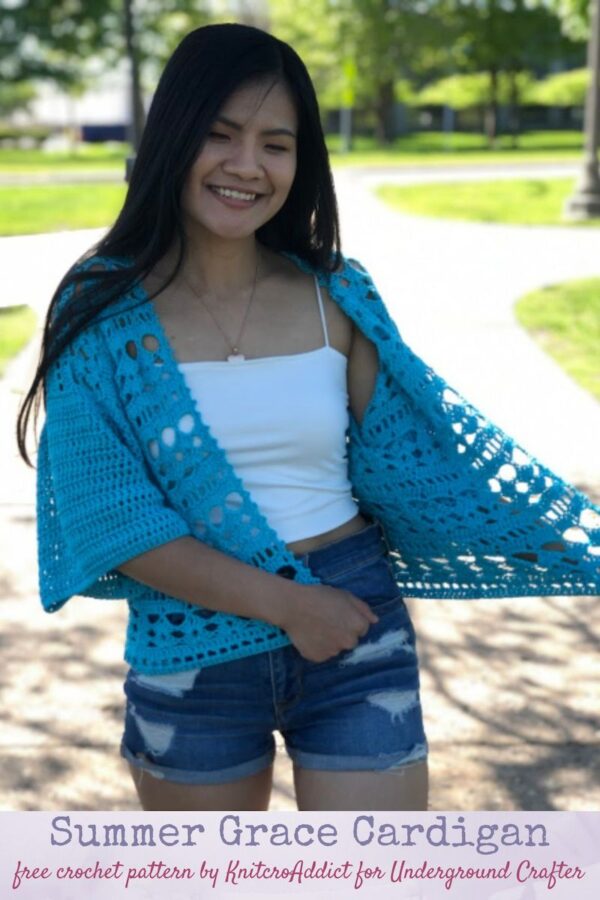
Yarn: Original Patons Grace; follow the published gauge. Sizes: XS–XXL. Project guidance: Beginner-friendly, according to the designer.
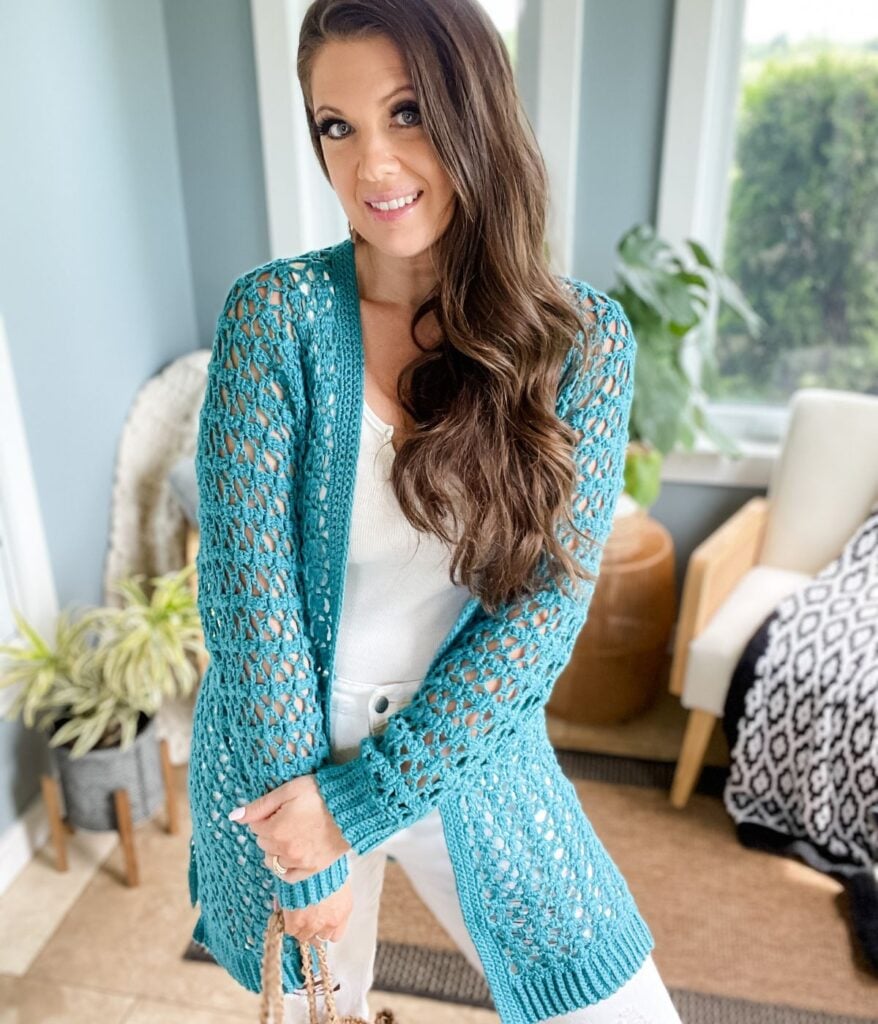
Summer Grace is for the maker who wants decorative lace with clear visual rhythm. Open bands alternate with shell motifs, so the fabric looks detailed even in one solid colour. The original turquoise sample shows how well a simple background can highlight the lace.
The cardigan is assembled from five pieces, making it useful for people who prefer working on manageable panels. The free hosted pattern includes six adult sizes, length-adjustment guidance and a two-part video. We have linked the written instructions and both videos; we did not verify a separate PDF listing for this hosted design.
Before you start: Label the pieces as you finish them and compare matching panels before assembly. Block according to the yarn care instructions so the shell bands open consistently.
6. Breeze Cardi

Yarn: #1 fingering; original Scheepjes Sunkissed. Sizes: XS–XXL. Project guidance: Designed to support new garment makers.
Breeze is an attractive option if you want a fine, flowing cardigan rather than a large-hole mesh jacket. The lightweight yarn gives the stitch pattern a smaller scale, and the longer silhouette makes it easy to imagine over jeans, a tank or a simple dress.
The designer provides free written instructions and a two-part video, with an optional paid PDF containing photo guidance. The stitch pattern uses a two-row repeat. Fine yarn does mean more stitches for a given area, so choose this for the fabric you want rather than assuming every openwork cardigan will be a quick project.
Before you start: Keep markers at the first and last stitches. A missed edge stitch may be difficult to notice in openwork until the panel has already changed width.
7. Cherry Blossom Wrap Cardi

Yarn: Fingering/4-ply; original Scheepjes Whirl. Sizes: Grouped sizes spanning XS–5X. Project guidance: Easy stitches and panel construction.
Cherry Blossom offers a different answer to the cardigan question: a soft wrap that can be secured with a tie. Crossed stitches create an open fabric, while the two-panel construction gives the design a relaxed shape. The pink-to-grey colour transition makes the original sample particularly distinctive.
The sides can be seamed for a cardigan or left open for a ruana-style layer, following the designer’s guidance. Free online instructions may require a free Grow account; a printable PDF is sold separately. Choose this if you like flexible styling more than a fitted shoulder and sleeve.
Before you start: If using gradient yarn, plan both panels before starting. Beginning them at comparable points in the colour sequence helps the back seam look intentional.
8. Kylie Kimono

Yarn: DK; original Lion Brand Mandala body. Sizes: S–3XL. Project guidance: Repeating lace wave with assembly.
Kylie is the choice for a longer open-front silhouette with visible colour movement. Its wave-like lace gives a striped or colour-changing yarn room to shine, while the contrasting lower ribbing frames the fabric. It can fill the gap between a cardigan and a lightweight cover-up.
The original instructions include a free written version and an optional paid PDF. The sample combines two yarn colours, and the published design has a long, relaxed shape. We did not verify a dedicated full video, so the buttons lead to the written pattern and PDF listing.
Before you start: Before altering length, check where the lace repeat ends and how the ribbed section is added. A change to the main body also changes yarn requirements.
9. Lunara Short-Sleeve Cardigan
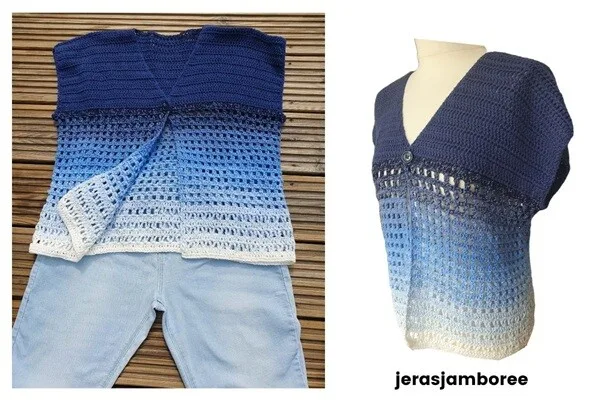
Yarn: DK cotton. Sizes: S–3XL. Project guidance: Intermediate.
Lunara is useful when you like the look of mesh but want a little more coverage around the shoulders. Open sections give way to a denser upper body, while short sleeves keep the overall silhouette light. The original blue-to-pale gradient emphasises the change in stitch texture.
The body is worked in one piece to the armholes before dividing. The V-neck shaping and multiple stitch patterns account for the intermediate rating. Free written directions and optional paid PDF links are provided on the designer’s page; a dedicated video was not verified.
Before you start: Swatch the different stitch sections and note the hook changes. Using the same hook everywhere can alter how the open lower body meets the more structured top.
10. Dream Catcher Lace Cocoon Cardi

Yarn: #5 bulky. Sizes: Four grouped sizes spanning XS–5X. Project guidance: Experienced makers or adventurous beginners.
Lace does not have to mean a thin summer garment. Dream Catcher puts a large openwork motif on the back of a cocoon cardigan made in bulky yarn. It is our warmer option for makers who love decorative holes but want a substantial layer for cooler days.
The design grows from a centre motif into a rectangle, which is folded and seamed to form the armholes before finishing. Free written instructions and three videos cover the project; the paid PDF adds charts, photos and other extras. Its oversized fit is part of the design, so consult the current schematic carefully.
Before you start: Work the centre carefully and mark the corners. A consistent motif makes the later expansion easier to assess, and an accurate size choice prevents the cocoon shape overwhelming your frame.
How to choose yarn for a lace or mesh cardigan
Start with the pattern’s recommended yarn weight, then consider the fibre, yarn construction and stitch gauge together. Two balls labelled DK can behave differently: one may make a crisp grid, while another produces a soft fabric that stretches under its own weight. The aim is a fabric that matches the designer’s measurements and suits the way you intend to wear the cardigan.
For a clear, defined stitch pattern
A smooth yarn makes it easier to distinguish stitches and see the openings. Light and medium colours are often easier to work with than very dark yarn, especially while learning. Strongly variegated colours may disguise small motifs. Before buying the full quantity, picture the garment over the actual top or dress you plan to wear underneath.
For drape and everyday comfort
Wash and dry a generous swatch using the yarn label’s care instructions. Measure it after it is fully dry, then feel whether it bends and falls comfortably. Cotton can give good definition but may feel heavier in a long garment; blends can change the weight, stretch and softness. A fibre name alone cannot guarantee the result, so let the treated swatch guide the substitution.
For a warmer openwork layer
A cardigan can have lace openings and still be substantial. A heavier yarn or insulating fibre will produce a different garment from fine cotton mesh. If warmth is your priority, choose a pattern written for that type of fabric rather than replacing fine yarn with bulky yarn and hoping the original stitch counts will still fit.
Choose the right size before choosing the colour
Measure your bust and compare it with the pattern’s body-size chart. Then check the finished garment measurements and the intended ease. Positive ease is the difference between your body measurement and the finished garment circumference; do not add it again if the designer has already included it.
Also compare upper-arm width, armhole depth, sleeve length and shoulder-to-hem length with a cardigan you like wearing. For an open-front design, the published “width” may not represent a complete closed circumference. Read the schematic labels before doubling a measurement. A cropped cardigan, wrap and cocoon can all fit the same bust measurement while feeling very different on the body.
When your swatch has too many stitches across the specified distance, your stitches are smaller than the pattern’s; a larger hook may help. When it has too few, a smaller hook may help. Recheck row gauge too. A correct width with incorrect row height can still change an armhole, sleeve or overall garment length.
A practical checklist for making your first openwork cardigan
- Read the whole pattern. Identify the size, terminology, construction order, special stitches and any instructions hidden in a second tutorial part.
- Record your measurements. Write down the finished dimensions you are aiming for and highlight only the numbers for your chosen size.
- Make a stitch-pattern swatch. Use the actual openwork repeat, rather than a plain double-crochet square, when that is what the gauge instructions specify.
- Wash, dry and measure. Avoid pulling the mesh open to force the swatch to the stated size. Measure relaxed fabric unless the designer specifically says otherwise.
- Track repeats and edges. Mark the row ends and any shaping points. Count at the same stage of each repeat so an error does not spread through the panel.
- Compare pieces before joining. Check fronts and sleeves together. Correct a meaningful mismatch before seaming rather than stretching one piece to meet the other.
- Finish and block with care. Follow the fibre instructions, support the wet garment and dry it flat. Let it dry fully before judging the final fit.
Fix common lace and mesh crochet problems
The panel keeps getting wider
Check the turning chain and the first and last stitch of each row. Accidentally working into both a turning chain and the stitch it represents can add width. Count complete repeats as well as individual stitches, and compare the current row with an earlier correct row. Blocking will not remove a repeated accidental increase.
The cardigan stretches after washing
Compare it with your washed swatch and the intended finished measurements. Support the garment while wet, reshape it gently and dry flat according to the care label. If a substitute yarn grows considerably, the best solution may be a different yarn or a revised size based on a reliable swatch, rather than trying to shrink the completed cardigan.
The front edge waves or pulls inward
Check the number and spacing of edging stitches against the designer’s instructions. Too many stitches can create ripples, while too few can draw the opening inward. Do a short section first and lay the garment flat before continuing around the entire edge. Check that both fronts receive comparable treatment.
The lace is hard to see
Look at the yarn colour, surface texture and layer underneath. A busy print behind small lace motifs can obscure them, and fluffy yarn can soften the definition. A plain camisole in a contrasting shade is a useful way to see the stitchwork clearly when assessing the finished garment.
How to wear a lace or mesh crochet cardigan
For a casual outfit, try a fine mesh layer over a plain tank with jeans or linen trousers. A shorter tie-front shape can work well with a higher waist, while a longer open-front cardigan creates a more vertical line. For a dress, check where the cardigan hem meets the waist or skirt before deciding on length.
A close colour match between the top and cardigan gives subtle texture; stronger contrast makes the openings more noticeable. Keep necklaces and bag hardware in mind because open stitches can catch on them. For more outfit combinations, see our crochet cardigan styling guide.
Frequently asked questions
What is the easiest lace cardigan to crochet?
Choose by construction and support rather than appearance alone. A repeating stitch with clear panel measurements is often easier to manage than a design combining complex lace and shaping. Cabot Trail has an easy rating and a full video; Diamond is labelled advanced beginner and also includes video help. Practise the special stitches first.
Can a beginner crochet a mesh cardigan?
Yes, if they can maintain stitch counts, read the instructions and make a gauge swatch. Mesh often uses familiar stitches, but a garment still involves sizing, edges and assembly. Choose a tutorial that explains those stages, and check whether its beginner label refers to the stitch or to the complete project.
Are these crochet cardigan patterns and PDFs free?
Each design listed here has a free written version on the linked website. Printable PDFs are generally optional paid products. Some free patterns require a free account. A PDF button leads to the designer’s listing or PDF options, rather than a reuploaded copy of their instructions.
Do all 10 patterns have a video tutorial?
No. Videos are linked where verified. Some are complete tutorials, some have multiple parts, and the Nexus link is specifically a pocket-ribbing technique. Designs without a verified full tutorial still include written pattern buttons; a missing resource has not been replaced with an unrelated video.
How much yarn do I need for a lace cardigan?
Use the amount given for your size in the original pattern, plus the allowance needed for your swatch and any planned changes. Fine yarn, bulky yarn, different lengths and different amounts of ease can lead to very different totals. Compare metres or yards, not only the number of balls.
Can I make the cardigan longer or shorter?
Sometimes, but identify which part determines length before changing it. In side-to-side or two-panel garments, the starting chain may affect length; in bottom-up designs, rows may be more relevant. Preserve the stitch repeat and check how your change affects armholes, shaping and edging.
Do I have to block a lace cardigan?
Check the designer’s finishing guidance. Blocking can help even the fabric and reveal openwork, but it cannot repair incorrect stitch counts or guarantee a different size. Use a method suitable for the fibre and test it on the swatch before treating the entire garment.
Are US and UK crochet terms the same?
No. For example, a US double crochet is a UK treble crochet, and a US single crochet is a UK double crochet. Check the terminology at the start of the original pattern and follow one system consistently. Hook sizes in millimetres help avoid another possible source of confusion.
Which project should I choose for a filet crochet cardigan?
Lemon is a useful choice for a simple filet-style mesh look. If you want recognisable pictures or more graphic filled-and-open blocks, use the linked earlier collection to explore additional filet designs. A decorative lace cardigan is not automatically a charted filet pattern.
Can I use one of these cardigans as a beach cover-up?
An airy design may suit that purpose, but check the yarn’s care requirements and remember that openwork does not provide reliable sun protection. A fine wrap or kimono shape can be convenient over swimwear; keep a separate sun-protective layer available when needed.
More crochet cardigan patterns to explore
If you prefer to compare more silhouettes before choosing your yarn, continue with our lightweight and lace cardigan patterns or browse the full Crochet Cardigan Pattern category. For an alternative construction, explore our granny square and hexagon cardigan ideas.
Design and photograph credits belong to the creators identified beside each project. This is an independent editorial selection, not a test of every pattern. Follow each designer’s current instructions for stitch counts, yarn quantities, measurements and finishing; linked resources and access conditions may change.