A good handmade scarf earns its place by the door: soft enough to reach for on a cold morning, long enough to wear comfortably, and in a color that works with the coats already in the wardrobe. These 12 free crochet scarf patterns for men offer different ways to get there, from simple beginner rectangles to richly textured winter wraps.
Below, you will find an original designer photograph for every idea, useful details about the yarn and construction, and clearly labeled buttons to the instructions. Choose by the wearer’s habits as much as by the photograph: a slim scarf for commuting and a generous super scarf for outdoor layering solve different needs.
How to use this collection: Every design has a free pattern available on the designer’s website or as a download. Optional paid, ad-free PDFs are labeled separately. Lion Brand buttons lead to the official page containing the free download. Video buttons appear only where a relevant tutorial is linked; stitch lessons are identified as such.
These are pattern guides and project-selection notes. Follow the linked designer’s instructions for the complete stitch counts, row sequence and finishing. Sizes and materials below refer to the original samples.
Choose your men’s crochet scarf pattern at a glance
| Pattern | Best reason to choose it | Original size |
|---|---|---|
| 1. Blue-and-Black Fringed Scarf | A classic two-color gift | 8½ × 74 in, excluding fringe |
| 2. Cross-Stitch Scarf | Two-tone texture with a free PDF | 8 × 60 in |
| 3. Reversible Color Pop Scarf | A slim scarf with an accent edge | 5 × 72 in |
| 4. Light and Airy Scarf | Drapey layers for milder weather | 11 × 74 in |
| 5. Snow Country Super Scarf | An oversized winter statement | Just over 9 ft long |
| 6. One Ball Crocheted Scarfie — Version 2 | A first scarf with simple stitching | 7 × 68 in |
| 7. Blooming Moss Scarf | Fine yarn and botanical texture | 22 × 180 cm after blocking |
| 8. Always and Forever Textured Scarf | A gift with several size options | Ten sizes, including men’s small, medium and large |
| 9. Zebra Print Scarf | Bold black-and-white styling | 8 × 85 in |
| 10. Rocky Scarf | Bobbles and ridges with a full video | 6 × 72 in, excluding fringe |
| 11. Green Apple Scarf | A shorter beginner scarf in a favorite color | 7 × 62 in |
| 12. Chocolate Cherry Scarf | A very large scarf with a simple repeat | 12½ × 105 in |
Quick picks: Start with One Ball Scarfie or Green Apple for a beginner-rated project. Choose Rocky if a full video helps you learn. For a large winter wrap with more involved stitching, look at Snow Country.
1. Blue-and-Black Fringed Scarf
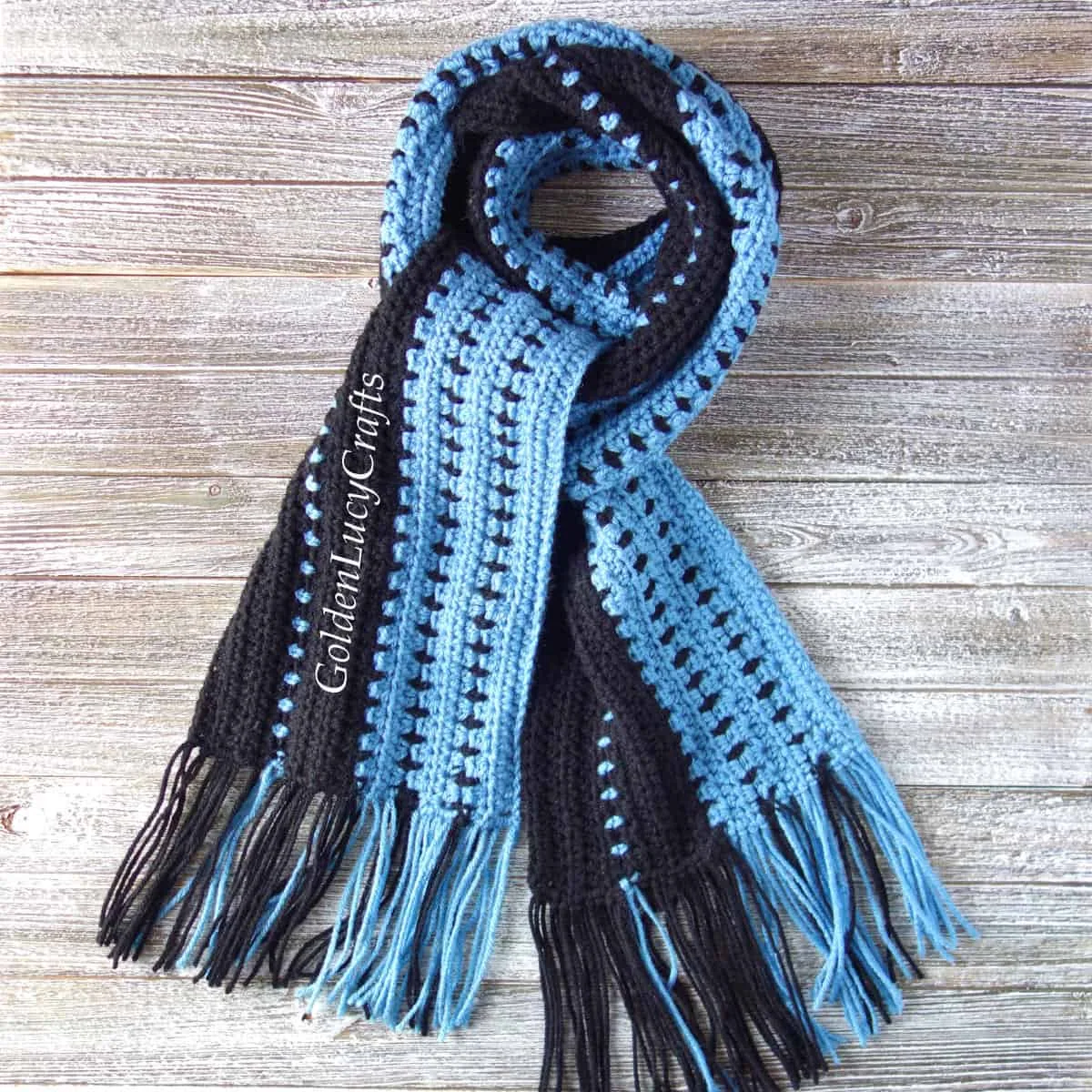
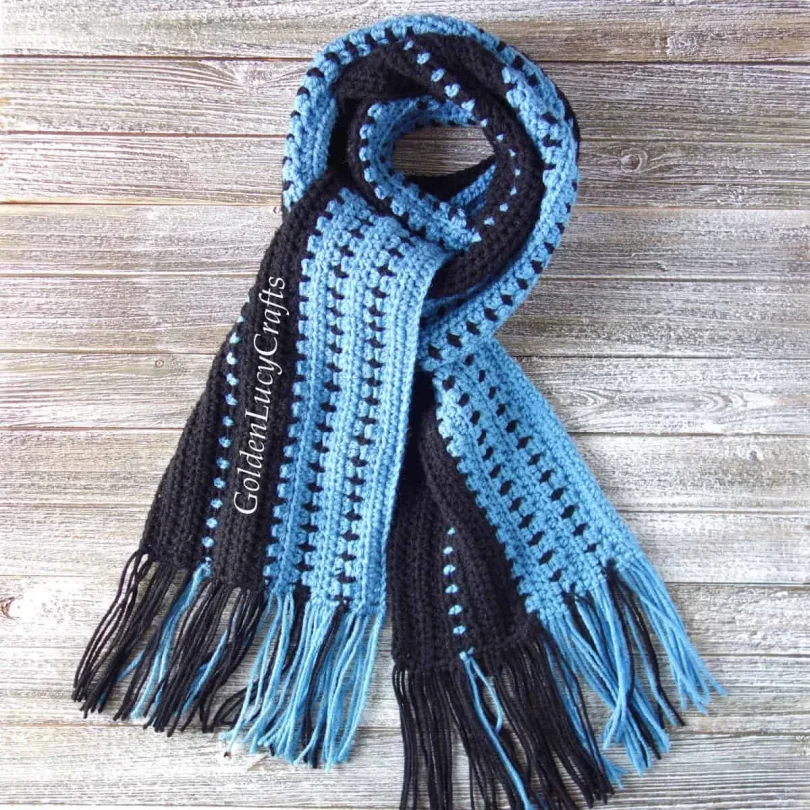
Yarn: #4 medium / worsted
Finished size: 8½ × 74 in, excluding fringe
Hook: 6 mm for the starting chain; 5.5 mm for the fabric
Strong lengthwise stripes give this scarf a tailored look, while the fringe keeps it relaxed enough for a denim jacket or a weekend coat. The blue-and-black combination is particularly useful if you want a handmade gift that feels familiar rather than overly decorative.
Olena’s design combines half double crochet with contrasting textured rows and is worked along the scarf’s length. The original uses one skein each of two Red Heart Super Saver colors. Although the individual stitches are familiar, the designer rates the complete pattern intermediate, so read the row sequence before choosing it as a first project.
For a personal version, try charcoal with navy, forest green with black, or two favorite team colors. Keep a noticeable difference between the shades so the texture remains visible. Because the foundation establishes the length, compare it with a scarf the recipient already wears before committing to the long rows.
Finishing tip: Lay the scarf flat before trimming its fringe; cutting while the fabric hangs can leave uneven ends.
2. Cross-Stitch Scarf
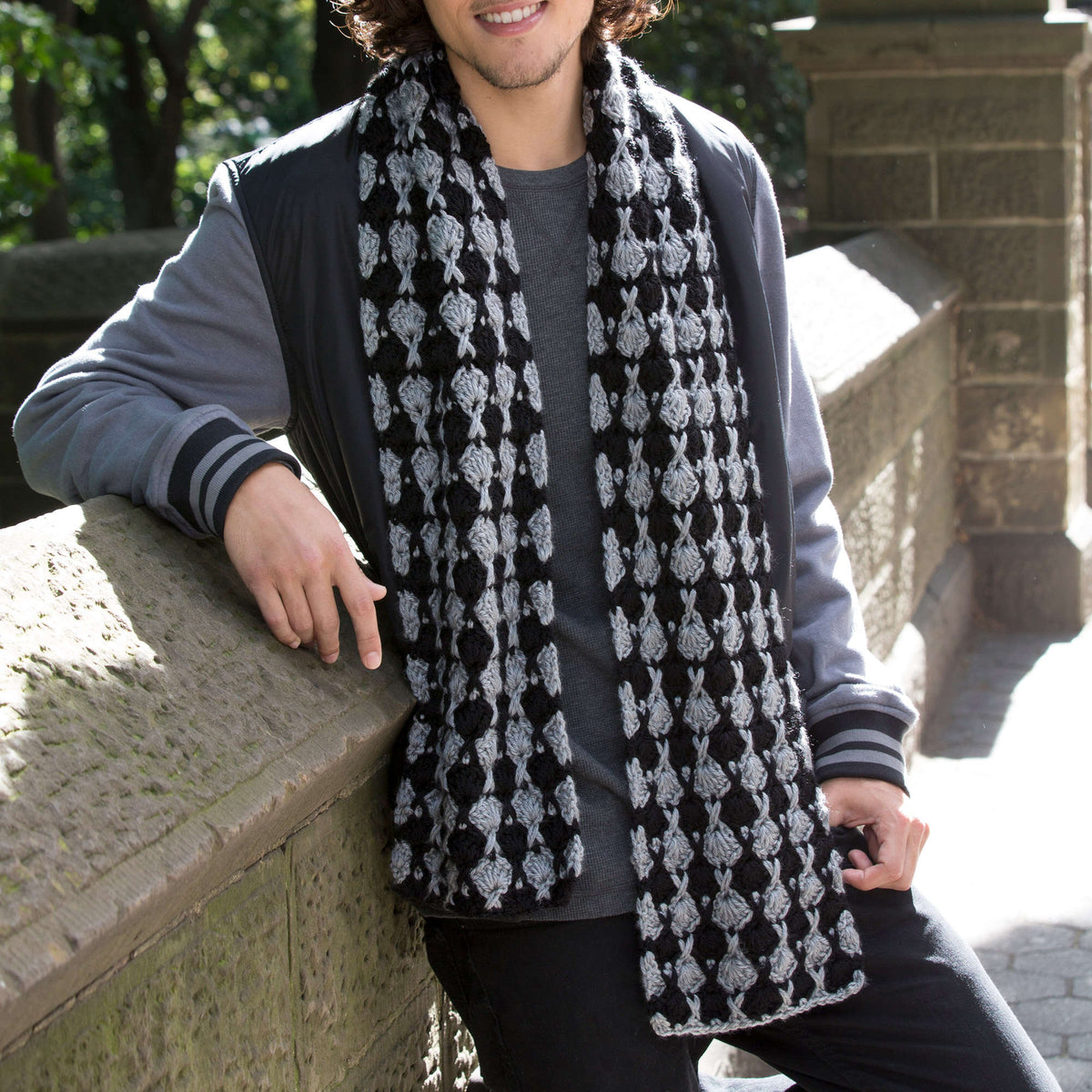
Yarn: Red Heart Soft
Finished size: 8 × 60 in
Hook: 5 mm
The appeal of this scarf is the rhythm of its contrasting rows: there is enough detail to make a neutral color palette interesting, but the overall shape stays simple. Its relatively moderate length makes it worth considering for someone who dislikes very long scarf tails.
Here, “cross-stitch” refers to crossed crochet stitches, not embroidery added to finished fabric. The pattern combines those crossed stitches with shells, producing a reversible scarf. Yarnspirations rates it easy, and the free PDF includes the special-stitch explanation, color-change notes, gauge and finishing directions.
Choose this design if you already recognize single and double crochet and want to practise reading a slightly more involved repeat. Work a small sample before beginning the full scarf so you can see exactly where the crossed stitches sit. It is easier to correct their placement in a swatch than several color changes later.
Color idea: Black and light gray look graphic; navy and oatmeal would give the same design a softer, everyday feel.
3. Reversible Color Pop Scarf

Yarn: Red Heart Soft in three colors
Finished size: 5 × 72 in
Hook: 5.5 mm
A narrow scarf can be a better everyday accessory than a large wrap, especially when it needs to sit comfortably inside a coat. This design uses a quiet main color with a contrasting edge, giving you a straightforward way to include a favorite bright shade without making the entire scarf bold.
The fabric is reversible and uses single crochet and chain spaces. The original palette pairs charcoal with turquoise and off-white, and the PDF explains the body and the separate color-pop edging. It is a useful choice for practising consistency over a longer project while keeping the main stitch vocabulary small.
Try navy with rust and cream, or dark gray with a restrained mustard accent. Before adding the edging, lay the main section on a table and check that both long edges are straight. When working into the row ends, distribute stitches according to the pattern rather than squeezing extra stitches into convenient gaps.
Wearability tip: This slimmer shape suits a simple drape or loose wrap without creating a bulky knot.
4. Light and Airy Scarf
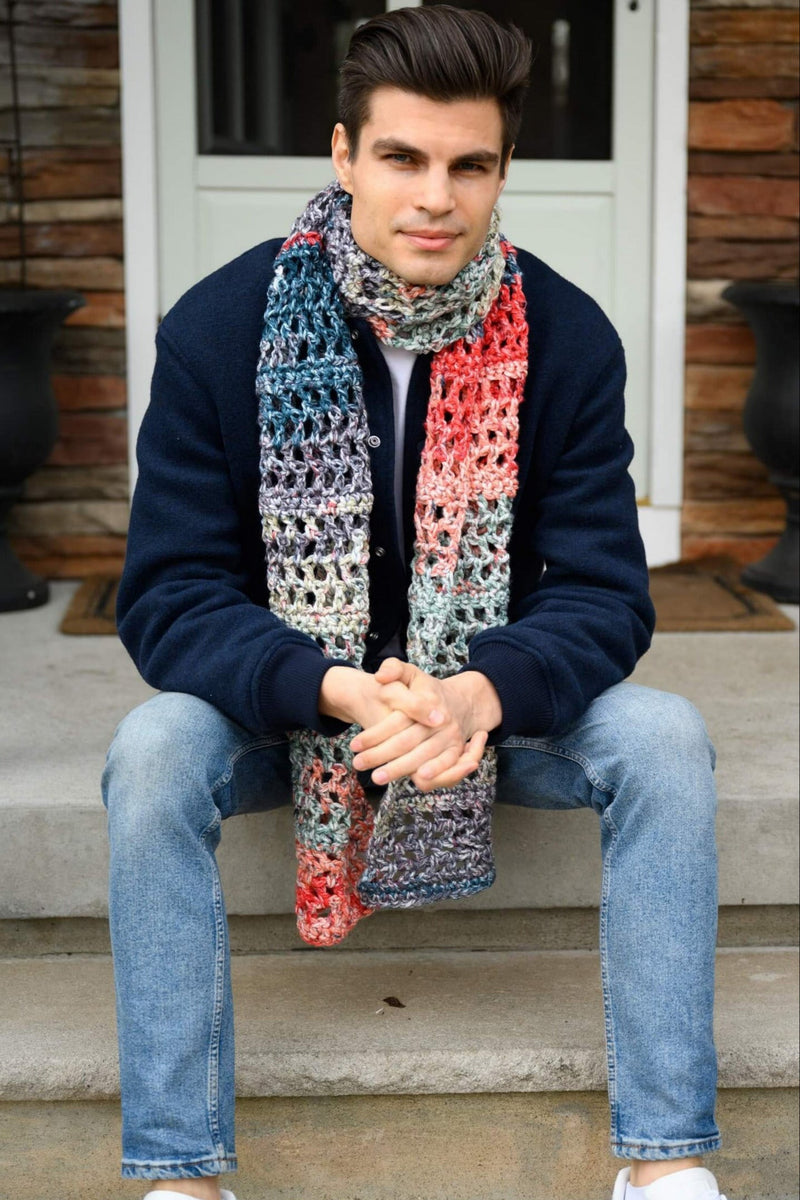
Yarn: #5 bulky; Mandala Impressions
Finished size: 11 × 74 in
Hook: See the original PDF
Not every scarf needs to feel dense and heavy. This Lion Brand design uses a more open texture, making it an appealing option for someone who wants a soft layer over a sweater or a scarf that contributes color without looking rigid.
The pattern is rated easy and uses bulky Mandala Impressions yarn. Despite the yarn weight, the stitch arrangement creates a lighter-looking fabric. The original measures approximately 11 by 74 inches, so it has more width than several of the slimmer scarves in this collection.
Lion Brand explains that the length can be changed by adding or removing complete repeating sections. That makes it helpful when you want to adapt the scarf to a particular way of wearing it. Follow the complete repeat rather than stopping in the middle of a section.
Yarn-selection tip: Check a washed sample for softness and drape. An open pattern made with a stiff substitute may look attractive laid flat but feel awkward around the neck. Let the gradient supply the color changes and keep the rest of the outfit simple.
5. Snow Country Super Scarf
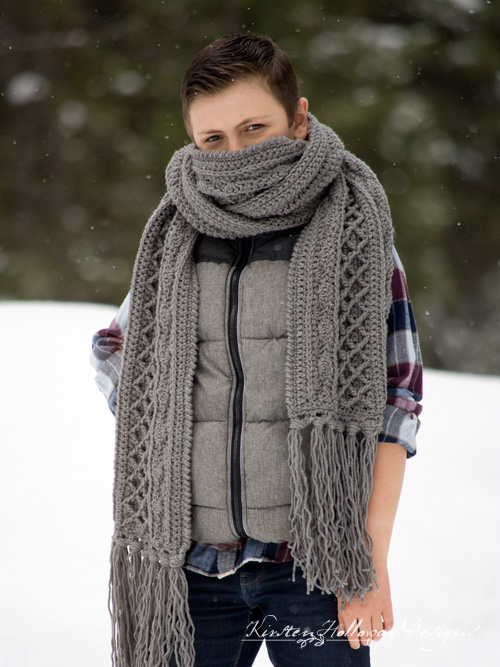
Yarn: #4 worsted; approximately 775–800 yd
Finished size: Just over 9 ft long
Hook: 5.5 mm, or size to match gauge
This is the choice for someone who actively likes an oversized winter scarf. Its generous length creates a substantial wrapped silhouette, and the sculpted surface gives a plain gray yarn plenty of character. It would look especially striking against a simple dark coat.
The design combines several textures, including raised diamond details, and is rated intermediate. Kirsten specifies approximately 775–800 yards of worsted-weight yarn. Treat that quantity as a planning requirement: this is a much larger commitment than a narrow one-ball project.
The front-post stitches require attention because some are worked into earlier rows. Before beginning, read the special-stitch notes and identify the right and wrong sides. Marking the front of the fabric can help you keep track when returning to the project after a break.
Customization tip: The designer provides a length-adjustment multiple and an optional hood modification. Use those notes if you want a shorter version; reducing stitches arbitrarily can interrupt the diamond pattern. Keep the yarn color simple so the relief remains the focus.
6. One Ball Crocheted Scarfie — Version 2
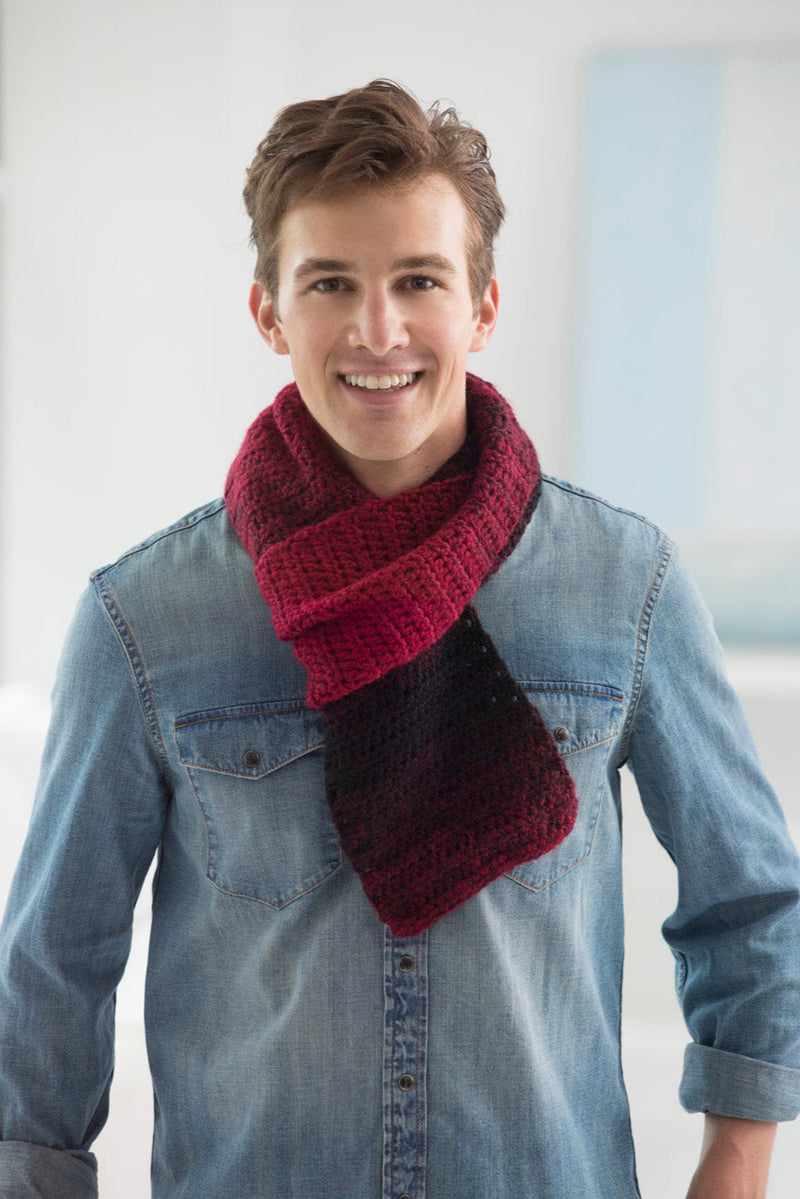
Yarn: #5 bulky
Finished size: 7 × 68 in
Hook: See the original PDF
If your main goal is to finish a wearable first scarf, this is one of the clearest starting points in the collection. The simple surface lets the yarn carry the visual interest, so you can concentrate on making even stitches and keeping the sides straight.
Lion Brand rates Version 2 as beginner level and lists a finished size of approximately 7 by 68 inches. The gauge is given in half double crochet, and the original project uses bulky yarn. Use the specific Version 2 download linked below so that your measurements and materials correspond to the same design.
The one-ball idea is convenient, but it depends on the original yarn’s yardage. A different bulky skein may contain considerably less yarn. Compare the length on the label, not just the number of balls or their weight.
Beginner tip: Put a removable marker in the first and last stitch of each row. Count regularly during the first few inches; a scarf that slowly narrows is much easier to fix early. Save the yarn label for the finished gift’s care instructions.
7. Blooming Moss Scarf

Yarn: Original: two 100 g balls of Scheepjes Our Tribe
Finished size: 22 × 180 cm after blocking
Hook: 3.5 mm, or size to match gauge
Blooming Moss brings a more delicate kind of texture to the list. The raised details suggest small stems and seed-like tips against an open background, making this an attractive choice for someone who enjoys nature-inspired accessories without wanting a large motif or obvious picture.
Christina combines an expanded moss-stitch background with front-post stitches and small popcorn details. The original free instructions specify Scheepjes Our Tribe and include close-up photographs to explain the more unusual stitch placements. The finished dimensions are measured after blocking.
Although “moss stitch” may sound like a beginner project, the complete scarf involves more than the basic single-crochet-and-chain repeat. Read the photo tutorial first and keep track of the rows where the raised elements begin. The finer yarn also means a different pace from the chunky projects elsewhere in this list.
Finishing tip: Block a sample using the yarn’s care instructions before judging the fabric. For a gift, choose this design for someone who appreciates a lighter scarf with small details visible up close.
8. Always and Forever Textured Scarf

Yarn: #4 aran; Paintbox Simply Aran in the sample
Finished size: Ten sizes, including men’s small, medium and large
Hook: 5 mm
Chocolate brown and cream make this scarf easy to imagine with a wool coat, a corduroy jacket or a plain sweatshirt. Two different textures provide the interest, so the design can feel considered even when you choose understated colors.
The scarf combines staggered double-crochet pairs with half double crochet worked in the back loop. The designer supplies ten sizes, including three men’s options. The listed yarn estimates for those men’s sizes are approximately 410, 456 and 483 yards, which makes planning a gift more practical than guessing from a single photograph.
This is worth considering if you want to build confidence with texture while retaining a rectangular project. Keep the size-specific numbers marked in the instructions, especially when working through the foundation and stitch counts.
Video note: The buttons below open the designer’s right- and left-handed staggered-stitch lessons. They explain the stitch, rather than taking you through the complete scarf. Use them alongside the free written pattern. An optional paid PDF is also mentioned on the designer’s page.
9. Zebra Print Scarf
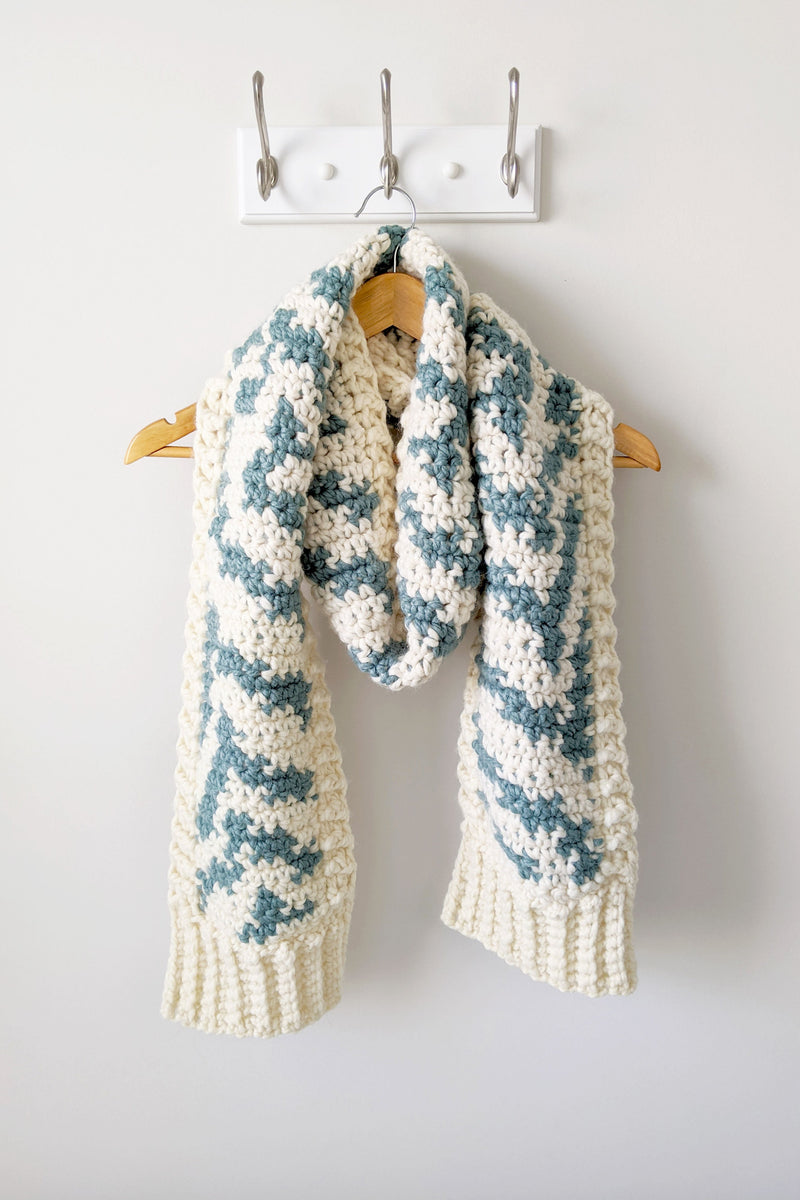
Yarn: #6 super bulky
Finished size: 8 × 85 in
Hook: See the original PDF
For a recipient who enjoys a statement accessory, this black-and-white scarf offers a stronger visual direction than a conventional solid-color design. The animal-inspired pattern makes the scarf the focal point, so it pairs particularly well with an otherwise quiet outfit.
Lion Brand lists this as an intermediate crochet project made with super bulky yarn. Its approximate length of 85 inches also places it among the longer choices here. The original product is categorized for women, but the scarf’s rectangular shape and graphic palette can suit anyone who likes the style.
Choose it for the recipient’s taste, rather than assuming that every men’s scarf needs to be neutral or minimally patterned. If you are making a surprise gift, look at the colors and prints already present in their wardrobe before committing to such a distinctive design.
Planning tip: Read the complete PDF before purchasing yarn, including the color requirements. Large stitches make mistakes conspicuous, so check the developing pattern frequently. Resist tightening your tension simply to make the color boundaries appear sharper.
10. Rocky Scarf

Yarn: Lion Brand Heartland; two skeins in the materials list
Finished size: 6 × 72 in, excluding fringe
Hook: 5 mm
Rocky is a strong option when you want a textured scarf that still feels compact enough for everyday wear. The bobbles interrupt the ridged rows just enough to make the surface interesting, while the original green color keeps the overall effect grounded and easy to style.
Sarah works the scarf lengthwise using bobbles and half-double-crochet-based texture, including stitches placed in the third loop. The written pattern rates it easy and provides a complete video tutorial showing the construction and that less familiar loop placement.
The materials list specifies two skeins of Lion Brand Heartland and a 5 mm hook. Use that list when planning: an introductory paragraph on the page names a different yarn, while the pattern’s detailed supplies and Ravelry listing identify Heartland.
Making tip: Practise one bobble-and-ridge section before starting the long foundation. Watch that the bobbles sit consistently on the intended face. Fringe is optional, so you can leave the ends plain for a cleaner silhouette. A matching Rocky Beanie is linked from the designer’s page.
11. Green Apple Scarf
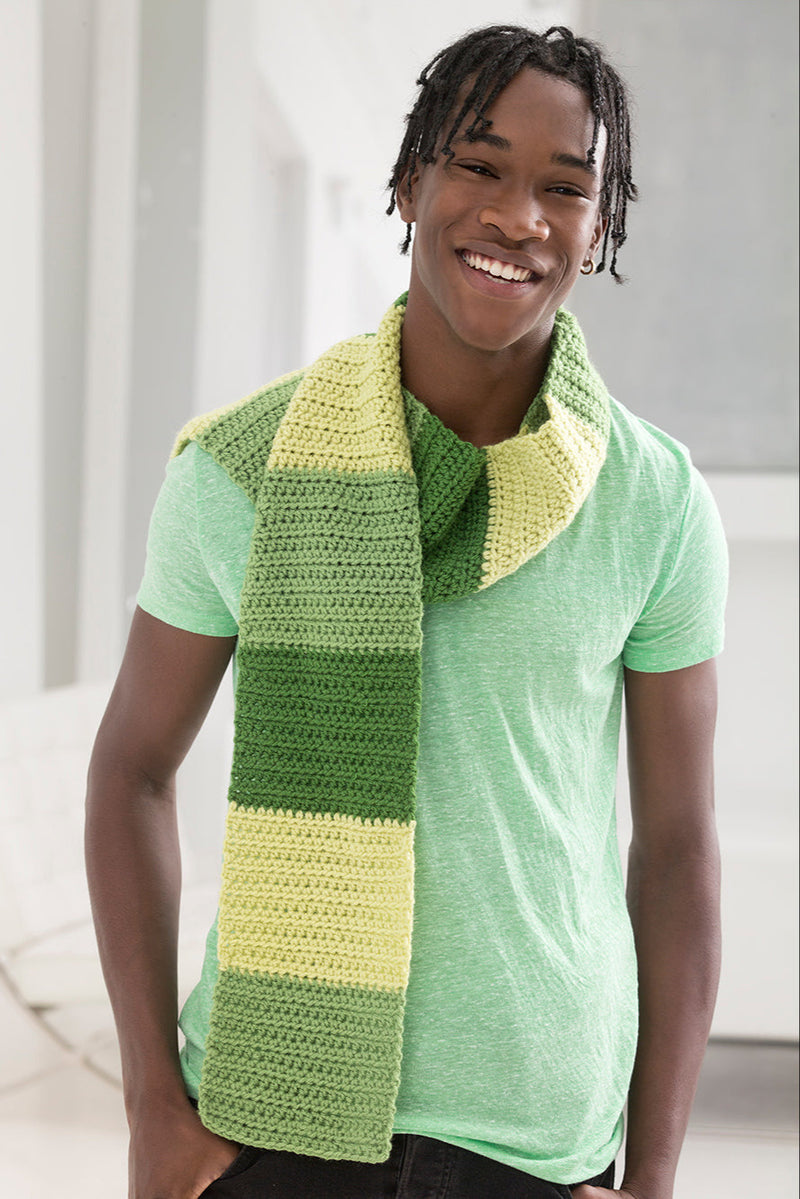
Yarn: #4 medium / worsted
Finished size: 7 × 62 in
Hook: See the original PDF
A straightforward scarf in a well-chosen color can be more useful than a complicated design the recipient rarely wears. Green Apple is a good example: its appeal comes from a clean rectangular shape and a manageable size rather than elaborate surface decoration.
Nathan Vincent’s pattern is rated beginner by Lion Brand and uses medium-weight yarn. At approximately 7 by 62 inches, it is shorter than several of the generously wrapped designs above. That makes it a useful comparison point if you are choosing between an everyday scarf and a super scarf.
The listed gauge is based on half double crochet. Check the download for the complete materials and instructions before substituting yarn, particularly because fiber choice influences how the finished rectangle hangs.
Gift idea: You do not need to keep the apple-green shade. Consider a color that picks up a small detail in the recipient’s favorite jacket or hat. Make a few inches and test the fabric against your neck; softness matters more than matching the sample photograph exactly.
12. Chocolate Cherry Scarf
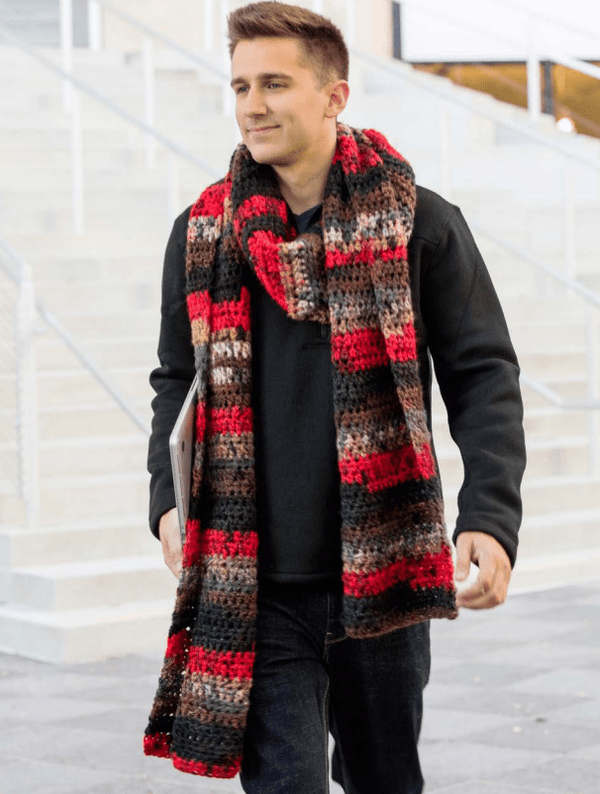
Yarn: Original: five skeins of Mega Brushed Chunky
Finished size: 12½ × 105 in
Hook: 8 mm, or size to match gauge
Chocolate Cherry combines a large, enveloping shape with a straightforward stitch pattern. The variegated yarn provides the changing color, making this a good direction for someone who likes rich autumn shades but would rather avoid managing separate balls for striped rows.
The free Premier Yarns PDF rates the scarf easy and uses half double crochet. The original is substantial: approximately 12½ inches wide and 105 inches long. Its materials list calls for five skeins of Mega Brushed Chunky and an 8 mm hook, adjusted as needed for gauge.
That size is part of the design’s character, but it is worth checking against the recipient’s preferences before starting. A person who wears a slim coat or dislikes bulky layers may prefer one of the narrower scarves in this collection.
Substitution tip: If the original yarn is unavailable, compare its yardage, texture and finished gauge with your alternative. A smooth yarn can produce a very different surface from a brushed one. Check the sample after washing, and keep enough yarn aside to finish neatly.
How to choose yarn for a men’s crochet scarf
Start with comfort against the neck. A yarn that feels pleasant in your hand can still feel scratchy when worn under the chin. Crochet a small sample, wash it according to its label, allow it to dry, and test it against your neck before buying the full quantity for a gift.
Choose the fiber for the person who will wear it
Easy-care acrylic is practical when the recipient wants straightforward washing. Wool and wool blends are useful for warm, springy fabrics, but softness and washing requirements vary. Cotton-rich yarns can suit milder-weather accessories; their weight and drape may differ substantially from the wool or acrylic used in a winter pattern.
For a surprise gift, include the yarn label or a short care card. Do not assume that all wool must be hand-washed or that every acrylic can go in a hot dryer: the individual label is the instruction to follow.
Match more than the yarn-weight number
Two yarns labeled worsted can produce noticeably different fabrics. Compare the recommended gauge, fiber, strand construction and yards per ball. If you change from a fluffy yarn to a smooth one, or from a soft blend to firm cotton, make a new sample rather than expecting the photograph’s texture to carry over unchanged.
For bobbles, ridges and raised diamonds, a solid or gently heathered shade usually makes the stitch work easier to see. Strongly variegated yarn can be attractive in simple stitching, but its color changes may compete with an elaborate textured repeat.
Get the length, width and drape right
The most useful measuring tool is a scarf the recipient already enjoys wearing. Lay it flat and record its length and width, then compare those measurements with the patterns above. Ask how it is normally worn: hanging straight, looped once, or wrapped several times. There is no single correct scarf size for every man.
Pay attention to the direction of construction. In a scarf worked lengthwise, the starting foundation largely determines the long dimension. In a scarf worked from one short end, repeated rows build the length. Always preserve the pattern’s stitch multiple when adjusting the foundation, and remember that altering either dimension changes yarn use.
If you add fringe, consider both the extra yarn and the total worn length. A scarf that looks manageable before finishing can become surprisingly long once fringe is attached. Reserve yarn for the ends before extending the main fabric.
A short checklist before you begin
- Open the exact pattern version and read the materials, gauge and special-stitch notes.
- Check whether the instructions use US or UK crochet terms.
- Make and wash a sample in the intended yarn.
- Compare the finished measurements with a scarf that fits the recipient’s routine.
- Mark the relevant size and any repeat instructions before starting.
- Keep enough matching yarn for finishing, fringe and any planned extra length.
Tips for a neater, more comfortable finished scarf
Keep the foundation relaxed. A tight starting chain can pull along one edge even when later rows are consistent. Use the designer’s suggested foundation method and compare its flexibility with the fabric as you work. Do not automatically change hook size unless your sample shows a reason to do so.
Check both edges regularly. Put markers in edge stitches when the turning chains are hard to identify. Count at the end of a repeat, especially after color changes. A missing edge stitch can turn a long rectangle into a taper before the mistake becomes obvious.
Finish before you judge. Weave in the ends securely and block according to the fiber’s care instructions. Blocking can settle a texture and straighten a scarf, but it will not replace missing stitches or correct an unsuitable yarn substitution. Avoid aggressively stretching raised details flat.
Frequently asked questions
Which free crochet scarf pattern is best for a beginner?
One Ball Crocheted Scarfie — Version 2 and Green Apple are both rated beginner by Lion Brand. Choose the one whose yarn weight and finished size you prefer. If this is your very first project, practise the foundation, turning and half double crochet on a small rectangle before starting the full scarf.
Are all the patterns and PDF downloads free?
Every design in this collection has a free route to the instructions. That does not mean every PDF is free: some independent designers offer the pattern on their blog and sell an optional printable version. The buttons distinguish free downloads from paid PDFs so you can choose the format you want.
How much yarn do I need for a men’s scarf?
Use the quantity in the specific pattern rather than a general ball count. Width, length, yarn thickness and stitch texture all affect consumption. When substituting, compare total yardage or meterage; five small balls and five large balls are not equivalent. Allow for any changes you make to the original size.
Can I make these scarves without fringe?
Check the finishing notes first. Several rectangular scarves can be worn with plain ends, but fringe sometimes incorporates loose color-change ends. If you leave it off, those ends still need to be woven in securely, and you may want a tidy finishing row if the designer provides one.
Why is my crochet scarf becoming narrower or wider?
Count the stitches at both edges and check whether the turning chain counts as a stitch. Accidental increases and missed final stitches are common causes. If the stitch count is correct, compare your tension and check that you have not changed the hook or the repeat placement.
Can I use a different color or make one of these scarves for anyone?
Yes. Choose colors, dimensions and a texture that the wearer will enjoy. The collection is organized around a search for men’s scarves, but these accessories can suit anyone. A favorite shade and a comfortable fabric are more useful guides than a gender label.
More crochet scarf ideas to explore
For a simpler next project, browse our easy crochet scarf patterns for beginners. If you enjoyed the raised details here, explore textured scarves with cables and bobbles. For more generous proportions, see our long crochet scarf patterns.
You can also find more styles in the Crochet Scarf Patterns category. Save your favorite design, check its measurements, and choose the yarn with the wearer in mind.
Selection inspired by Crocht’s men’s scarf collection. Project details were checked against the linked original designers and publishers. All designs and original photographs belong to their respective creators. This article provides original commentary and directs you to the complete patterns.