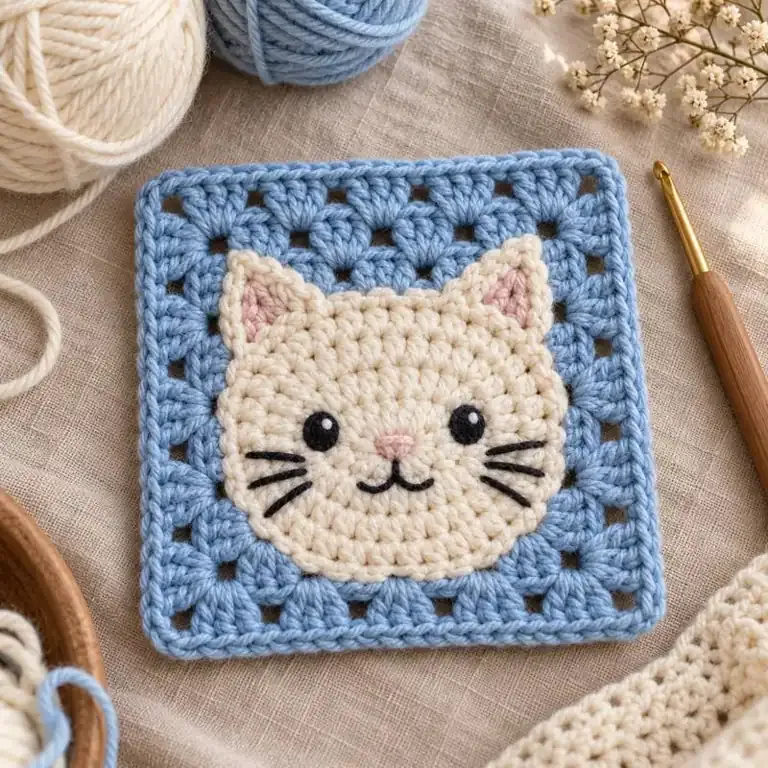
A cat granny square turns a small, satisfying crochet motif into the start of a much bigger project. Make one as a coaster or bag accent, repeat a favorite cat face for a blanket, or mix different expressions and colors for a playful cushion. The key is choosing a pattern whose construction matches the way you like to crochet: some begin with a separate cat appliqué and build a square around it, while others shape the face and corners together.
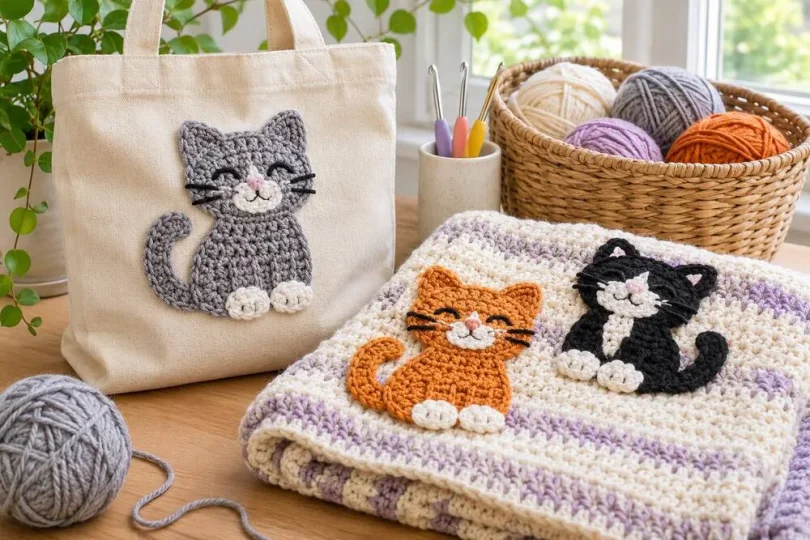
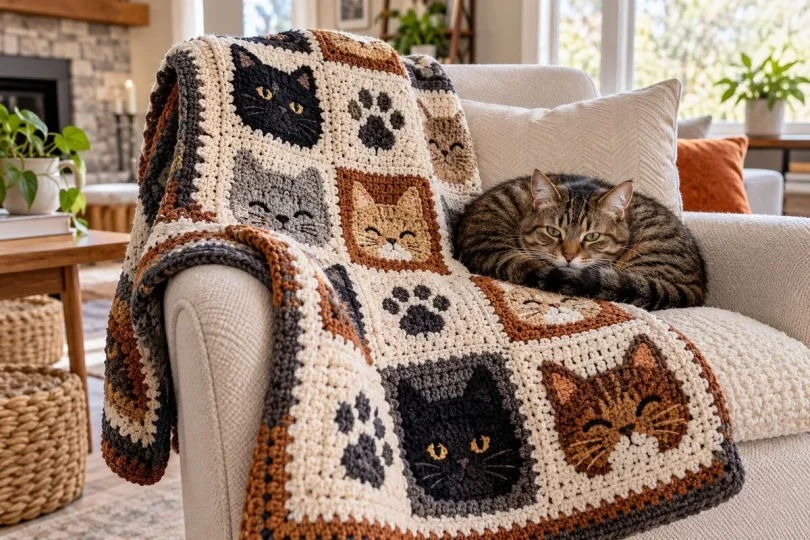
This guide brings together five real cat-themed granny-square patterns and tutorials, with the format, materials, approximate size, and best use for each. The illustrations on this page are original visual concepts to help you imagine color and styling; they are not stitch charts or exact photographs of the designers’ samples. Follow the linked creator’s instructions for the actual pattern.
Explore the Cat Granny Square Patterns
At a glance: which pattern should you try?
| Pattern | Format | Approx. size / hook | Best for |
|---|---|---|---|
| Be Ewenique Boutique | Free written pattern + video; optional paid printable | About 5 in; 5 mm hook | A cat appliqué that becomes a square |
| Sewrella | Free written blog pattern; optional paid PDF | 6 in; 5 mm hook | A larger, classic kitty-face block |
| Crochet Bits | Free online instructions; optional ad-free PDF | About 4.7 × 4.3 in; 4 mm hook | Colorwork and a detailed cat face |
| Loopara paw-print square | Free written tutorial with video | About 3 in; 2.3 mm hook | Small motifs and paw-print projects |
| Hook & Loop tutorial | Free YouTube video | Check the video’s materials section | Following a cat-face square visually |
1. Be Ewenique Boutique: a cat appliqué framed as a square
This is a useful choice if you like constructing a character first and adding the square afterward. The designer begins with a round cat-head motif, shapes the two ears, then works a contrasting border around the face. That construction makes the cat stand out clearly and gives you room to choose a background color that suits a blanket or bag.
The designer lists worsted-weight yarn and a 5 mm hook. The appliqué is about 4 inches wide, and the finished square is about 5 inches. The web instructions are available to read for free and include a full video; a printable PDF is offered separately through the designer’s page. The source uses US crochet terms, so check the abbreviations if you normally follow UK terminology.
For a first test square, use a light face color, a darker outline for the features, and one calm border shade. Keep the embroidered eyes and whiskers simple; tiny details look clearer when they are sewn with smooth, non-fuzzy yarn.
Open the Free Written Cat Square Pattern
Watch the Designer’s Full Video Tutorial
2. Sewrella: a six-inch kitty-face granny square
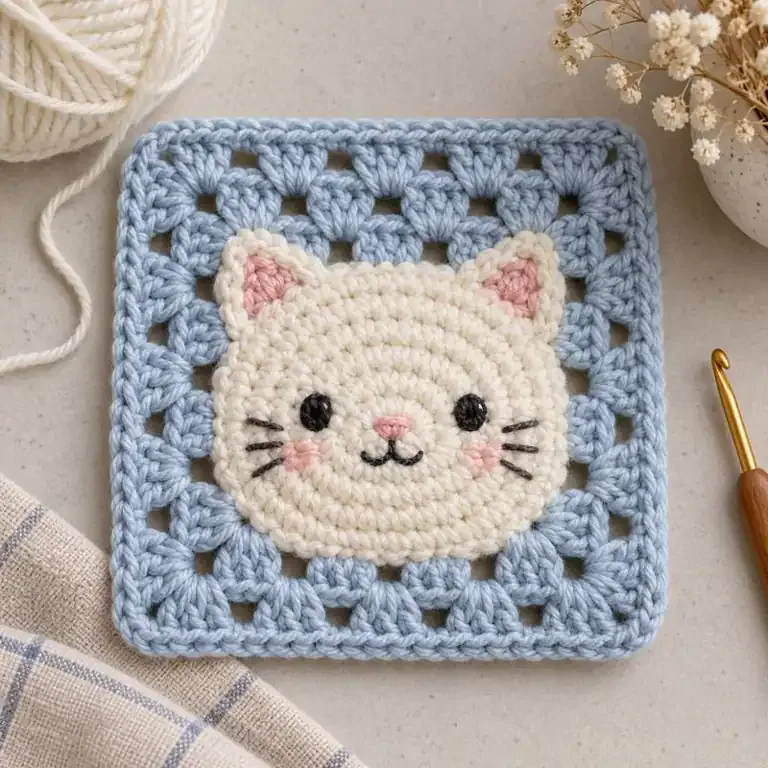
Sewrella’s “Kitty Cat Crochet Granny Square” makes a larger block, about 6 inches square. The cat’s head and ears form the focal point, while several granny rounds create a roomy frame. That extra area makes the motif easy to see in a pillow front or tote, and it means you need fewer blocks to cover the same area than you would with a 3- or 5-inch motif.
The written pattern calls for worsted-weight yarn, a 5 mm (H) hook, a tapestry needle, and a handful of colors for the face, ears, and background. The designer shares the instructions on the blog for free and also offers a large-print, ad-free PDF for purchase. It is a nice option if you want an expressive cat with embroidered facial details and prefer reading a row-by-row post.
Before making a full blanket, crochet one square and measure it after the same blocking or washing you expect to use on the finished piece. If your block comes out noticeably larger or smaller than 6 inches, adjust your hook or tension before making the rest.
View Sewrella’s Free Kitty Cat Pattern
3. Crochet Bits: a detailed, colorwork cat face
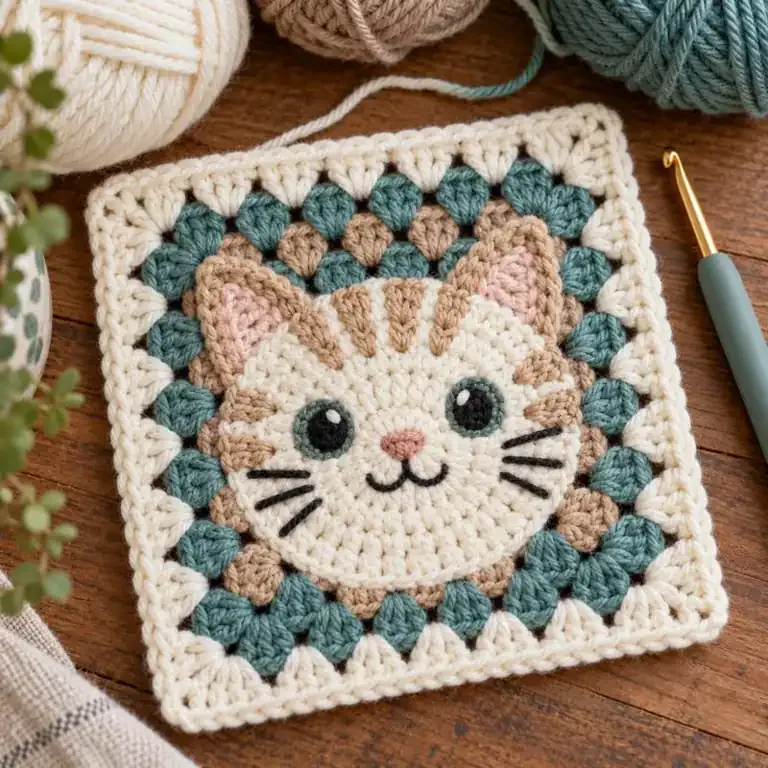
If you enjoy changing colors to create a face, Crochet Bits has a cat-face granny square with a finished size listed at roughly 12 × 11 cm (about 4.7 × 4.3 inches). The online pattern uses a 4 mm hook and medium-weight yarn; its sample colors are white, beige, and blue, but you can adapt them to a ginger tabby, tuxedo cat, or a fictional color palette.
The face is formed through several rounds of color changes, then a separate squaring section creates the corners. This gives the motif a graphic look, but it also means stitch placement and color carrying matter. Use stitch markers to identify the round’s beginning and keep the unused strand relaxed behind your work so the square does not pucker.
The creator’s instructions are viewable online. The same page offers an ad-free PDF for $3.49 at the time checked; confirm the current price and terms on the creator’s site before purchasing. Choose this version if you value a defined face motif and are comfortable tracking color changes.
Read the Cat Face Pattern and Check PDF Details
4. Loopara: a small paw-print granny square
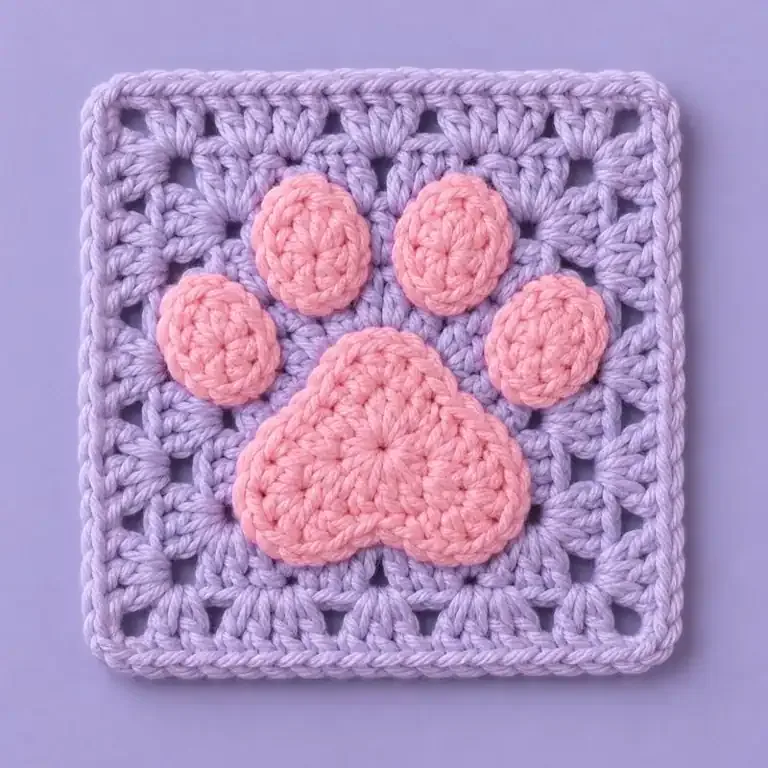
Not every cat-themed square needs a face. Loopara’s small paw-print motif is listed at about 3 inches and uses a 2.3 mm hook with fine cotton yarn. Its raised pads give the square texture, and the compact size works well for coasters, small pouches, a decorative panel, or as an accent between larger plain squares.
This design uses several stitch types and shaped details, so “small” does not automatically mean easiest. Read the abbreviations before starting and keep the instructions open while you work. Because the hook is much smaller than the 4–5 mm hooks used by several face motifs above, it will produce a denser fabric; do not combine it directly with larger squares until you have tested the finished measurements.
The creator’s page includes the written tutorial and a video link. Check the yarn label and care guidance, especially if you plan to use the motif in a frequently washed blanket or bag.
See Loopara’s Free Paw-Print Square Tutorial
5. Hook & Loop Crochet: a video-first cat square tutorial
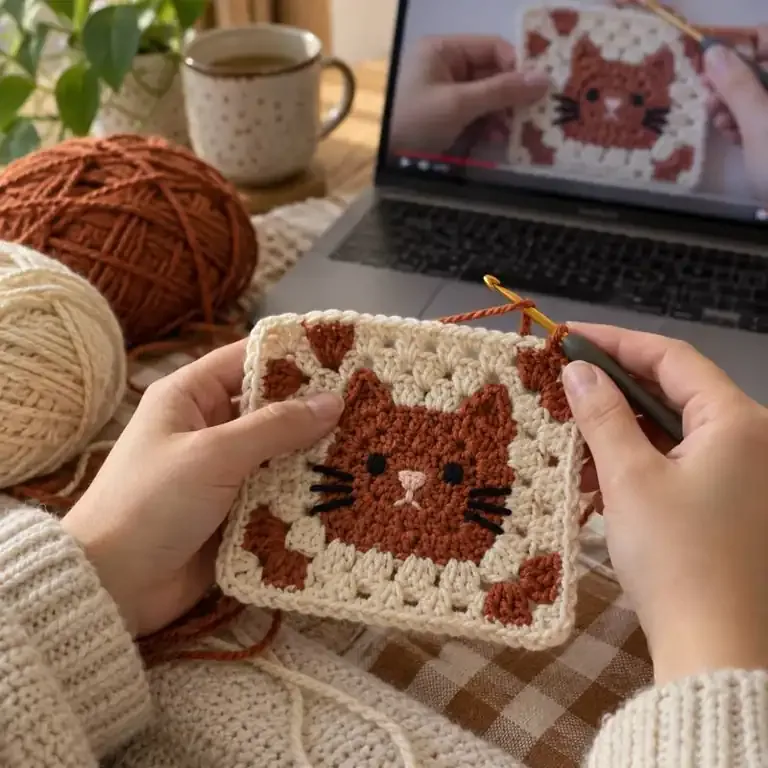
Some crocheters learn more easily by watching how a stitch is made than by interpreting a paragraph. Hook & Loop’s YouTube lesson walks through the materials, cat nose and face, muzzle, ears, and the rounds that turn the face into a square. The chapter list helps you return to a specific stage instead of scrubbing through the entire video.
This is a video tutorial rather than a separate written pattern page, so pause to record the materials and round counts that matter to you. The creator’s description also flags a correction at 11:03: the stitch cluster should be four unfinished double crochets, not five. Keeping that note beside your project can save a frustrating restart.
Use this tutorial if you prefer visual demonstrations or want to see how the face transitions into the border. If you need a printable reference, choose one of the written patterns above instead.
Watch the Free Cat Granny Square Video
How to choose yarn, hook, and colors
For a blanket or tote that will see regular use, smooth, sturdy yarn makes the cat details easier to read and the fabric easier to care for. Acrylic and cotton are common choices; check the care label and select one fiber for all blocks when possible. Mixing yarn weights or fibers can change square size and drape even when the color palette looks coordinated.
- Use the hook listed in the chosen pattern first. If your stitches are unusually tight or loose, make a second test square with a half-size adjustment.
- Choose contrast for the face. A light muzzle on a darker head, or dark embroidery on a pale face, helps the features remain visible from a distance.
- Limit the palette. One face color, one accent color, one border color, and a shared joining color usually make a coordinated blanket without creating too many yarn ends.
- Make one complete test square. Count the rounds, measure it flat, and check that the corners lie square before making multiples.
- Weave in ends as you go. Cat faces involve several color changes; securing tails after each motif keeps finishing manageable.
For a calm room palette, try cream, sage, and warm gray. For a bright gift, combine mustard, coral, and teal with a neutral border. A black-and-cream tuxedo palette reads clearly, while ginger, ivory, and rust suggest a tabby without needing complicated stripes.
Turn individual squares into a finished project
Blanket: Pick one motif size and make a sample layout before calculating the total. If your target is around 45 × 60 inches and your blocked square measures 5 inches, a starting grid of 9 columns by 12 rows gives a nominal 45 × 60 inches before seams or joining edges change the measurements. Join two or three plain squares between cat motifs if you want a lighter, less busy design.
Tote bag: A front panel of six 5-inch squares arranged three across and two high is about 15 × 10 inches before joining and edging. Add a lining if the bag will carry small items, since granny-square gaps can stretch.
Cushion: One 6-inch cat square can anchor a patchwork front, or a set of smaller squares can cover a larger panel. Measure the actual cushion insert and include the seam allowance and border in your plan.
Whichever project you choose, block the squares to a consistent measurement before joining. A simple whip stitch or slip-stitch join gives a tidy seam; a join-as-you-go method can reduce sewing later, but test it first because it may affect the finished width.
Common problems and quick fixes
Why is my square curling?
Check whether the corners have the right number of chain spaces or stitch groups, and avoid pulling chains too tightly. If the pattern’s rounds are correct but the motif still cups, try a slightly larger hook for the border and compare a second sample.
Why do my squares end up different sizes?
Use the same yarn weight and hook, and compare tension across motifs. If you intentionally combine different patterns, block the smaller ones gently or add a simple border round to bring them closer in size. Do not stretch a square so far that the cat face distorts.
How can I make the face look neat?
Use a tapestry needle and smooth yarn for embroidery. Mark the center line before stitching the nose and eyes, then check the expression from a few feet away. Secure the ends on the back so features do not loosen with use.
Frequently asked questions
Are these crochet cat granny-square patterns free?
Several have free instructions on the designer’s website or in a YouTube tutorial. Some designers also sell an optional printable or ad-free PDF. Check the pattern page for its current terms and price; “free online pattern” does not always mean the downloadable PDF is free.
Which cat granny square is best for a beginner?
If you already know basic crochet stitches, start with the format you find easiest to follow. Be Ewenique Boutique and Sewrella provide written blog instructions; the linked video can help when you want to see how the cat face is shaped. The paw-print square is small but includes more varied details.
Can I use different patterns in one blanket?
Yes, but make one sample of each design first. Compare the blocked dimensions, yarn weight, and drape, then use extra border rounds or plain squares to create a consistent layout.
What can I make besides a blanket?
Try a tote front, cushion panel, wall hanging, table runner, or a single square as a coaster or appliqué. For bags, add a fabric lining if the stitch gaps are wide.
Do the pictures show the exact patterns?
No. The images in this guide are original concept illustrations to show possible color and styling ideas. Use the pattern designer’s page for the actual sample, stitch details, and instructions.
More crochet cat projects
If you enjoy making cat motifs, continue with our collection of free crochet cat amigurumi patterns, try the mini crochet cat with a lacy collar, or browse our Crochet Cat Patterns category for more feline projects.