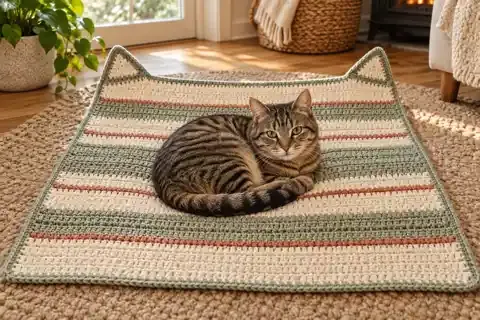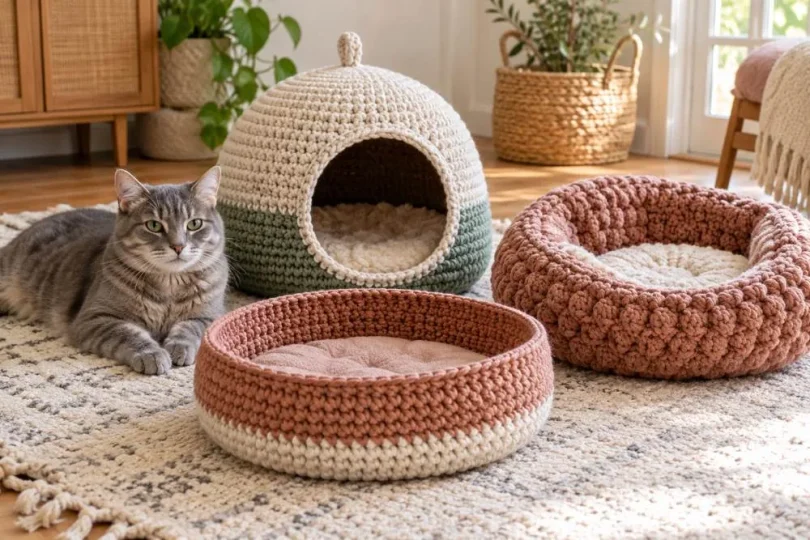
A crocheted bed can be a cozy perch, a tucked-away cave, or a washable spot that fits your cat’s favorite corner. The right pattern depends on how your cat sleeps, how much structure you want, and whether you are comfortable working with bulky yarn or cord. This guide compares ten pattern resources and explains how to choose a size before you buy yarn or start crocheting.
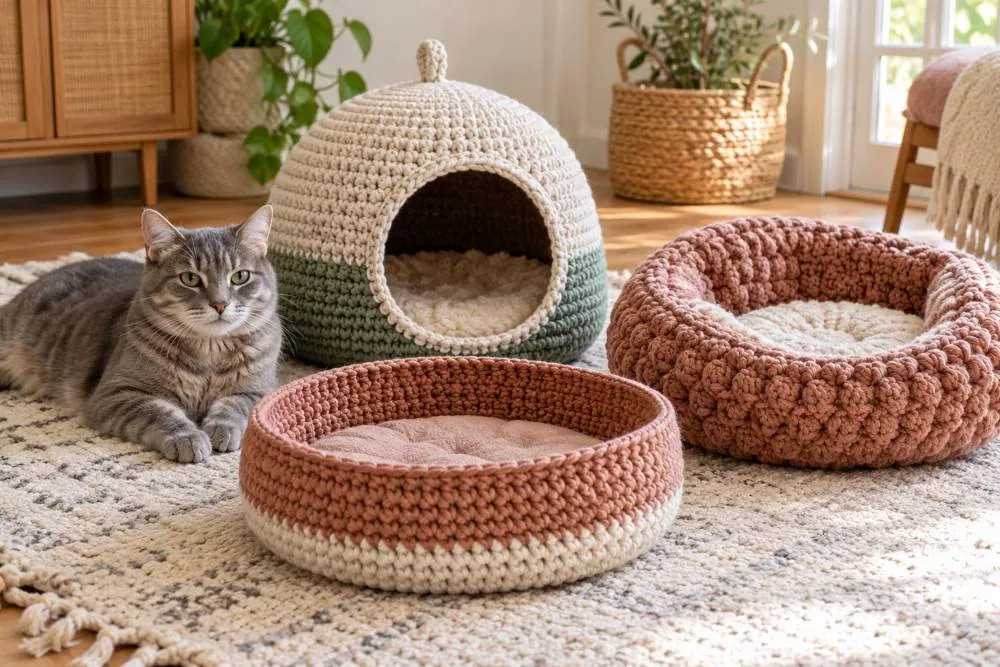
The illustration is original editorial artwork, not a photograph of the designers’ exact finished samples. Each button leads to the creator’s pattern page or PDF, where you can confirm the current instructions and materials.
Choose quickly
- For a tucked-in cat: start with a cave or enclosed house.
- For a cat that stretches out: choose a shallow basket or flat nest.
- For a firm silhouette: look for bulky yarn, cord, or a pattern with structural support.
- For a beginner: choose a clearly written pattern with stated measurements and simple stitches.
- Measure your cat’s preferred sleeping curl before selecting a size.
Before choosing a cat bed pattern
Measure a bed your cat already uses, or note the space occupied when your cat is curled up. For a nest, measure across the widest part of the curled body and add a little room for turning. For a cave, check both the interior floor and entrance: an opening that looks roomy in a photo may be awkward for a larger cat. Follow the designer’s finished measurements and make a gauge swatch if the pattern calls for one.
Structure is another key decision. Regular yarn makes a softer bed that can collapse or stretch; bulky yarn, a tight stitch, cord, or a frame can help it hold its form. Read the instructions to see whether the pattern is washable, whether a removable cushion is included, and whether it needs a plastic hoop or another support. For a project that your cat will use every day, choose materials you can clean and let dry fully.
10 crochet cat bed and cave pattern ideas
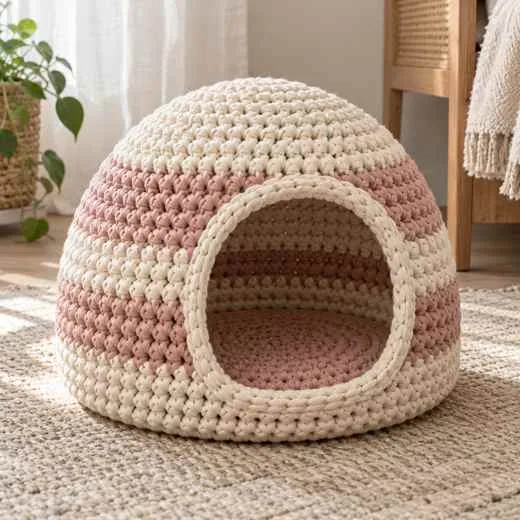
1. Macramé-cord cave bed
Lucy Kate Crochet’s cave-style bed uses 3 mm macramé cord and a 6 mm hook to create a firmer structure than a typical soft-yarn project. The designer notes that cord can be demanding on the hands, so this is a make to work on gradually rather than rushing. It is a good fit if you want a defined hideaway and are comfortable with a dense, sturdy fabric. Check the full instructions for the finished size and color amounts before choosing cord.
Read the free cave-bed pattern
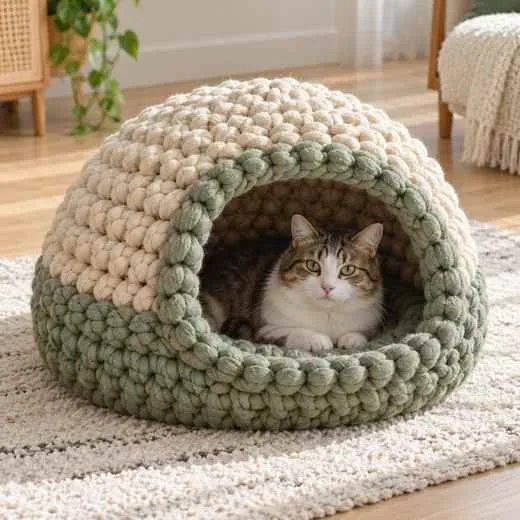
2. Oversized chunky cat cave
Love Fest Fibers provides a free cat-cave pattern with a basic skill level and jumbo hook. Its stated finished measurements are about 17 inches across and 8.5 inches tall, using two 50-yard balls of the recommended bulky yarn; the creator notes that another ball can help size it up for a larger cat. This is one of the clearest options if you want a big, soft cave with dimensions listed up front. Check the yarn’s care instructions and consider how easily the finished piece will fit into your washing routine.
Open the free chunky cat-cave pattern
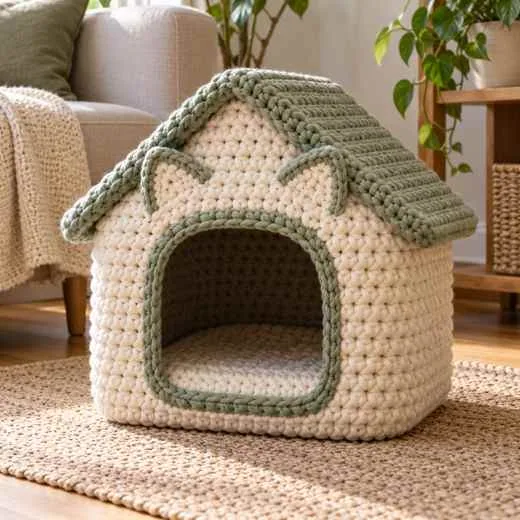
3. Kitty cat house
Hobbii’s Kitty cat house pattern is presented as a free beginner-friendly pet project. Its listed finished size is approximately 35 × 40 cm, with an entrance height of about 12 cm. Those measurements make it especially important to compare the doorway with your cat’s body size and comfort. A house shape can feel secure to cats that like covered spaces; leave it in a quiet spot and let your pet investigate it at their own pace.
View the free Hobbii cat-house pattern
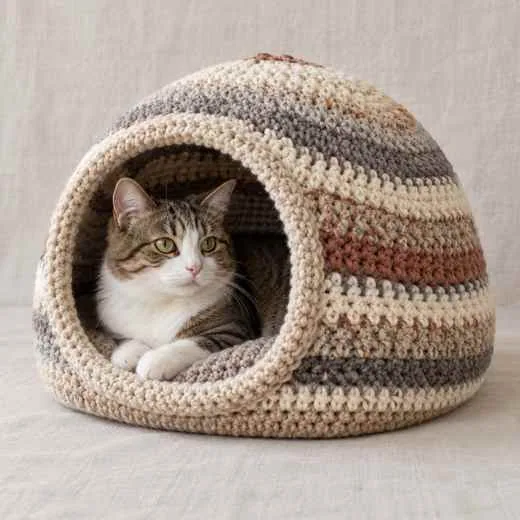
4. Hoop-supported scrap-yarn cave
Ioana van Deurzen’s free pattern listing describes a cave made with leftover yarn and a plastic hoop, with size adjustments possible. Ravelry also notes that the original is a photo tutorial rather than detailed row-by-row instructions, so it is better for crocheters who can interpret construction photos and adapt as they go. The hoop helps keep the entrance open, but check that it is fully covered and cannot poke through the stitches.
See the free cat-cave photo tutorial
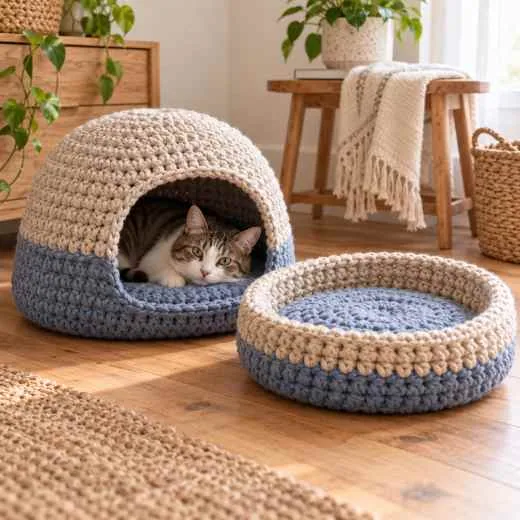
5. Marley’s Cat Cave or Bed
This free pattern by Jenni Catavu is listed with a one-size construction, worsted-weight yarn, and two hook sizes: 6.5 mm and 9 mm. The pattern calls for a substantial amount of yarn, so review the yardage and gauge before beginning. The combined cave-or-bed idea is useful if you want to compare an enclosed sleeping nook with an open resting space. A gauge swatch matters here: even a small difference in a dense fabric can change the final dimensions.
Open the free Marley’s cat cave or bed pattern
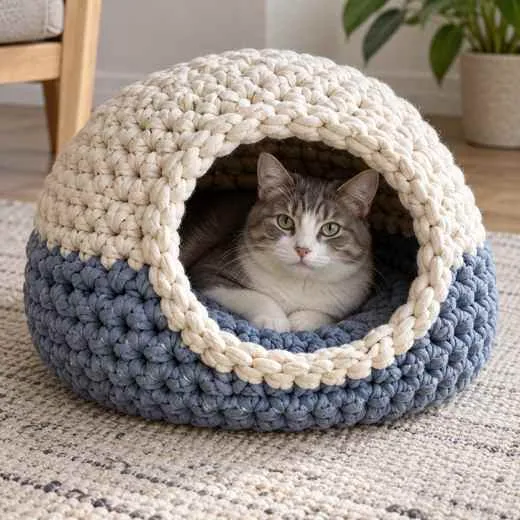
6. Lion Brand Kitty Cozy PDF
Lion Brand’s free Kitty Cozy PDF is an easy-level pattern worked in one piece, first in the round and then divided to form the doorway. The PDF lists a finished diameter of about 16 inches and a height of about 12 inches, with a 15 mm hook and a bulky recycled-fabric yarn. It is a strong choice for someone who prefers a printable pattern with measurements and a defined build sequence. Read the yarn and gauge notes in the PDF before substituting a different bulky material.
Download the free Kitty Cozy PDF
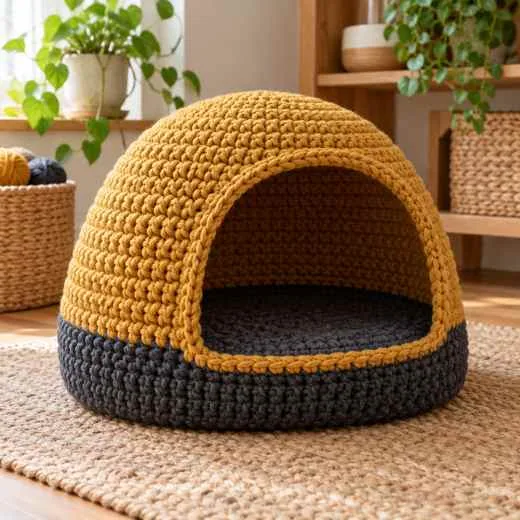
7. Mary Maxim cat cave
Mary Maxim hosts a free cat-cave pattern page. Open the source to review the complete material list, sizing, and download steps, because retailer pages can change the way a free pattern is delivered. A cave is especially useful for cats who like to hide or lean against soft walls, but the entrance should remain open and the piece should sit securely without tipping when your cat steps inside.
Check the free Mary Maxim cave pattern
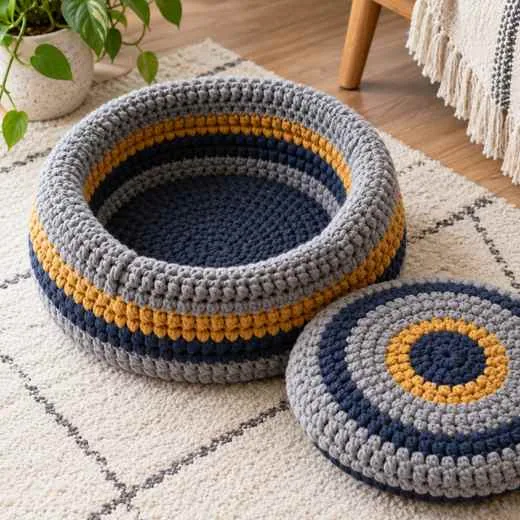
8. Curl-Up Kitty Cat Bed with removable liner
Lion Brand’s free Curl-Up Kitty Cat Bed PDF creates an open, raised-sided bed rather than an enclosed cave. The easy-level pattern lists a base circumference of about 117 cm (46 in) and a height of about 15 cm (6 in), and includes a separate liner that can be removed for washing. Its instructions call for a dense fabric and explain how to fold the sides inward to help the bed hold its shape. Check the unusually generous listed base measurement against your room and your cat’s size before starting; the pattern’s gauge and yarn quantities are important for this large project.
Download the free Curl-Up Kitty Bed PDF
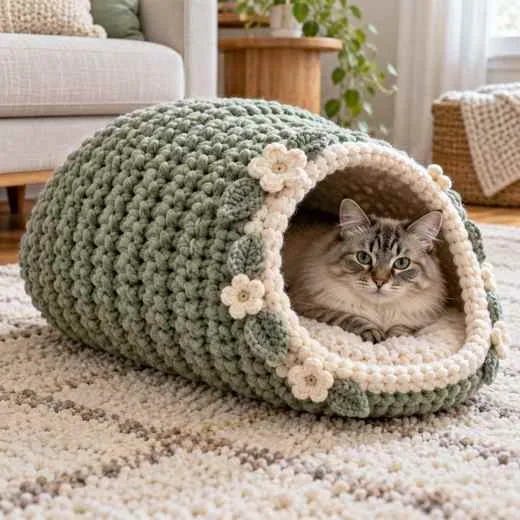
9. Bernat Blanket Big crochet cat cocoon
Yarnspirations offers this free Bernat Blanket Big cocoon pattern as a downloadable PDF with no sign-up required. The pattern uses an 8-inch (20 cm) floral hoop to keep the opening defined and lists a finished length of about 20 inches (51 cm), with an opening around 8 inches (20 cm) across. It is a good match for a cat that enjoys curling up in an enclosed pod. Before starting, compare the entrance with your cat’s size and check the yarn care instructions; the source recommends a gentle machine wash and low tumble drying.
Get the free Bernat cocoon pattern
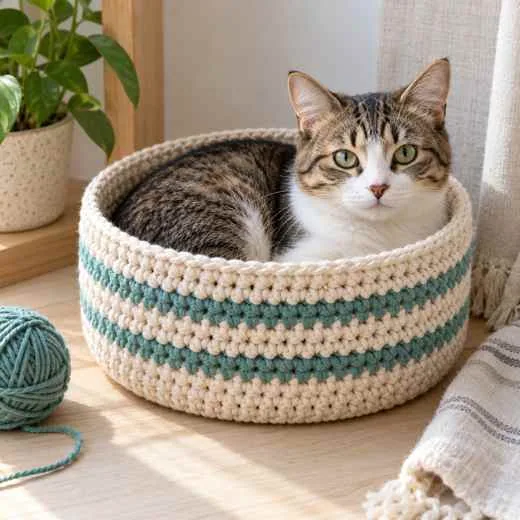
10. Lily Sugar’n Cream crochet cat basket
This free, easy pattern from Yarnspirations uses Lily Sugar’n Cream yarn and makes a more upright basket-style bed. Its listed finished size is about 10 inches (25.5 cm) in diameter and 8 inches (20.5 cm) tall. That compact footprint may suit a kitten or a cat that likes a snug rim, but measure your pet’s curled-up width first—the usable interior is smaller than the outer diameter. The pattern page also includes care guidance for the cotton yarn, so review it before choosing colors.
Open the free Lily cat basket pattern
How to size a crochet bed for your cat
Measure first, then compare the pattern
For an open bed, measure the cat while curled up and compare that width with the interior measurement, not the outside edge. A thick raised rim reduces the usable sleeping area. For a cave, compare body width with the entrance and floor space, and allow enough room to turn around. If your cat is still growing or is between sizes, use the pattern’s adjustment options where available instead of scaling every round by guesswork.
Make a gauge swatch when called for
Gauge tells you how large the stitch fabric will be with a particular yarn and hook. A bed may still be usable if it comes out a little larger, but a smaller entrance or floor can change comfort significantly. Match the pattern gauge before making the full piece; use the yarn and hook recommended by the designer as the starting point.
Think about cleaning and placement
Choose yarn that suits the cat’s habits and the way you can care for the bed. A cat that sheds heavily may make a textured surface harder to clean. A cave should have ventilation and a stable base, and an open bed should not slide on the floor. Let a newly made bed air out and make sure it is dry before inviting your cat to use it.
Tips for a sturdy, comfortable finish
- Keep stitch tension consistent so the walls do not flare or buckle unexpectedly.
- Count increases on circular bases; uneven increases can make a bed wobble.
- Weave in ends securely and keep them on the outside of the sleeping surface.
- Do not leave a sharp frame, wire, or exposed hoop where a cat could reach it.
- Test the bed’s stability by pressing the base and rim before placing it in regular use.
- Introduce the finished bed gently with a familiar blanket; some cats prefer time to explore.
Which pattern is best for your project?
For a large, chunky cave: compare Love Fest Fibers and the Lion Brand PDFs. For a beginner: start with Hobbii’s beginner listing or the Lion Brand easy-level PDF. For a firm cord structure: choose Lucy Kate Crochet’s macramé-cord design and pace the work. For an enclosed pod: look at the Bernat cocoon. For a compact basket bed: compare your cat’s measurements with the Lily Sugar’n Cream basket before starting. For a scrap-yarn experiment: the hoop-supported Ravelry photo tutorial offers room to adapt, but it expects more construction judgement.
Frequently asked questions
Are crochet cat beds durable?
Durability depends on yarn, stitch density, construction, and your cat’s behavior. A cat that scratches or chews may damage a crocheted bed, so inspect it often and stop using it if the fabric opens or support becomes exposed.
Can I use any yarn I have?
Use the designer’s material list as your baseline. Substituting a thinner or stretchier yarn can change the dimensions and structure. If you substitute, make a gauge swatch and test the finished fabric for stability.
Should I add a cushion?
A removable cushion can make cleaning easier, but add one only if the pattern allows for it and it does not block the entrance or reduce the usable space too much. Wash both pieces according to their fiber labels.
Will my cat use a cave bed?
Some cats love enclosed spaces; others prefer an open bed or a sunny patch of floor. Let your cat choose. A crocheted cave is not a guaranteed favorite, so use materials you already own when possible and avoid forcing your cat inside.
More crochet patterns for cat lovers
Pair a new sleeping spot with handmade playthings in our guide to crochet cat toy patterns. For more projects, see our popular cat crochet ideas for home décor and gifts, crochet cat amigurumi patterns, and large collection of free crochet cat patterns.