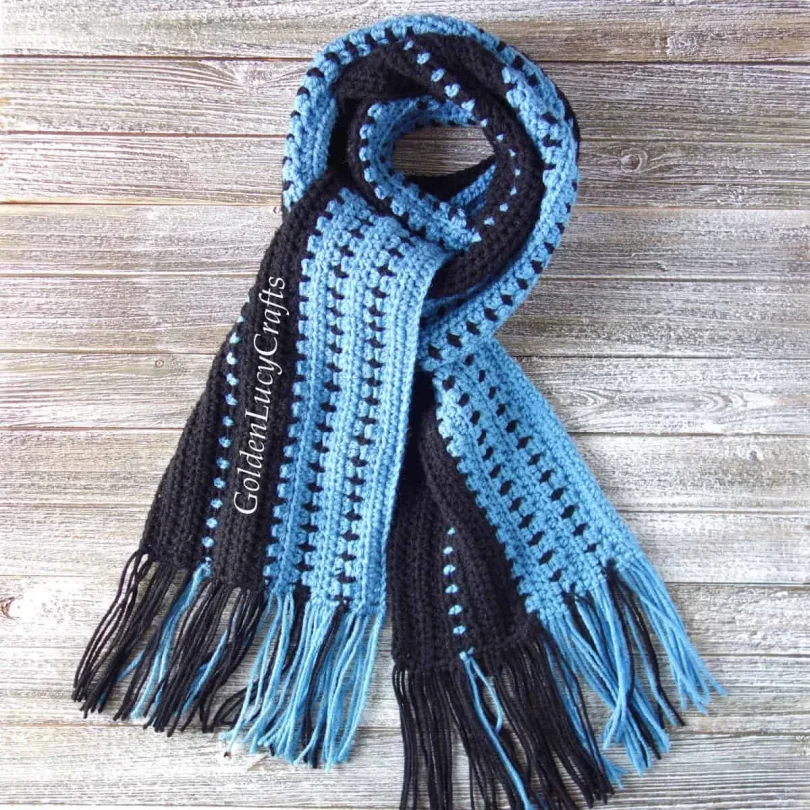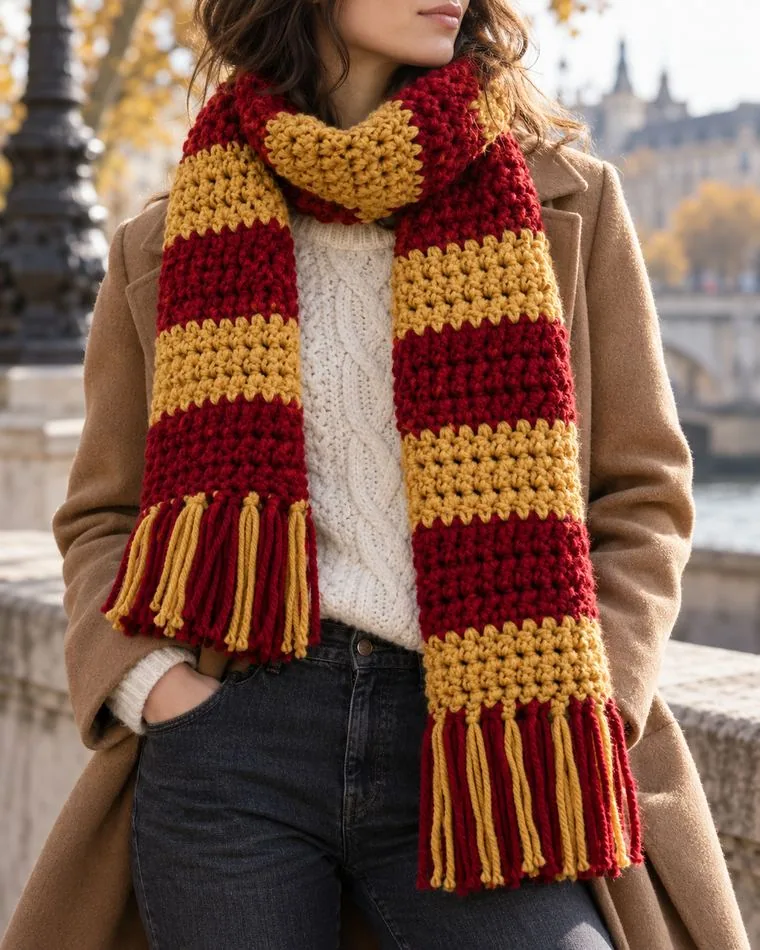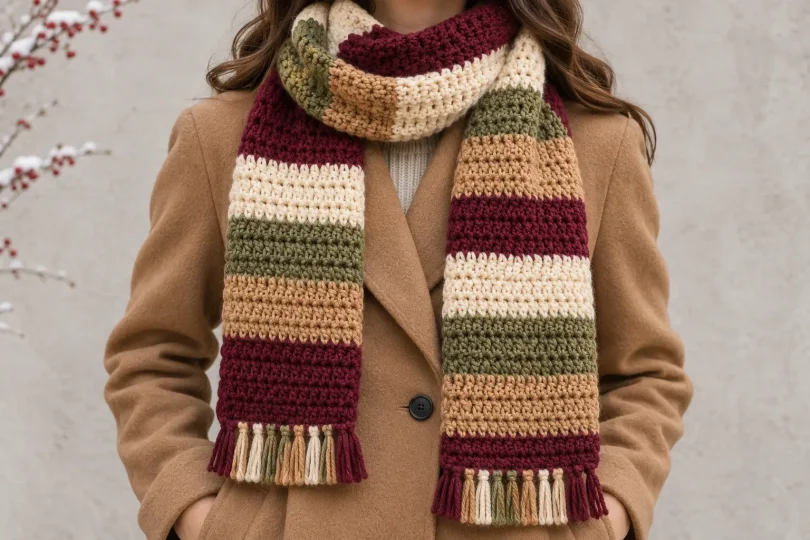
A striped crochet scarf can be as simple as letting a multicolor skein do the work, or as deliberate as planning every band around a favorite coat. This guide brings together 12 striped scarf crochet patterns so you can pick by texture, shape and the kind of color changes you want to practice.
Each idea includes a credited photo of the designer’s sample and a link to the pattern. Where a printable PDF or a relevant video is available, you’ll find a separate button. Finished sizes refer to the original samples and may change with your yarn and tension.
Find your first striped scarf
- For fewer yarn ends: Red Heart Self-Striping Scarf.
- For a complete video: Yay For Yarn’s Herringbone Scarf.
- For a closed loop: Denim and Cream Infinity Scarf or Faded Stripe Infinity Scarf.
- For a wide wrap: Long Cotton-Blend Scarf or Oversized Granny Stripe Scarf.
12 striped scarf crochet pattern ideas
1. Long Cotton-Blend Striped Scarf

Pattern notes: DK cotton–acrylic · 4 mm hook · 11 × 82½ in
This generous scarf is a good choice when you want a long wrap with plenty of drape. The mini bean texture makes even broad stripes look more interesting up close, and the sample’s cotton blend gives it a different feel from a thick winter acrylic scarf.
Make it yours: Start with three shades of one color and one contrast. Keep the yarn base consistent so the different bands hang alike. Work a mini bean swatch first and look for the stitch itself when you insert your hook, rather than the small closing chain.
2. Caron Simple Stripes Scarf
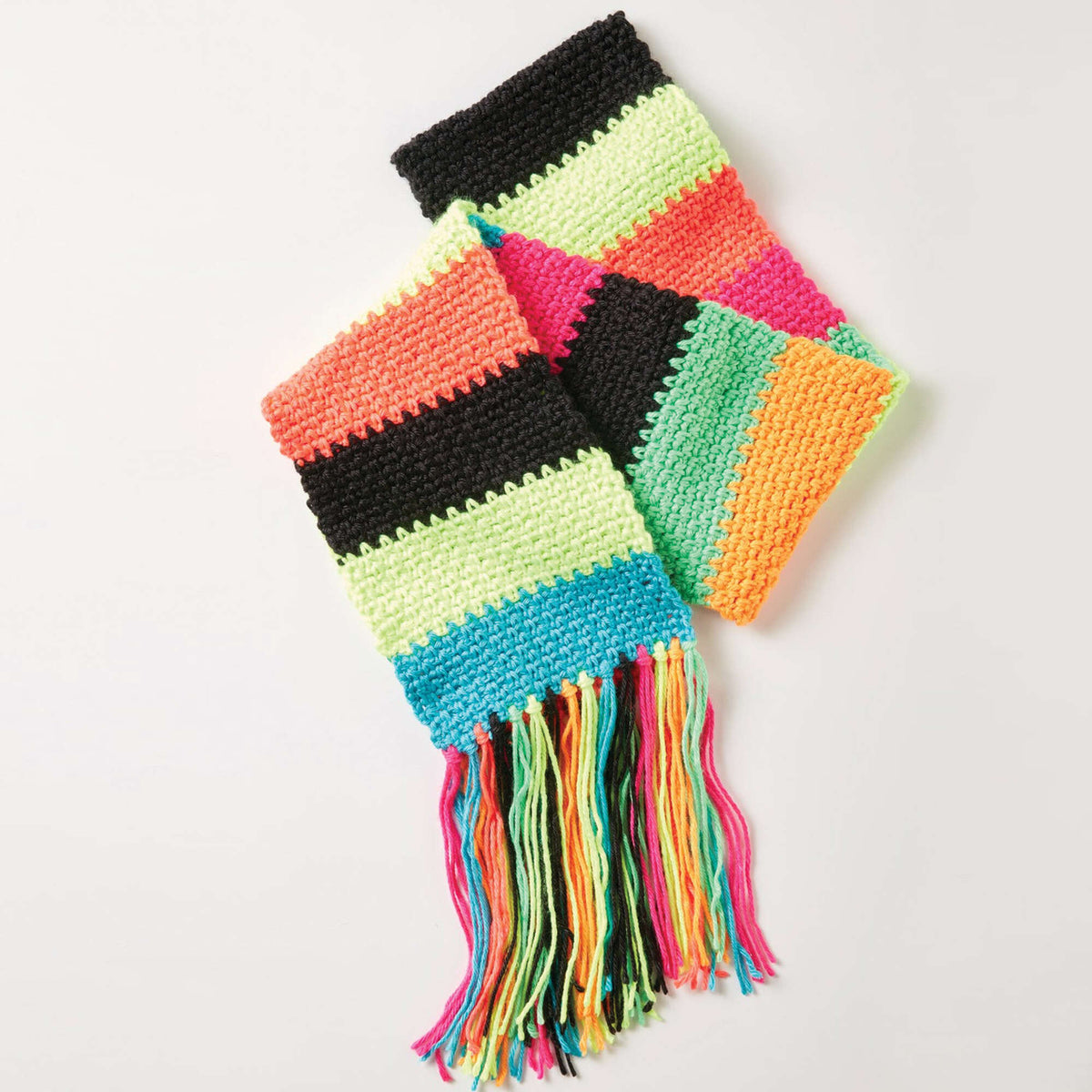
Pattern notes: Caron Simply Soft · 5 mm hook · 7 × 70 in before fringe
This is a useful first project if you’re learning to change colors. The fabric uses single crochet and chain spaces, so there are only a few things to track while the stripe sequence supplies the interest. The official PDF includes the instructions and color order.
Make it yours: Try navy and cream with one narrow gold accent. If you’re swapping colors, use yarns of similar thickness and check the width after your first few rows. Reserve matching yarn for fringe before adding length.
3. Pink and Gray Wide-HDC Scarf

Pattern notes: 6.5 mm hook · 90 × 6 in in the sample
Blush and gray make a soft pairing, but the real reason to choose this design is the fabric. The wide half double crochet is worked between posts, changing the appearance of the stitch without changing how you finish it. The sample is narrow and long enough for loose wraps.
Make it yours: Try cream and slate if you prefer a cooler palette. Make a short swatch in the between-post stitch before starting the long foundation. Compare the swatch with a regular half double crochet sample so you know which texture you want.
4. Black and White Striped Scarf

Pattern notes: Worsted yarn · H hook · interactive pattern
The high contrast makes this the boldest two-color option. It works especially well if your usual coat is plain and you want the scarf to be the main detail. The designer lists black and white worsted yarn, so substitutions such as espresso and cream keep the same idea.
Make it yours: Use the interactive pattern page to follow the instructions. If you are making the scarf as a gift, look at the recipient’s coat first. Cream softens the contrast, while a clear white gives the stripes a sharper edge.
5. Denim and Cream Blanket Stitch Infinity Scarf

Pattern notes: Worsted yarn · 6 mm hook · 10 × 56 in before joining
This is the striped scarf to try if you prefer a closed loop. The denim background makes the cream lines stand out, and the blanket stitch gives the fabric enough texture to look good over a plain sweatshirt or coat.
Make it yours: If you adjust the length, end where the stripe spacing will look natural after joining the short ends. Clip the ends together first to check how the loop fits. A soft cream accent also works with rust or forest green.
6. Herringbone Striped Scarf

Pattern notes: Herringbone half double crochet · written pattern and full video
Herringbone half double crochet tilts the stitches slightly, giving the stripes a woven look. This design is especially useful if you want a scarf that feels understated but still rewards a closer look. The tutorial demonstrates the project and the designer offers a printable version.
Make it yours: Try oat, clay and charcoal for a palette that works with denim and wool coats. Pause the video at the first herringbone stitch and practice it on a short chain. Keeping that initial pull-through relaxed will make the fabric easier to work.
7. Oversized Granny Stripe Scarf

Pattern notes: Granny clusters · 70 × 11½ in before fringe
This scarf takes the open, familiar rhythm of granny clusters into long stripes. The broad finished width is a good fit for someone who wants a statement scarf that can cover the shoulders. The spaces between clusters also give you clear places to insert the hook.
Make it yours: Use leftovers of similar weight for a scrappy look, or choose one color to repeat between brighter shades. If you want an everyday scarf with less fabric around the neck, compare the original width with one you already wear before making changes.
8. O’Go First Blush Scarf

Pattern notes: Solid yarn plus a multicolor O’Go · color handling video
First Blush is an example of using a multicolor yarn as a palette. The designer separates its sections and adds a solid color to decide where the stripes appear. This gives you more control than letting all the colors run through in their original order.
Make it yours: If you already have several coordinating solid yarns, plan them on a table and arrange the stripe order before starting. Photograph that order so you can refer to it later. The designer’s video helps you see how the multicolor yarn is separated.
9. Red Heart Self-Striping Scarf

Pattern notes: Half double crochet · 7 × 72 in
This is the simplest option if you want color changes without switching skeins for every stripe. The half double crochet leaves room for the yarn to show its own sequence. The stripe widths and transition points will vary with the yarn, the width of the scarf and your tension.
Make it yours: When you join a new skein, decide whether you want the next color to continue naturally or match the point where the last ball ended. For a closer match, unwind the new ball to the right section before joining.
10. Bernat Striped Scarf
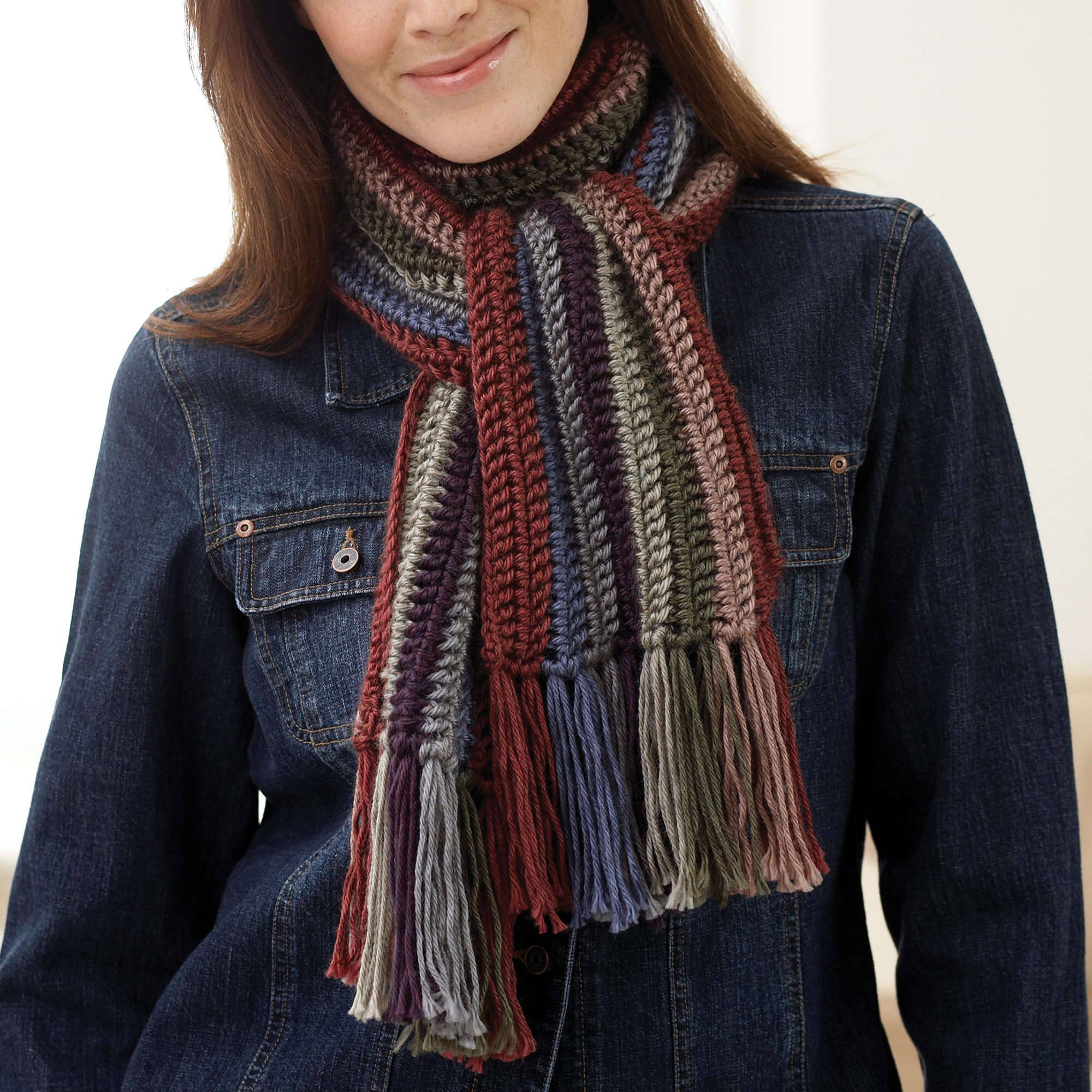
Pattern notes: Post-stitch texture · 7 × 60 in before fringe
Choose this scarf when you want stripes and tactile ribbing in the same project. The post stitches add relief, which makes the fabric look substantial even when you choose a quiet palette. Its sample is shorter than several of the long wraps here.
Make it yours: Try two colors that are visibly different but close in mood, like oatmeal and muted brown. Practice working around the post and count across the first few rows. A stitch marker at each edge helps you catch the turning stitches.
11. Red Heart Hearts & Stripes Scarf
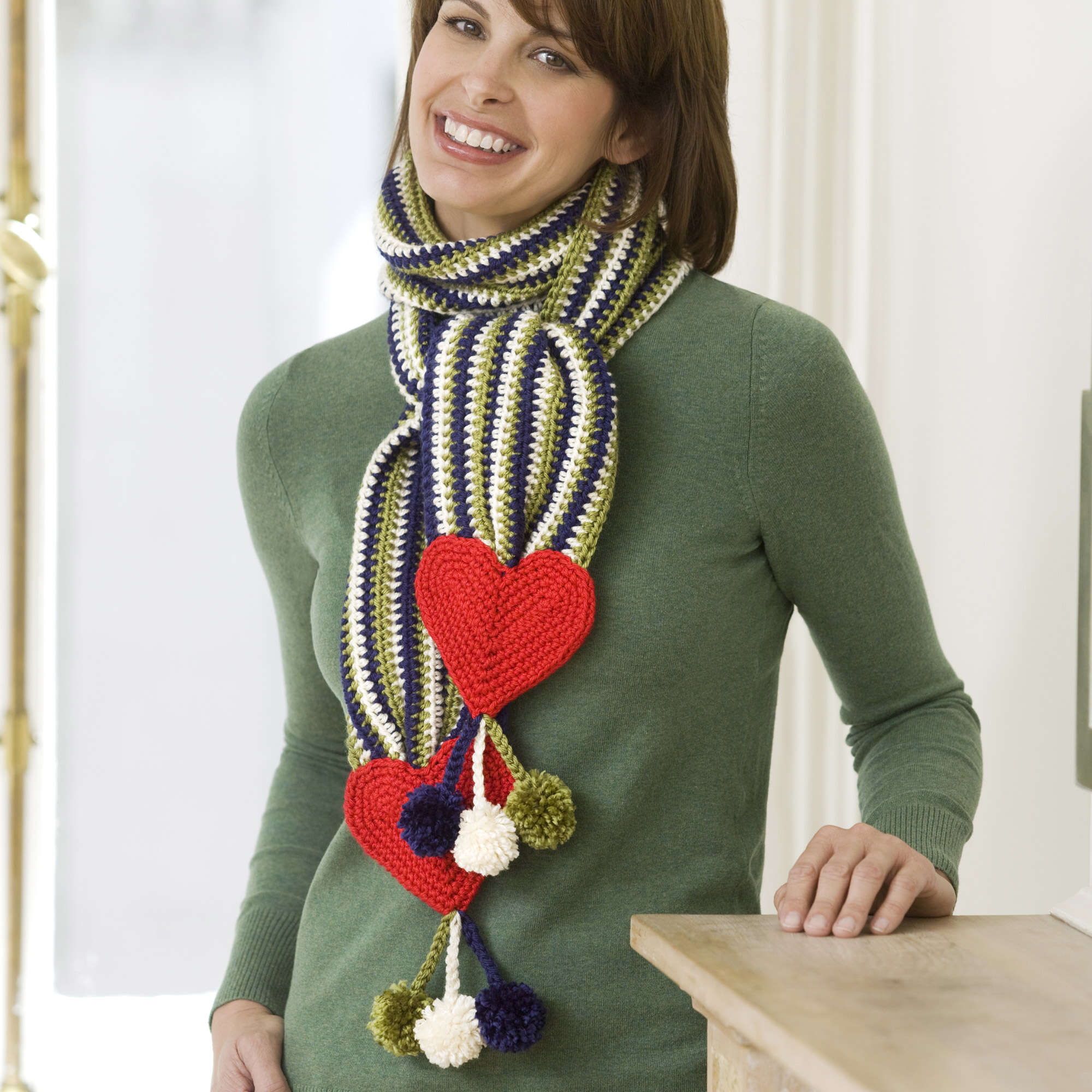
Pattern notes: Red Heart Soft · 5 mm hook · 6 × 65 in before pompoms
Pick this design if you want the stripes to share the spotlight with a decorative detail. The heart motifs and pompoms give the scarf a playful finish. The official PDF includes separate motif instructions, so you can work on the scarf and embellishments in stages.
Make it yours: For a gift, repeat one stripe color in the hearts so the finished pieces look connected. Lay out the motifs before securing them and check the scarf from both ends. Leave enough yarn for the pompoms before extending the body.
12. Faded Stripe Moss Stitch Infinity Scarf

Pattern notes: Moss stitch · 6½ × 73 in before joining
This design is for readers who prefer gradual transitions to hard lines. Moss stitch uses single crochet and chain spaces, and the way the colors are arranged lets shades blend visually. The long rectangle joins into an infinity scarf.
Make it yours: Pick a light, middle and dark shade from the same family. Lay the skeins side by side in daylight before starting. If the middle color looks too different from both neighbors, the transition will read more like a stripe than a fade.
How to make your stripes look intentional
Decide which color should lead. For a calm palette, give one color most of the width and reserve a strong contrast for narrower bands. For an even two-color scarf, test the stripes in a short swatch first. The same colors can look much bolder when both bands are equally wide.
Keep the edge tidy. When a pattern calls for a new color on the next row, it often asks you to finish the last pull-through of the previous stitch with the new yarn. For short repeats, carry the resting color up the edge if it will be covered or sit neatly. Cut and weave in the ends when a long carry would show or pull.
Measure the scarf body before adding fringe. Try it around your neck the way you plan to wear it, and compare the length with a scarf you already own. If you are joining an infinity scarf, temporarily pin or clip the short ends together to check both fit and stripe placement.
Frequently asked questions
Which striped crochet scarf is easiest for a beginner?
The Red Heart Self-Striping Scarf lets the yarn handle the color changes. If you want to learn to change colors by hand, Caron Simple Stripes combines a simple stitch sequence with clear bands in the official PDF.
Can I mix leftover yarns?
Yes. Choose leftovers that work to a similar gauge and can be washed the same way. Make a swatch with two or three colors together. If one stripe draws in or flares out, swap that yarn before starting the full scarf.
How do I keep both ends balanced?
Sketch the stripe sequence before you crochet. You can mirror the bands at the two ends or use the same border color to frame an asymmetric design. For an infinity scarf, check the two colors that will meet at the seam.
Looking for more colorwork? Browse our granny square scarf patterns or explore the full crochet scarf collection.